Category Archives: Houseplants

Rattlesnake Plant

Posted on by


It’s like having a little bit of the Brazilian rainforest in your home.

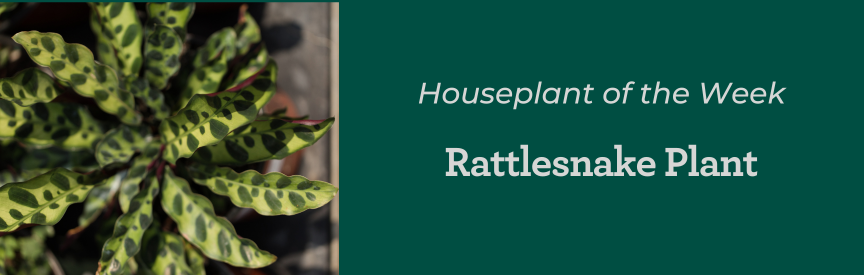
The striking Rattlesnake Plant features elongated leaves with wavy edges that can grow up to 30 inches long. The underside of the foliage is a deep purple, but it’s the upper surface of the leaves that inspires its name – light green with a dark green pattern that resembles the skin of a rattlesnake.

Cultivating this plant takes a little careful planning, but can be accomplished if you mimic its tropical habitat.

CARING FOR YOUR RATTLESNAKE

Light: Rattlesnake Plants thrive in bright, indirect light. Direct sunlight can scorch their delicate leaves, while too little light can cause the vibrant colors to fade.

Watering: These plants prefer consistently moist soil but should not be waterlogged, which can lead to root rot. Add water when the top inch of soil feels dry. Brown curling leaves indicate too little water, while yellowed leaves means your plant has too much H20.

Humidity: As tropical plants, the Rattlesnake loves high humidity, which is why they do well in kitchens and bathrooms or in rooms with a humidifier. Pebble trays and misting the leaves regularly can also help maintain the required humidity levels.

Soil: A well-draining potting mix is crucial. A mix designed for African violets or a combination of potting soil, peat, and perlite works well.

With proper care, the Rattlesnake Plant will add a visually stunning touch of the tropics to any indoor space.

Houseplant of the Week: The Moth Orchid

Posted on by
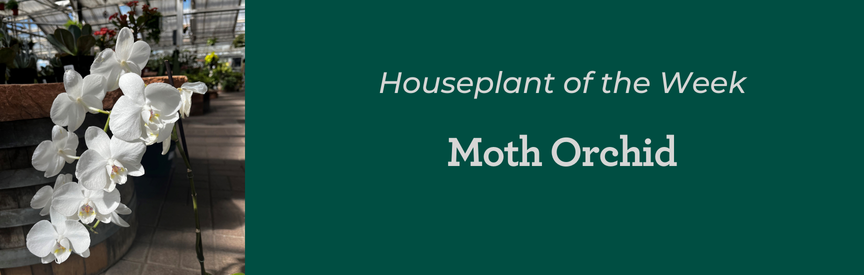
Detail of the flower of a white moth orchid at Warner's Nursery.

Often new plant enthusiasts shy away from orchids, thinking that the plant’s exotic looks mean they are “fussy” and require more gardening expertise than a newbie might have. It’s not true. Here’s what you need to remember about growing orchids: they’re not difficult, just different.

It’s estimated there’s more than 30,000 species of orchids and probably more than 200,000 hybrids. And, yes, some are challenging, even for professional gardeners.

But ones like Phalaenopsis, also known as the moth orchid and available at Warner’s Nursery, really aren’t that hard to cultivate. You just have to be aware of what they need: specialized potting media, careful watering, a way to make sure the roots get air, and bright – but not direct – sunlight.

An air plant in a pot

Most orchids are native to the tropics, where they are essentially air plants, attaching themselves to the bark of trees. Their thick, white roots are able to absorb moisture and nutrients, and because they grow high in the trees, they are used to good air circulation and plenty of light.

Your job is to re-create these conditions in your home and make it possible for this air plant to thrive in a pot. Fortunately it is relatively easy to do that.

Caring for your moth orchid

  • Planting Material: As an epiphyte (fancy word for air plant), moth orchids can’t be grown in soil; their roots would suffocate. Instead pot them with material that’s similar to or comes from a tree, such as bark chips. Having perlite, moss, or coconut husk chips mixed in helps with water retention. You can also buy potting mix that is made special for orchids.
  • Light: Orchids like light, but keep them out of direct sunlight as their leaves will scorch. East- and west-facing windows are good places for them.
  • Watering: There are some orchids that store water, but the moth orchid isn’t one of them, meaning they tend to have a low tolerance for drought. You’ll want to water them about every 7 to 10 days. If the planting material is almost dry and the pot feels light, you should water. Make sure that water doesn’t rest around the stem as that will cause new leaves to rot.
  • Fertilizer: Orchids do love to be fed regularly, but like “light meals.” So take your typical houseplant fertilizer, weaken it by diluting it to about 1/4 strength and feed that to your plant every 7 days. Among orchid growers, this is called the “water weakly, weekly” method.

Philodendron ‘Ring of Fire’

Posted on by

Philodendron ‘Ring of Fire’ is another bright and beautiful hybrid from the philodendron family. As the plant matures, its lobed variegated leaves turn different colors that can run from different shades of green to yellow, orange, and even a deep red.

It’s given to vining or climbing, meaning you have lots of different ways you can display this plant.

Here are some guidelines when cultivating your plant:

Light: Like most philodendron, Ring of Fire likes bright indirect light to maintain its variegation. Too much direct sunlight and you might scorch the leaves, while too little light might reduce the vibrancy of its colors.

Water: A tropical plant, philodendrons enjoy water in moderation. In the spring and summer, keep the top inch of soil moist to the touch, but starting in September, cut back and allow the soil to dry out a bit between waterings.

Soil: A good, fast-draining soil is best. You don’t want your plant sitting in water. A mix of perlite, peat moss, and orchid bark is a good way to maintain the balance between retaining moisture and providing good drainage.

Temperature/Humidity: Ring of Fire likes warmth and humidity. A humidifier, pebble tray or daily misting can make your plant happier. Protect it from cold drafts by keeping it away from vents or air conditioners.

Dracaena Sanderiana Gold

Posted on by

Dracaena sanderiana ‘Gold’ is commonly known as Gold Ribbon Dracaena for its striking lance-like leaves that have deep green stripes with prominent gold edges.

This plant prefers bright, indirect light but can tolerate low light conditions. Direct sunlight should be avoided as it can scorch the leaves. When placed in low light, the plant may grow more slowly and the variegation on the leaves may become less pronounced.

This plant is relatively drought-tolerant and prefers to dry out slightly between waterings. Overwatering can lead to root rot, so it’s crucial to ensure the soil is well-draining. It prefers moderate humidity levels but can tolerate lower humidity. During winter, avoid placing the plant near cold drafts or heating vents.

Feed Dracaena sanderiana ‘Gold’ with a balanced, water-soluble fertilizer every month during the growing season (spring and summer). Reduce feeding frequency in the fall and winter when the plant’s growth slows down.

Houseplant of the Week: Peperomia ‘Ginny’

Posted on by

Peperomias are tropical plants from the pepper family that are popular as indoor plants because they are easy to take care of and come in an almost endless array of colors and varieties.

One of the newest versions is Peperomia clusiifolia known as Peperomia Ginny or sometimes a Tricolor Peperomia because of its varigated, colorful leaves.

Like other Peperomia, this plant thrives in medium to bright, indirect light, but it can also tolerate low light relatively well.

You’ll want to water your plant every one to two weeks, allowing the potting mix or soil to dry out between waterings. If you see your leaves turning yellow and dropping off, it can be a sign that you are overwatering.

Because of a tendency towards root rot, you’ll want to plant your Peperomia in a pot with good drainage and use a light, well-draining soil for your plant. 

Houseplant of the Week: Club Moss

Posted on by

Club Moss Houseplant

Although they have no flowers, the club moss or Selaginella, is a charming, easy-to-care-for houseplant whose beauty comes from its foliage. 

Colors can range from green to gold and some species feature new growth that is white, which makes them look like they are frosted.

They also can be placed in a variety of containers, working well in pots and terrariums.

Caring for Your Club Moss

  • Soil – If planting in a pot, start with good commercial potting soil, which is lighter than top soil and often contains a mild “starter” fertilizer.
  • Water – Club Moss likes moist but well-drained soil. Check the soil moisture with your fingertips. If the top two inches are dry, or the plant is wilted, you need to water it.
  • Fertilizer – Apply a balanced liquid fertilizer monthly.
  • Temperature – The Club Moss is a native of sub-Saharan Africa and loves humidity. If you want to make this plant happy, place it in the kitchen or bathroom. Avoid placing in drafty, hot, or high sun locations.

Houseplant of the Week: Sunny Star Croton

Posted on by

Long, strong leaves with lines of bold neon yellow are typical of this cultivar of the Codiaeum variegatum or the Croton plant. Native to the Pacific Islands, crotons are often grown outdoors, but they are also popular as lovely houseplants.

Here’s the first thing you need to know about croton plants in general: they are a bit stuck in their ways. Crotons are notorious for not liking change and can be sensitive to disturbances whether it’s repotting or changing lighting conditions or humidity.

So if you take home your plant and find that it loses a bunch of its leaves within a few days, don’t panic. It’s not that it’s a bad plant or you somehow “failed” it. Basically, it’s gone into shock. It will recover pretty quickly with some regular plant care – the right amount of light, proper watering and good soil.

Caring for your Croton

Let’s talk about lighting first. In general, Crotons like a sunny location; lack of sufficient light can even cause new leaves to be less colorful! Crotons also like their humidity; they are, after all, a tropical plant. A pebble tray or regular misting will keep your plant looking good.

Crotons like consistent mild moisture, but don’t want to be waterlogged, so a soil with good drainage is a must.

The plant should also be kept away from drafts and cold, as it cannot tolerate temperatures below 60 degrees.

Crotons can reach heights of about 3 feet, so you might want to make this a floor plant in your home.

Houseplant of the Week: Algerian Ivy

Posted on by

Algerian Ivy

The image that probably pops into most people’s heads when you mention Ivy is the vine you often see clinging to the sides of houses. In fact, as a vine, it’s often considered invasive because of its aggressive growth.

But as a houseplant, ivy is a favorite of indoor gardening enthusiasts. Algerian Ivy (Hedera canariensis), with its cascading foliage and elegant demeanor, is a versatile houseplant with lovely dark green leaves often edged in creamy white.

This plant has larger leaves than its cousin, English Ivy, and is slightly more drought tolerant.  

Caring for Your Algerian Ivy Plant

The most important thing your ivy plant needs is the right amount of light. Ivy plants that are mostly green like bright indirect light, but variegated versions with white on the leaves prefer medium light.

While Ivy plants like regularly watering, they don’t want to be waterlogged as this can make the roots rot.

Remember to feed your plant, too. Fertilize your ivy with a water soluble, nitrogen-rich fertilizer about once a month except in winter, when the plant is dormant.

Houseplant of the Week: Calathea concinna ‘Freddie’

Posted on by

The beautiful ‘Freddie’ with its dramatically patterned leaves is another member of the ‘prayer plant’ family. Plants in the family are known for their leaves moving from flat during the daytime to erect at night, as if they were hands in prayer.

Like most tropical plants, Freddie loves heat and humidity. It prefers medium to bright indirect light, but will tolerate lower light.

When watering, you are trying to walk the line between keeping the soil damp most of the time without allowing the plant to sit in water or overly wet soil, which can cause root rot.

While sitting in water is not good, surrounding it with humidity is a positive. Try a humidifier or sitting the plant on pebbles to increase humidity. If you really want to give Freddie a treat, try misting.

For a planting medium, you can use a potting mix that is well draining, with elements like perlite or coco coir.

Finally, remember that this plant likes it nice and hot, and while it will tolerate cooler temperatures in the home, make sure it’s not near any A/C vents and avoid drafts.

Houseplant of the Week: Spider Plant

Posted on by

You have to love the nicknames that this week’s houseplant goes by: the airplane plant, the ribbon plant, and (our favorite) hen and chicks. But for most of us, the variegated leaves of Chlorophytum comosum are best known as “the spider plant.”

These are very easy plants to grow and very relatively forgiving of less-than-perfect care.

The slender leaves are striking on their own, but in time, your maturing plant will send out long stems from which little “plantlets” will develop. This is one of the reasons why these plants are so popular as hanging container plants. In fact, if you have them as on a shelf or a table, you’ll want to check periodically that the weight of those plantlets aren’t pulling the pot over.

You can easily propagate your spider plant with those plantlets. Once the plantlet develops roots that are at least an inch or two long, use a pruner to carefully cut it off the stem – keeping the roots intact – and plant in a new pot. Keep your new plant well watered (but not soggy) until the roots become more established.

Spider plants like indirect sunlight, as direct sunlight can burn the tips of their leaves. (Cut the tips off if this happens). They also like nice even moisture, so a good potting soil mix is essential. This is a tropical plant, so it truly loves heat and moisture, but will do well with average household temperatures and humidity – just keep it away from air conditioners and vents.

Spider plants grow fast, so you might want to repot them every once in a while so they don’t get root-bound.