
Forget your fertilizer – these plants feed themselves.
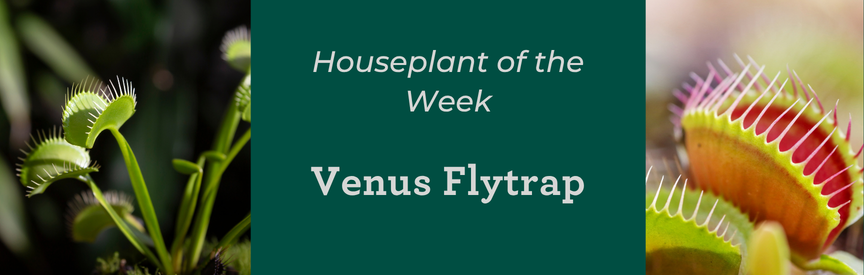
Dionaea muscipula – or the Venus Flytrap – is infamous for its carnivorous ways. Its modified leaves are two lobes attached by a hinge, forming a trap. Nectar within the trap lures small insects and if those insects touch a sophisticated series of small hairs inside the leaf called trichomes, the leaves will close and the plant will eat the insect.
Venus flytraps still use photosynthesis to get most of their energy – you should probably think of the insects as a nutrient-rich supplement in their diets. But it means that you shouldn’t use fertilizer with flytraps – it’s likely to burn the plant instead of nourishing it.
Venus flytraps are also famous for being “difficult,” but truthfully, it’s just that they have some specific requirements. Meet those, and your flytrap should thrive.
Light: Unlike most houseplants, Venus flytraps thrive in bright direct sunlight. They need that extra light to power up their photosynthesis, since they do not pull nutrients from the soil.
Water: This is where the “difficult” reputation comes from. Much like a wealthy patron in a fancy restaurant, Venus doesn’t do tap. Rainwater is acceptable and if push comes to shove, they’ll drink distilled water. They’ve got a good reason not to drink tap water, however – the minerals and salts in typical tap water are fatal to them. So don’t judge.
Fertilizer: Don’t do it. Venus gets her nutrients from photosynthesis and those delicious bug snacks. The chemicals in fertilizer – much like the ones in tap water – will damage these sensitive plants.
Soil: Peat moss and perlite are the way to go. Potting mix will not work.