Category Archives: Houseplants

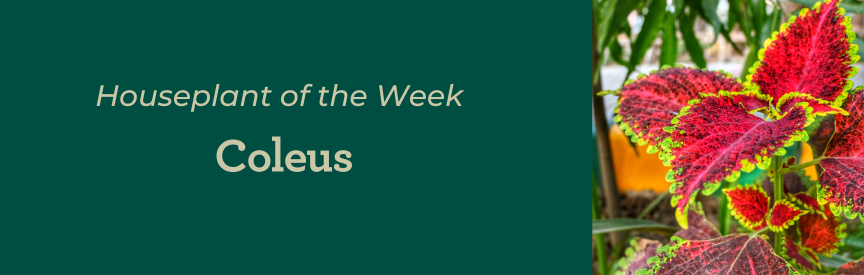
Houseplant of the Week: Coleus

Posted on by

Most people know about Coleus as an outdoor plant. Its bright array of foliage colors (red, pink, orange yellow, burgundy and purple), are patterned on leaves that can be pointed, oval or scalloped. The almost endless varieties have made Coleus a popular bedding plant for decades.

But it is also a wonderful indoor plant. It is a relatively easy plant to care for, making it a good choice for both novice and experienced gardeners.

Caring for Your Coleus

  • Light – Coleus plants need bright light, but they should be protected from direct sunlight, which can scorch their delicate leaves.
  • Watering – Coleus plants need moist soil, but they should not be soggy. Water the plant regularly, allowing the top inch of soil to dry out between waterings. Be sure to empty any saucers or drip trays after watering to prevent the roots from rotting.
  • Fertilizer – Coleus plants should be fed about once a month.
  • Temperature and humidity – Coleus plants prefer warm temperatures between 60 and 75 degrees Fahrenheit. They are also tolerant of high humidity, but they can tolerate lower humidity levels if necessary.

Houseplant of the Week: Echeveria

Posted on by

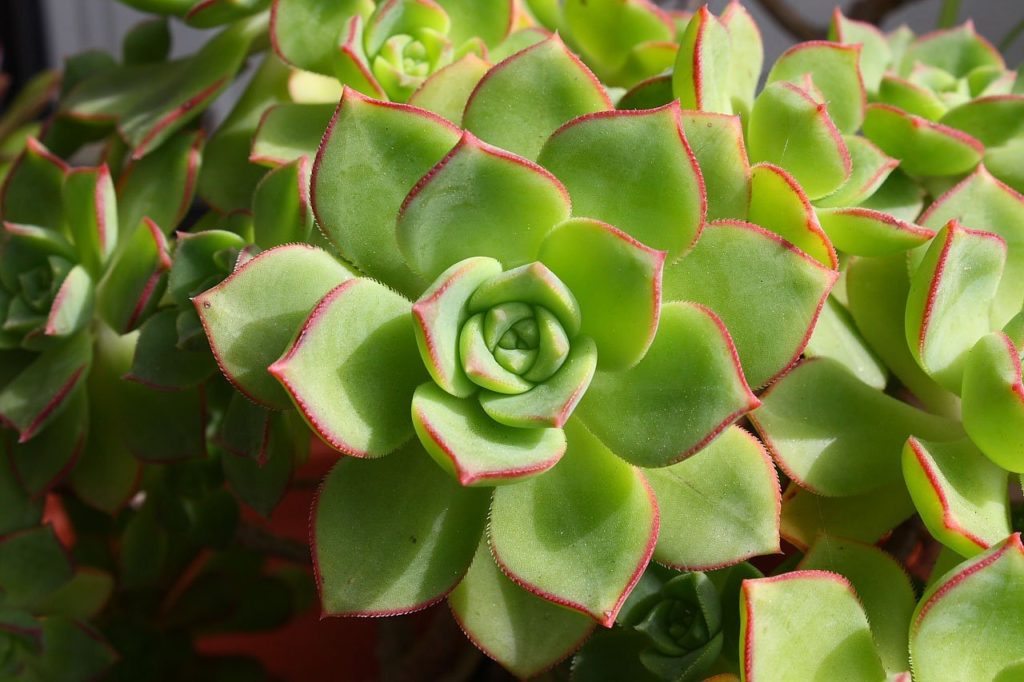
Is it any surprise that a houseplant this beautiful is named after an artist?

In 1787, Atanasio Echeverría y Godoy was part of the Royal Botanical Expedition to New Spain, an exploration of areas throughout what is now California, Mexico, Cuba and Puerto Rico. He created hundreds of drawings of the plants they discovered and cataloged, including this group of succulents.

There are about 150 species of Echeveria, most of which feature the beautiful rosette design. They are sturdy plants that can be grown in the shade, but can also take some frost. All the species are drought-resistant, but they tend to grow better with regular watering and fertilizing.

Most species lose their lower leaves in winter. Since these droppings can be fertile ground for a fungus that can then attack the plant, you should remove them regularly.

Caring for Your Echiveria

  • Light: Echeverias prefer full sun to partial shade. However, avoid direct afternoon sun, particularly in the summer, as your plant can actually get sunburnt. In the winter, get them to the brightest window in your home, so they can get their fill of sunlight.
  • Watering: Moderate amounts of water are needed from spring through fall. (Wrinkled leaves? That’s your plant telling you it needs more water.) The plants biggest issues tend to come from overwater, so be careful not to soak your plant too much.
  • Feeding: Not required but, as we mentioned above, they will grow better with some extra nutrients. It’s easy to overfertilize an Echeverias, so dilute your fertilize more than usual and use less often than recommended for other plants.

Houseplant of the Week: Dieffenbachia

Posted on by

Showy, beautiful and easy to care for, Dieffenbachia can make a super indoor plant.

Its tolerance for low light and numerous varieties make it a favorite houseplant for homes and offices. 

One word of caution, however. If you have small kids or pets, you’ll probably want to make sure you place this plant out of reach. Diffenbachia’s milky sap is a mild irritant and should be kept from bare skin. The sap can even result in temporary loss of speech if ingested by causing swelling of the tongue and throat! That’s how Dieffenbachia came by it’s other name, “dumb cane.”

Caring for Your Dieffenbachia

  • Light: It likes bright but filtered light, particularly in the spring, when it’s tender new leaves can get easily burned. Make sure to rotate your dieffenbachia so they don’t pull to one side of the planter.
  • Water: Keep your Dieffenbachia moist, but be careful not to overwater.
  • Fertilizer: Feed every couple of weeks with a nitrogen-rich fertilizer to encourage growth

Houseplant of the Week: Philodendron ‘Atom’

Posted on by

It feels like every few months we get a new cultivar from the philodendron family that is more beautiful than the last. You can certainly say that of the newest arrival in our nursery, the ‘Atom.’

As a dwarf cultivar, it is compact and will only grow about 12 inches high. It also has a bushy appearance with gorgeous, deep-green leaves that are ruffled, which is why it’s also known as the “lacy” philodendron.

Here are some pointers for taking care of Philodendron Atom:

Light: This plant is native to the rainforests of Brazil and Paraguay, where it grew under tree canopies in relatively high humidity. You can replicate this by placing your plant in a warm, bright area away from direct sunlight, air conditioners, and heaters.

Water: Let the top inch of the soil dry off in between waterings. Your Atom would love frequent misting to remind it of its rainforest homeland. (In fact, it would be thrilled if you put it in a steamy bathroom!)

Fertilizing: Feed Atom with an all-purpose fertilizer about once a month during warmer months.

Soil: A good, fast-draining soil is best. You don’t want your plant sitting in water.

Houseplant of the Week: Syngonium ‘Maria Allusion’

Posted on by

Syngonium ‘Maria Allusion’ plant in a 4-inch pot in the nursery

The unique Syngonium ‘Maria Allusion’ is a beautiful and easy to care for houseplant native to Central and South America. What make’s this plant striking is it’s new leaves, which will come in pink and red before fading into green.

This plant tends to be compact with lovely arrowhead-shaped leaves.

Maria Allusion is tolerant of a wide range of conditions, making it perfect for new houseplant owners.

Caring for your Maria Allusion Syngonium:

Although relatively easy to grow – and resistant to most pests and diseases – it does have some specific requirements. It prefers bright, indirect light and should be watered when the top inch of soil is dry. Maria Allusion doesn’t require frequent feeding, but you should fertilize every 6-8 weeks.

Houseplant of the Week: Rabbit’s Foot Fern

Posted on by

Fronds of rabbit's foot fern plant

The rabbit’s foot fern (Davallia fejeensis) is a beautiful and easy-to-grow tropical fern that was originally found in Fiji, but is cultivated all over the world. Like many ferns, it has lacy, graceful fronds, but what makes this fern unique is its rhizomes, which are covered with a fine, fur-like mat of hairs.

Rabbit’s foot ferns are epiphytic, which means they grow on other plants and absorb nutrients and moisture from the air in the wild. They are adaptable enough, however, that they can be grown in containers or hanging baskets, and they make a great addition to any indoor plant collection.

Growing Rabbit’s Foot Ferns

Although rabbit’s foot ferns are relatively easy to grow, they do have some specific requirements.

Light: Your fern will need bright, indirect light.

Soil: Rabbit’s foot ferns like a loamy, rich soil with plenty of peat. Look for a peat-based potting mix, which will also have a slightly acidic pH that these plants like.

Watering: Rabbit’s foot ferns need to be watered regularly, but the soil should not be soggy.

Fertilize: Feed with liquid fertilizer every two to three weeks throughout the growing season (April through September). In the fall and winter, feeding can be reduced.

Neon Pothos

Posted on by

Pothos is that plant that you usually give to your friends when you aren’t sure if they have green thumbs or not. Almost anyone can cultivate this not-too-fussy plant.

While most pothos fall into the “golden pothos” family, there is one that’s particularly eye-catching because of its extremely bright, heart-shaped leaves: the appropriately named “neon” pothos.

Like the more common golden pothos, these plants look great in a pot or hanging in a container. We suggest that you give your plant bright indirect light, not only so it can thrive, but also so it can maintain that striking neon color. (Neon pothos in low-light conditions will survive, but their leaves will start to get darker).

One of the very few demands of all pothos is to not be overwatered, so keep the top few inches of soil dry and test the soil prior to watering. While pothos don’t necessarily require fertilization, particularly if they have good nutritious soil, you can feed them on a regular schedule from April or May through August. Just follow the instructions on the label of your favorite plant food.

Pothos love a good misting and it’s also important to dust them when needed so they photosynthesize efficiently. This also gives you a chance to inspect your plant for any pesky pests or bugs.

Houseplant of the Week: Kalanchoe

Posted on by

Kalanchoe, which also goes by the lively names “Flaming Katy” and “Madagascar Widow’s-thrill,” is a popular succulent that comes in a wide variety of vibrant colors, including yellow, pink, magenta, orange and red. These blooms are set off by gorgeous, large, deep-green leaves.

They like bright, natural light as long as they don’t get too much direct sun, which can cause burning. The more light they get, the better; the flowers often won’t bloom if the plant doesn’t get enough.

As succulents, Kalanchoe don’t want to be sopping wet. They need good drainage. Water well and then water again when dry (which could mean up to two weeks depending on your house temperature, lighting and the size of the pot).

When you repot, use a mix of regular potting soil and one designed for succulents. And while Kalanchoe aren’t particularly vulnerable to pests, keep an eye out for aphids and mealybugs.

Houseplant of the Week: Aloe Vera Plant

Posted on by

Aloe vera plants are succulents, meaning they store water in their leaves. This makes them very drought-tolerant and easy to care for. However, there are a few things you need to do to keep your aloe vera plant healthy and happy.

Light: Aloe vera plants need bright, indirect sunlight. Too much direct sunlight can scorch their leaves. If you’re growing your aloe vera plant indoors, place it in a south- or west-facing window. If you’re growing it outdoors, plant it in a spot that gets morning sun and afternoon shade.

Water: Aloe vera plants should be watered deeply, but infrequently. Allow the soil to dry out completely between waterings. If you overwater your aloe vera plant, its roots will rot.

Soil: Aloe vera plants prefer well-draining soil. A cactus mix or a succulent mix is ideal. You can also add some sand or perlite to your regular potting soil to improve drainage.

Fertilizer: Your aloe vera don’t need much fertilizer. Feeding once a month during the spring and summer is all they need.

The Peace Lily

Posted on by

This week, we take a look at Spathiphyllum, better known as the “Peace Lily,” a great example of a spadix type of plant, where a spike of tiny little flowers is encased in a curved leaf-like structure known as a spathe. Peace Lilies are sometimes called Spathe flowers.

Besides being quite beautiful, Peace Lilies are valued as houseplants because they are easy to take care of and can acclimate to lower levels of light.

Peace Lilies symbolize purity and innocence and are often given as a gift to those who have suffered a loss, as the white lily represents the rebirth of the soul.

Caring for Your Peace Lily

Peace lilies are tropical plants, so they like warm temps, moist soil and high humidity.

  • Try not to put them near a cold, drafty window. A nice cozy room with indirect light will make them feel at home.
  • They will put up with dry soil for a little while, but eventually, their leaves will start to brown if neglected, so keep that soil moist. On the other hand, don’t overwater!
  • Northern Arizona is a dry place, so mist their leaves on occasion for increased humidity.
  • Peace lilies are not big eaters, so you only have to fertilize occasionally – about every six weeks, particularly to encourage growth in the spring and summer.