Category Archives: Houseplants

Houseplant of the Week: Alocasias

Posted on by

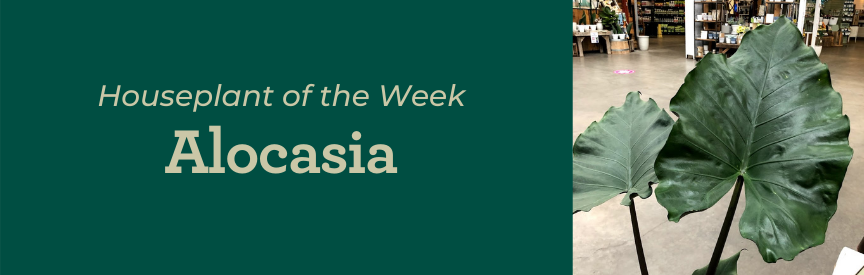
Alocasias are considered some of the most striking houseplants available because of their eye-catching foliage. Native to the subtropics, they have close to 80 varieties with a wide range of looks. 

Some are known for their gigantic leaves like the “elephant ear” varieties. Others feature highly visible veins, typically in a contrasting colors.

Alocasias need bright, indirect light. In nature, these plants thrive beneath tree canopies and direct sun will lead to the leaves getting burned. They are also used to high humidity, so don’t place them in a place where they will dry out easily, such as an air conditioner vent or a heater.

Allow the top 2 to 3 inches of the plant to dry between watering to ensure that the plant isn’t sitting in soil that is too wet.

Houseplant of the Week: Nepenthes, the ‘Monkey Cup’ plant

Posted on by

Nepenthes 'Monkey Cup' Plant

Move over, venus flytrap – there’s a new carnivore in town.

Nepenthes, which is often called the monkey cup or tropical pitcher plant, is rather exotic looking. From its tendrils you’ll see globe- or tube-shaped protrusions that act as traps. In the tropics, monkeys are often seen drinking rainwater from these “pitchers” which is how it got its most popular nicknames.

However, if you are smaller than a monkey, you might want to watch out. While insects are the primary diet for Nepenthes, larger versions of the plants in the wild have been known to trap rats, lizards and even the occasional bird. (Yikes – cue the “Little Shop of Horrors” soundtrack.)

Not to worry, however; the hybrids we offer at Warner’s will most likely stick to bugs.

Caring for Your Nephentes

  • Light – These plants love bright (although not direct) sun. A nice windowsill with bright light is perfect for this plant, which needs a hefty dose of light to develop its “pitchers.” Just make sure the plant doesn’t scorch, which will show up as red zones on the plant’s upper most growth.
  • Humidity – Although this plants roots are in the tropics, you don’t have to have a hothouse to grow a Nepenthes. They’ll tolerate lower humidity although they probably won’t develop as many pitchers. A terrarium is a great choice for this plant, however, because of the increased humidity it provides.
  • Soil – Your medium for this plant should be a mix of moss and perlite, not potting soil (the minerals in potting soil will actually damage the plant).
  • Water – Don’t let your Nephentes dry out completely. On the other hand, standing water is a bad idea as it causes root rot. 
  • Temperature – As you would expect with a plant that comes from the tropics, Nephentes doesn’t like the cold. Please keep it away from the air conditioner or drafts.

Houseplant of the Week: Asparagus Fern

Posted on by

Many common names for houseplants can be misleading; they are often based on what the plant looks like as opposed to what it actually is.

Take, for example, the Asparagus Fern. No, it isn’t a fern, and you aren’t about to harvest some delicious vegetable spears if you cultivate one. (And, in fact, if your Asparagus fern sprouts berries, please note they are not edible.)

Here’s another example where what you see doesn’t quite match reality: those fuzzy, soft-looking fronds? They can hide thorny spurs, so be careful when you tend to your plant.

Caring for Your Asparagus Fern 

Light: Ferns grow in the wild on forest floors where there’s a lot of shade, but this doesn’t mean that your houseplant has to be in a dark corner. It thrives best in bright, indirect light.

Misting: Mist the plant daily, focusing on the arching stems. If the plant appears to be turning brown and droopy, it likely needs more water.

Water: Keep soil moist and water when the top inch of soil feels dry to the touch.

Houseplant of the Week: Bromeliad

Posted on by

bromeliad plantThe Bromeliad family of plants is amazingly diverse, with eight botanical subfamilies and almost 3,600 known species. There are bromeliads that grow up to 50 feet tall (the puya raimondii) and bromeliads that you can eat (ananas comosus, better known as the pineapple).

But today we are focused on those species of bromeliads that can be grown indoors as a striking – and not to hard to maintain – houseplant.

Here’s the really interesting thing about bromeliads – they typically only flower once in their lifetimes. The colorful beauty of the plant is actually its leaves, or bracts, that are often mistaken for flowers. A bromeliad grows by added new leaves to the center of the plant. At some point, the center will become crowded and new leaves will no longer have room to form. The plant then starts producing “pups,” also known as offsets.

Caring for Your Bromeliad

Bromeliads have few needs and very few problem pests, so with good maintenance, you can enjoy one in your home or office year round.

  • Potting – This may be the most complicated part of having a bromeliad. They can be potted in a variety of media – in addition to traditional pots, you can also have an epiphytic or “air” plant, meaning it grows on a rock, tree bark or is somehow mounted. If you are potting your plant, don’t just use potting soil. It’s too dense and doesn’t allow for the drainage bromeliads need. You can purchase soil specific to bromeliads, or make your own that’s a mix of soil, perlite and some sort of bark, like fine fir bark, orchid bark or pine bark nuggets.
  • Light – For the most part, bromeliads thrive in bright, sunny spaces, but keep your plant away from direct sunlight for an extended period of time, as it can damage the leaves.
  • Water and Humidity – Bromeliads don’t like overwatering (they’ve adapted to withstand drought), but they do love their humidity.
    • For plants in a potting medium, soak it so that the water runs from the drainage holes. Then, don’t water the bromeliad again until at least the top two inches of potting media are dry. Any more and you could be asking for root rot.
    • If you have an air plant variety (living on a rock or tree bark instead of being planted), you just need to mist it regularly to keep it moist.
    • All bromeliads like about 60% humidity, which is difficult to maintain in our dry mountain desert. Regular misting or a humidity tray can help.
  • Fertilizing – Bromeliads don’t need a lot of food, but you’ll want to occasionally use a water-soluble fertilizer. Air plants versions of bromeliads can benefit from a liquid fertilizer diluted (about one-quarter to one-half strength), which you can then spray onto the plant.  

Houseplant of the Week: Angel Wing Begonia

Posted on by

Probably the most recognizable type of begonia, the angel wing is a native of South America. It grows on upright stems with wing-shaped leaves in an array of unique colors and fantastic displays of flowers.

These begonias are not difficult to grow, provided you meet a few basic requirements. 

Caring for Your Angel Wing Begonia

Angel wing begonias can bloom throughout the year with the right kind of care.

  • Plant your angel wing begonia in a soil or soilless mix high in organic material.
  • This plant likes moist, but not soggy, soil. Allow the soil to dry between waterings. Add pebbles or broken pot shards in the pot to aid in drainage.
  • Angel wing begonia houseplants like bright, indirect light, in moderate temperatures. Plants located in low light conditions will grow, but will not likely flower.
  • What you feed your begonia will depend on whether you are growing it for the beautiful foliage or the flowers. A food with more nitrogen will promote larger leaves, while one with more phosphorous will encourage flowers. Either way, fertilize every two weeks.
  • Repot each spring, moving into a slightly larger pot each year.

Houseplant of the Week: Grape Ivy

Posted on by

Grape Ivy goes by the formal name Cissus rhombifolia. Technically isn’t an ivy plant, but it does allow you to bring that vineyard look right into your home. It’s also sometimes referred to as the Oak Leaf Ivy because of the shape of its leaves.

It can be potted, trail down from a basket or climb – and no matter how you use it, it always looks good.

This is a low-light vine, which makes it a great indoor plant. However, if you are using it as a climbing plant, know it will climb towards the nearest light source (and it can grow to about five feet indoors). However, you can just prune it if it grows past where you want it.

The most important part of caring for your Grape Ivy is making sure it has enough, but not too much, water. That starts with planting it in a rich soil and drains well and in a container with plenty of drainage holes.

During the growing season, provide your Grape Ivy with steady water to keep the soil consistently moist, but not drenched. You can cut back on watering in the winter and allow the soil to dry in-between doses of water.

Though they need a lot of water, grape ivy plants are especially susceptible to root rot, so it’s important to plant them in the right soil and keep an eye on their reaction to your watering. If you notice the plant dropping leaves, it’s likely a sign that it’s receiving too much water and you should adjust accordingly.

Houseplants of the Week: Terrarium Plants

Posted on by

terrarium plants

This week’s houseplant star is actually several different plants living together under glass. Highly personal and creative, a terrarium is a work of living art that can add much to your home décor – or be a terrific gift!

Simply put, a terrarium is a container, typically made of glass, that is fully or partially enclosed and filled with small plants. A fully enclosed terrarium will essentially create an ecosystem that’s self-sustaining, but some plants (like succulents) require a container that’s at least partially open to allow for airflow.

For your terrarium, you will need:

  • A container to hold your plants. This can be one specifically designed for terrarium use, but you can also use any clear glass container with a wide mouth, from a goldfish bowl to a cookie jar.
  • Small plants that don’t grow too fast. African violets, pothos, small ferns, lucky bamboo, club moss and creeping figs are all good choices. And, of course, succulents, but again we’d suggest not fully sealing the container if you do.
  • Some gravel or crushed stone
  • Sheet moss and potting mix
  • (Optional) some decorations.

Putting Together Your Terrarium

Terrariums don’t have drainage holes, so you’ll want to build up your terrarium to create a drainage layer that keeps water away from the plants’ roots. That’s where your gravel or crushed stone comes in, to give water a place to go.  Then you’ll want to use a little moss to create a layer between the stone and your potting soil. After that, add about 2 inches of damp potting soil, then the plants.

Think about what you want the finished product to look like. Arrange your taller and shorter plants so they are visually interesting. Contrast colors and leaf shapes to make them stand out – much like you do for your outside garden beds!

When you take your plants out of their containers, tease out any roots that have become rootbound. You also might want to trim the roots a bit (this retards the growth of the plant, but be careful not to cut too much back). Create holes for each plant and place the plants in the terrarium, gently patting the soil down to keep them secure and eliminate any air pockets.

Once your plants are in, you can add fun decorations to your terrarium to truly make it your own.

Houseplant of the Week: Cacti

Posted on by

Found in an amazing array of shapes and colors, cacti are those succulents that even the blackest of thumbs have a hard time killing. The cactus family (Cactaceae) is considered one of the most distinctive and specialized groups in the plant kingdom, which includes about 2,000 species!

What do you need to grow cacti? A sunny spot, well-draining soil and not much else. The big trick with cacti is not overwatering them.

All cacti are part of the succulent family of plants, meaning that their stems are designed to hold water in case of a drought. When the plant is dry it uses those reserves. But if you overwater, it can cause the plant to rot.

Houseplant of the Week: Caladium

Posted on by

Many think of caladium as an outdoor annual, but this plant, with its dramatic array of green, red, pink and white leaves can be grown indoors as well.

However, don’t be surprised if your plant only produces leaves from spring to fall. Caladium plants require a rest period of about five months before they sprout again in spring.

Place your caladium in medium light, keeping them out of direct sunlight, which can burn their leaves.

The big challenge with these plants is that they like a lot of humidity, as they are natives of tropical forests. You can achieve this by misting or placing a saucer filled with pebbles and water under the container. As the water evaporates, it will moisten the air and provide the humidity your caladium needs to stay happy.

Houseplant of the Week: Ficus Audrey

Posted on by
Banner featuring image of the Ficus Audrey

We understand why you might be a little nervous about adopting a plant named “Audrey,” particularly if you are a fan of Little Shop of Horrors. But we promise our Ficus Benghalensis is not a bloodthirsty alien looking to take over the world.

Although now that we think about it…

In the wilds of India and Pakistan, where they are known as Banyan Trees, the Ficus Audrey can soar to 100 feet tall and grow several acres wide. They have roots that easily overtake other roots, which allows them to form a forest’s worth of canopy with just a single tree. In fact, the Thimmamma Marrimanu or Thimmamma’s Banyon Tree located in Anantapur, India, is thought to have the world’s largest canopy from a single tree, covering almost 5 acres.

So maybe not world domination, but forest domination – sure! 

Your indoor version of Audrey won’t be this expansive, but it still might grow as tall as 10 feet! In appearance, it’s very similar to the Fiddle Leaf Fig, although it’s actually easier to grow.

Here are a few tips on raising your Ficus Audrey:

  • This ficus thrives in indirect bright light. No direct sun or low light.
  • They don’t like drafts or low temperatures.
  • Make sure the top 2 to 3 inches of soil are dry before you water.