
 This week’s houseplant, Philodendron, comes in many varieties, including Splitleaf, Brasil and Hope Selloum, but one of our favorites here at the nursery is the “Swiss Cheese” philodendron.
The name comes from the holes that form on its heart-shaped leaves as it gets older.
In addition to being beautiful, they are relatively easy to care for.
- All philodendrons like bright, but indirect, light.
- These are tropical plants, so they like their humidity. A swiss cheese philodendron in your bathroom or kitchen will likely be a happy plant.
- It’s a good idea to let the top inch of soil dry out between waterings.
- If you give them some support, they will climb like a vine.
Finally, if your leaves are pale, it’s likely that your Philodendron isn’t getting enough calcium and magnesium. A good fertilizer will help you correct any nutritional deficiencies for your plant – just ask one of our experts at Warner’s about which fertilizer would be right for your philodendron.
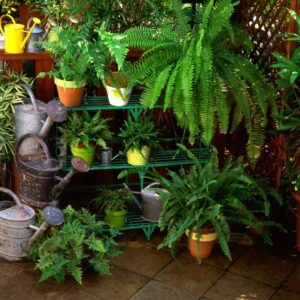 Ferns are typically underrated, and we think we know who’s to blame: yuppies.
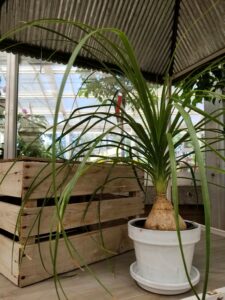 This week’s Houseplant of the Week, the Ponytail Palm Tree is definitely beautiful, but it has a secret. It’s neither a palm nor a tree.
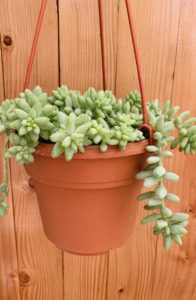 If you need a cute hanging plant that will add a lot of character to your outdoor patio or a really sunny nook of your home, we highly recommend Burro’s Tail.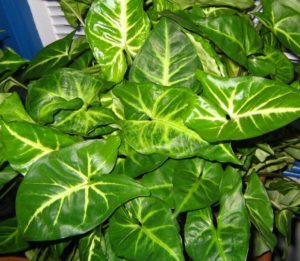
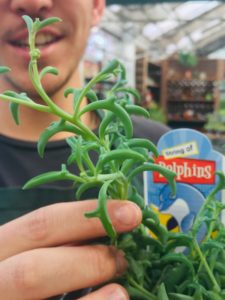 Rare and super unique, String of Dolphins is a fun succulent whose leaves literally look like tiny dolphins jumping out of the water.
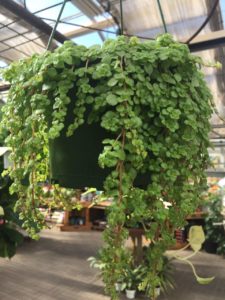 Don’t let the name fool you – Pilea Depressa might be called the “Baby tears” plant, but you will have nothing to cry about with this beauty.
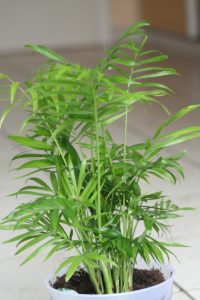 The Neanthe Belle or Parlor Palm is one of the most popular houseplant palms in the world – and its easy to see why. With its elegant lush leaves, this palm is a lovely addition to any home.
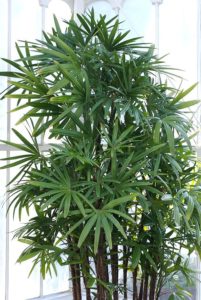 For tall, cool elegance you can’t go wrong with Rhapis excelsa, better known as the Bamboo Palm or Lady Palm.
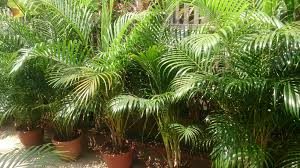 With the Areca Palm, the thing to remember is that this houseplant loves the light. Bright, indirect light, preferably from a south or west facing window is the ticket to making this palm grow.