Category Archives: Houseplants

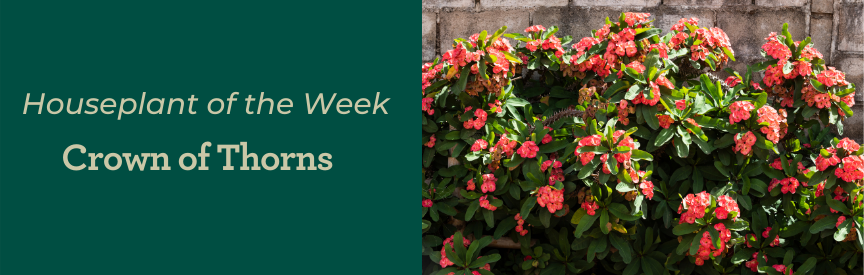
Houseplant of the Week: Crown of Thorns

Posted on by

What makes Euphorbia milii, the Crown of Thorns, such an easy indoor plant to cultivate? It thrives in the conditions you find in most homes, adapting well to normal room temperatures (although it can withstand temperatures as low as 50 degrees). It doesn’t mind dry indoor conditions and will even forgive you if you miss a watering or two.

The one thing it does insist on is a little sunbathing. Your plant will be super happy in a sunny window where it gets about four hours of bright, indirect sunlight each day.

Caring for Your Crown of Thorns

  • Soil –Use a sandy, well-drained soil that is 2/3 cactus or succulent potting soil and 1/3 perlite or coarse sand. The soil should drain quickly to prevent root-rot.
  • Water – From late spring to early fall, water your plant well and then allow the top half of the soil to dry out before watering again. Reduce the amount of water when the plant is not producing new leaves and flowers, but never allow the soil to totally dry out. 
  • Fertilizer –Feed monthly when it is actively growing with a water-soluble fertilizer diluted to half the recommended strength.
  • Pests & Diseases – While the plant is pest-resistant, too much moisture can cause mildew or fungus on the plant.
  • Repotting – A Crown of Thorns plant needs to be repotted every two to three years.
 

Houseplant of the Week: Dracaena

Posted on by

We’d understand if you think the Dracaena is an intimidating plant.

It’s name comes from the Greek and roughly translates to “Female Dragon,” because of the red gummy resin that can be produced by the stems of the plant resembling, it’s said, dragon’s blood.

Fortunately, the Dracaena doesn’t breathe fire. It’s even pretty easy to maintain.

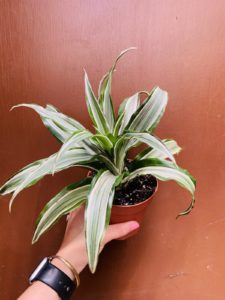
Dracaena houseplant being heldDracaenas like filtered light or semi-shady spots. Never place a Dracaena in direct sunlight. It’s ironic, but the dragon plant actually has leaves that will burn in direct light.

Dracaenas also require less water than most indoor plants. Mist their leaves, keep the soil slightly moist but also make sure it has good drainage (Dracaenas hate soggy soil as it can create root rot). A good rule of thumb? Let the top couple of inches of soil dry out before watering.

Dracaenas are sensitive to temperature, preferring it to be about 65-78 degrees during the day and no colder than 55 degrees at night.

Houseplant of the Week: Philodendron

Posted on by

This week’s houseplant, Philodendron, comes in many varieties, including Splitleaf, Brasil and Hope Selloum, but one of our favorites here at the nursery is the “Swiss Cheese” philodendron.

The name comes from the holes that form on its heart-shaped leaves as it gets older.

In addition to being beautiful, they are relatively easy to care for.

  • All philodendrons like bright, but indirect, light.
  • These are tropical plants, so they like their humidity. A swiss cheese philodendron in your bathroom or kitchen will likely be a happy plant.
  • It’s a good idea to let the top inch of soil dry out between waterings.
  • If you give them some support, they will climb like a vine.

Finally, if your leaves are pale, it’s likely that your Philodendron isn’t getting enough calcium and magnesium. A good fertilizer will help you correct any nutritional deficiencies for your plant – just ask one of our experts at Warner’s about which fertilizer would be right for your philodendron.

Houseplant of the Week: Ferns!

Posted on by

Ferns are typically underrated, and we think we know who’s to blame: yuppies.

A long time ago, in an attempt to cater to the wave of young urban professionals, lots of bars decided to go upscale. They installed better lighting, started offering fancier expensive drinks and added a lot of plants, mostly ferns, to their decor. The term “fern bar” was coined – and for many who missed the shot-and-a-beer vibe of their local watering hole, it wasn’t meant as a compliment.

But the haters don’t appreciate how versatile, easy to maintain and just plain luscious ferns are. And they seem to come in endless varieties. There’s the Western Sword with its layers of fronds coming up to a point like a sword; the Asparagus Fern, with its airy, delicate appearance and the Crocodile Fern with its scaly textured leaves. Not to mention the Birds Nest Fern, the Lady Fern, the Eagle Fern, and the Ostrich Fern (there’s a lot of ferns named after animals, aren’t there?) 

Caring for Your Fern 

  • Light: Ferns grow in the wild on forest floors where there’s a lot of shade, but this doesn’t mean that your houseplant has to be in a dark corner. So give your fern some morning or late afternoon sun, similar to the dappled light it would experience in the wild. No direct sunlight, however; that will make them lose their leaves or turn the fronds yellow.
  • Water: Ferns like moisture, so stand their pots on trays of damp pebbles and mist them regularly unless you are using a humidifier in the room, in which case that should be enough humidity for them.
  • Fertilizer: During the summer, feed your ferns every two to four weeks (dilute the strength because ferns have delicate root systems, and full strength will scorch them). Stop feeding in winter, while the plant is “resting.” 

Houseplant of the Week: Ponytail Palm

Posted on by

Ponytail PalmThis week’s Houseplant of the Week, the Ponytail Palm Tree is definitely beautiful, but it has a secret. It’s neither a palm nor a tree.

In fact, the Ponytail Palm actually is a member of the Agave family, which makes it a succulent.

It’s popular for many reason. First is that expansive beauty that just makes it a great addition to a home or other indoor space.

Another plus for our little imposter is that it’s super easy to care for. It can go some time between waterings, making it a favorite of folks who don’t have a lot of time for plant maintenance or who travel on a regular basis. (We realize that, right now, traveling on a regular basis isn’t a part of our lives, but it will be again some day.)

Caring for Your “Ponytail Palm”

  • Light – Technically, the Ponytail Palm needs sun, sun and more sun (or some form of bright light). However, did we mention this is a very forgiving plant? You could give it low light for half a year and then bright sunlight the other half and it would still be happy. That’s really helpful during the winter.
  • Water and Humidity – As mentioned above, you can wait two or three weeks between waterings. Make sure to let the soil dry out completely in between waterings. Also, they like their air dry.
  • Temperature – Don’t leave your Ponytail Palm out in the cold. They are a bit sensitive to temperature and thrive when it’s anywhere from 60 to 80 degrees. But definitely keep it away from the A/C vents!
  • Fertilizer – A general fertilizer works, but only once in spring and once in the summer. Too much food may lead to brown leaves. If you get brown leaves, use sharp scissors to just off the discolored part of the leaf.

Houseplant of the Week: Rubber Tree

Posted on by

Tall, dark, handsome and super easy to grow: what’s not to love about a rubber tree plant, the first of our ficus trifecta.

(The other two are the Ficus Benjamina and the Fiddle Leaf Fig; click on their names to read more.)

With it’s beautiful dark glossy leaves, ficus elastica is one of the easiest varieties to cultivate. It doesn’t drop leaves and doesn’t demand much maintenance.

It also grows fast. In nature, rubber tree plants can grow to up to 80 feet, so if you keep re-potting this houseplant into bigger and bigger pots it will get wider and taller. However, If you limit it to a 10-inch diameter pot, you should get a nice 3- to 4-foot tall plant.

Rubber plants love light but keep it from direct sunlight that might burn its leaves. Do not attempt to grow this in a spot with low light; you’ll be disappointed.

Water your rubber tree about once a week during the spring and summer and every two weeks in fall and winter. Good potting soil will make your rubber tree happy. Use fertilizer sparingly – maybe once in the spring and once during the summer.

Also, do not be alarmed by some root structure that you might see at the base of the plant. Your plant is not trying to climb out of its pot; these are “aerial” roots and perfectly normal.

Houseplant of the Week: Burro’s Tail

Posted on by

Burros Tail hanging plantIf you need a cute hanging plant that will add a lot of character to your outdoor patio or a really sunny nook of your home, we highly recommend Burro’s Tail.

It’s fleshy, overlapping conical leaves make it look like a braided tail. Those stems can grow to two feet and during the summer (the one pictured here is a baby; if they have the room to really grow those stems, Burro’s Tail can sometimes look like the plant version of Cousin Itt from the Addams Family). In summer, the stems have pink or red flowers at the ends. 

Scientifically known as the sedum morganianum, the Burro’s Tail likes full sunlight for growth and to enhance the blue-green or green-gray leaf color.

In terms of maintenance, it’s a typical succulent. It prefers gritty, well-draining soil and moderate watering, except in winter when you should cut back. You’ll want to let it dry out between waterings, as excess water will damage this plant easily.

You can propagate a Burro’s Tail either from the stem or leaf cuttings; the leaves are very delicate and break away easily. 

Houseplant of the Week: Frizzle Sizzle

Posted on by

Looking to put some pizzazz in your houseplant collection? Well, Warner’s is happy to announce we have some rare Frizzle Sizzle in stock. This native of South Africa is a bulb plant that features fabulously corkscrew leaves.

When in flower, the Frizzle Sizzle (more formally known as the Albuca spiralis) has fragrant, yellow blooms with a sweet smell similar to vanilla.

Caring for Your Frizzle Sizzle

  • Keep them warm. This plant thrives best at temps over 60 degrees. 
  • It likes sunlight, but not direct sunlight, which can burn its leaves.
  • On the other hand, not enough sunlight will take the sizzle out of the frizzle and your leaves won’t curl as much.
  • Let your plant dry out between waterings. 
  • Frizzle sizzles tend to go dormant in the summer after flowering. At that point, stop watering and fertilizing until you see new foliage in the fall/winter.
  • The Frizzle Sizzle seems to be blessedly free of pests and disease, making it an easy plant to maintain.
  • Final note: When your Frizzle Sizzle sends up its flower stalks in the spring, the tips of the leaves might brown. This is a natural occurrence and not a sign that your plant is ill. 

Houseplant of the Week: Arrowhead Plant

Posted on by

Arrowhead Plant closeup

Arrowhead plant by User:Omegatron / CC 3.0

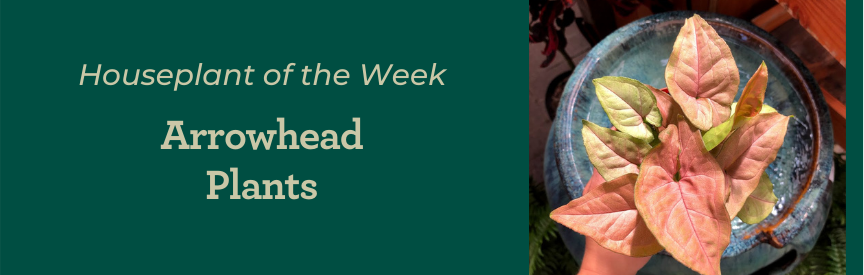
Take one look at the lovely Arrowhead Plant and you’ll see where it gets its name. The distinctively shaped leaves are contrasted by their lighter colored veins, giving it a bold and striking look.

This plant is great both as a table topper (if you trim the runners) or as a hanging plant.

Caring for Your Arrowhead Plant

Water: Water well and then allow the top half of the soil to dry out before watering again. Arrowheads droop when they are thirsty but are known to rebound quickly once they get a drink. As with most plants, avoid over-watering, which can lead to root rot.

Food: During the spring and summer (its peak growing time), these plants like fertilizer every couple of weeks. Drop down to once a month in the fall and winter.

Light: The darker green variations of this plant will do okay in low to medium light, but if it’s a lighter green or burgundy/pink variety, they need more light.

Temperature: Anywhere from 60 to 75 degrees works for the arrowhead. They love humidity, but can survive in the normal household humidity. However, keep them away from things that could sap the moisture from them, like air vents or fireplaces.

Houseplant of the Week: String of Dolphins

Posted on by

Rare and super unique, String of Dolphins is a fun succulent whose leaves literally look like tiny dolphins jumping out of the water.

These plants look fabulous in a mixed container or in a hanging basket on its own with the distinctive leaves hanging down.

Like most succulents, String of Dolphins are relatively low maintenance and have few growing issues. They need well-draining soil, however, to thrive.

They prefer bright, indirect light or filtered light from a window. They also tend to thrive in slightly crowded conditions, so think about mixing them with other smaller succulents and decorating with a sea theme of seashells or sand dollars.