Category Archives: Houseplants

Houseplant of the Week: Hoya

Posted on by
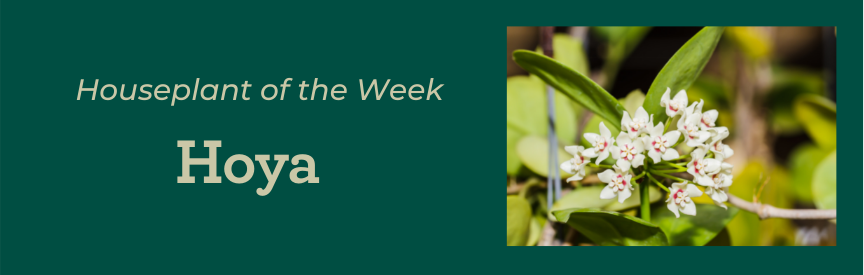
Banner with Hoya houseplant

Often called the “wax” plant because of its waxy leaves and star-shaped flowers, the Hoya is one of those plants that does better in bright, natural light. It will survive in medium and even low-light as well, but like most flowering houseplants, the more light it gets, the more blooms it will produce.

Caring for Your Hoya

This is a pretty easy going plant, but there are some basics.

  • Your hoya would prefer being too dry instead of too wet. Water it when the potting mix dries out and make sure not to overwater as that will cause root rot.
  • Although technically not a succulent, those thick leaves and stems do store water, so it will forgive you if you miss a watering.
  • The plant doesn’t require fertilizer, but you can use any general purpose houseplant fertilizer to get it to bloom better. (Warner’s has several good options.) Just follow the directions on the packaging. 

Houseplant of the Week: The Black Raven ZZ Plant

Posted on by

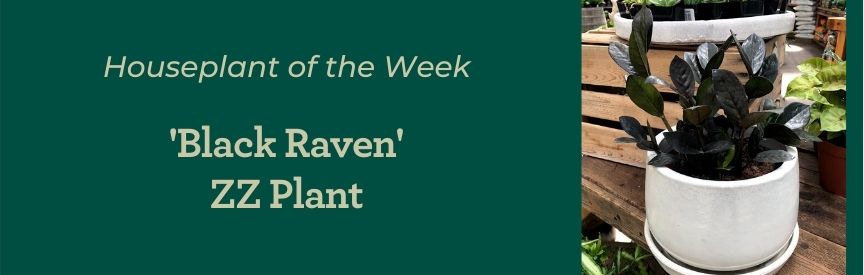
We love the Zamioculcas zamiifolia (say that three times fast), better known as the ZZ, and right now we have one of the rarer versions of this plant – the Black Raven, with glossy black leaves.

Despite it’s exotic looks, the Raven is a relatively easy plant to take care of.

This is one of the most forgiving plants you’ll find in our nursery. Miss a watering (or three) and it still shows off it’s glossy, feathery wings as its rhizomes hold a lot of water. It’s not particular about soil; anything that drains well will do.

It’s not even fussy about light, which makes it very popular in places where there’s little natural light, like an office cubicle, or cities where most days are overcast. (Although truthfully it thrives best in bright indirect light.)

It also has no identified pest or disease problems.

No wonder this beauty is the star of so many Instagram posts!

Houseplant of the Week: Ric Rac Cactus

Posted on by
Ric Rac cactus

In the rainf‌orest, the Ric Rac Cactus lives on tree trunks as an epiphyte, its dramatic serrated leaves cascading down. But much like bromeliads, orchids and air plants that hail from the tropics, it’s possible to successfully cultivate a Ric Rac Cactus in your home.

The name comes from the zig zag decorative trim that you often see on curtains and clothing. In fact one of the other popular names for this plant is the “zig zag cactus” and also the “fishbone cactus.”

Because its distinctive leaves cascade beautifully, this plant looks fabulous in a hanging basket. 

Caring for your Ric Rac Cactus
Your Ric Rac needs porous soil. Warner’s has a mix designated for cacti that you can purchase, or make your own with a mix of three parts potting soil to one part pumice.

This cactus loves a warm spot, but protect it from direct sun rays which can burn the beautiful leaves. 

Because it is a tropical plant, the Ric Rac likes a little more humidity than your typical cactus. It should grow in average household conditions. It can tolerate drought, but to keep your Ric Rac in tip top shape, make sure it gets a drink when the top inch of soil dries out.

Give it some food once a week during the spring and summer growing months and then cut back during the winter. A liquid fertilizer similar to one for orchids works well. 

If the leaves get very long, you might want to give your Ric Rac a trim, but be careful! This is a cactus and it has some small (but sharp) thorns.

Houseplant of the Week: Tradescantia

Posted on by

Tradescantia goes by many names, including wandering jew and the purple inch plant. Whatever you call it, however, it is a beauty that looks great in a hanging planter or spreading along a flat surface.

Part of the spiderwort family and originally from Mexico, Tradescantia is a plant that grows easily – some might argue too easily. In fact, in certain zones, it is grown outside and can be seen as invasive!

But as a indoor plant, it will be a welcome and colorful addition to any room.

Typically, Tradescantia matures into a plant about 6 to 9 inches in height spreading 12 to 24 inches.

Caring for Your Tradescantia

Probably the trickiest part of cultivating your Tradescantia is getting the moisture levels right. These plants like their water, but like most plants will develop root rot if they are soggy. Your best bet is to make sure that it is planted in potting soil that drains well. Mixing a little sand into your potting soil can help. Water them when the soil starts to get dry; don’t let the plant fully dry out.

You’ll also be looking to find the right balance for light. Tradescantia likes bright but indirect light. Too little light and the distinctive variegation on its leaves will start to fade. Too much direct sunlight and those leaves will scorch. However, they can tolerate some direct light, which makes them a great choice for growing in a sunny window.

Propagating Your Inch Plant

Remember how we said this plant was easy to grow? Well, that applies to creating new plants from cuttings. Simply take a one-inch piece of stem containing at least one leaf and set it in fresh potting soil. Water it regularly and you should have a fully rooted new plant in just a few weeks.

Houseplant of the Week: Arrowhead Plants

Posted on by

A hardy houseplant with uniquely shaped leaves, the Arrowhead plant is actually a vine, although you won’t see that early on since it grows very slowly. It works well as a hanging plant or in a standing pot and is also very easy to maintain.

Not only that, an established and healthy plant is easy to propagate with cuttings.

So what is the Arrowhead (also known as a Nyphthytis) looking for in its home?

  • Let your plant dry out between waterings. 
  • It likes a little humidity, particularly in the winter, so misting the plant daily or placing it on a pebble tray will help it thrive.
  • Make sure its soil drains well (if it’s too wet, it will lead to root rot).
  • Make sure your lighting is right. Arrowheads actually come in different shades and while green leaves will enjoy low or medium light, plants with pink or white leaves want bright, indirect light.
  • In either case do not place directly in the sun, which can bleach out the leaves.

Houseplant of the Week: The Croton

Posted on by

Variegated leaves in a strong greens, yellows, reds, orange, creams and pinks are the calling card of Codiaeum variegatum or the Croton plant. In more tropical areas, these beauties are grown outdoors, but they are also popular as lovely houseplants.

Here’s the first thing you need to know about these plants: They are finicky about being moved. So if you take home your plant and find that it loses a bunch of its leaves within a few days, don’t panic. It’s not that it’s a bad plant or you somehow “failed” it. Basically, it’s gone into shock. It will recover pretty quickly with some regular plant care – the right amount of light, proper watering and good soil.

Caring for your Croton

So let’s talk about lighting first. In general, Crotons like a sunny location; lack of sufficient light can even cause new leaves to be less colorful! But there’s a wide range of Crotons, so be sure to check the specific lighting needs of the variety you purchase.

Crotons also like their humidity; they are, after all, a tropical plant. A pebble tray or regular misting will keep your plant looking good.

Crotons should only be watered only when the top of the soil is dry to the touch. Then, they should be watered until the water flows out the bottom of the container. They like to dry out between waterings, so a soil with good drainage is a must.

The plant should also be kept away from drafts and cold, as it cannot tolerate temperatures below 60 degrees.

Houseplant of the Week: Rhaphidophora tetrasperma

Posted on by

Rhaphidophora tetrasperma

Often called the mini Monstera because of its resemblance to the Monstera deliciosa, the Rhaphidophora tetrasperma is having its moment in the sun as the “it” plant trending on social media with its peek-a-boo leaves.

Well, maybe not fully in the sun; just like Monstera and Philodendron, this plant doesn’t like direct sunlight. It flourishes when it has dappled, filtered light. An east-facing room where it can catch the morning rays and be in shade the rest of the day would be perfect. 

Rhaphidophora likes to be moist but not waterlogged, which – as in so many cases of overwatering – will cause root rot. On the other hand, don’t wait so long to water that it dries out. Check that the top part of the plant’s soil has dried out; water it until you see water draining from the bottom and empty its tray to prevent the plant from standing in water.

One special item you might want to get for your Rhaphidophora is a sturdy climbing support as it does like to climb.

Houseplant of the Week: Paperwhites

Posted on by

So let’s change the terminology here, shall we? It’s not forcing a Paperwhite bulb, it’s coaxing it. Specifically encouraging it to bloom out of season.

Most spring flowering bulbs need 12 to 15 weeks at temperatures between 41 and 48 degrees in order to produce a good root system essential to “force” them to flower. But if you are looking to have lovely blooms this winter, we suggest Paperwhites.

Narcissus tazetta – which in addition to Paperwhites also includes the Soleil d’Or and Chinese Sacred Lily  – are among the most popular forcing flowers that do not require the 12-week rooting period. They are easy to start and can give wonderfully scented, white trumpeted flowers until late March.

Paperwhites are most often (and most easily) potted in shallow containers of gravel or decorative stones. Place bulbs on a layer of gravel and carefully fill in enough gravel to hold bulbs but not cover them, or place them onto the stones, pushing them down just far enough so the bulbs are supported in an upright position. Put several of them together, not worrying about crowding. A crowded grouping will be the most attractive.

Add water to the container. It should just reach the base of the bulbs, but not touch the bulbs. If the water covers too much of the bulb, it will rot. Now put them in a cool dark place for one to two weeks. When the roots have begun to take hold, and the plant has sprung from the bulb, take the pot out into a brightly lit room. In about a month, your Paper Whites will be in bloom.

Tip: Plant them in succession so you have pots of Paper Whites blooming all winter! After blooming, cut the flower and stem off. Do not cut back the leaves. Put them in a sunny window and transplant them outdoors when the weather permits. It will take 2 to 3 years before they will bloom again. 

Houseplant of the Week: Peperomia

Posted on by

Looking for an easy indoor plant that doesn’t take up too much room and comes in an almost endless array of colors and varieties? Then you might want to pick a peck of peperomia.

Two potted peperomia plantsThere’s well over a thousand varieties of these plants, which most commonly come with green, purple, red, silver and variegated leaves. The most popular include the Peperomia Scandens ‘Variegata’ also known as the “cupid peperomia” with its heart-shaped leaves; the P. argyreia, whose silver stripes against dark green leaves make it look like a watermelon skin; and the Peperomia obtusifolia, also known as the “baby rubber plant.”

Peperomia tolerate low light relatively well (although you might want more light for varieties that are more succulent). They can even grow under florescent lights, which makes them popular for offices. Water sparingly; many types of peperomia can hold water in their leaves, so it’s not a death sentence if you go on vacation or forget to water them once in a while.
Houseplant of the Week: Anthurium

Posted on by

Picture of anthurium

Waxy and dramatic, the show-stopping heart-shaped flowers of anthurium (also known as laceleaf, flamingo flower or painter’s palette) are a wonderful addition to your home.

These plants are often used as centerpieces on tables or dining rooms. However, your anthurium might do really well in your kitchen or bathroom, as they love humidity.

Anthurium thrive in bright, indirect light. You can have them in low-lit areas and the foliage will do well, but they won’t flower. They are not particularly fussy about feeding (general fertilizer every few months is a good idea), and they like their soil moist but not wet. Only water when the top inch has dried out. Anthuriums also love having peat moss or coco-coir in their pots.

Like many of the plants featured in this column, anthurium is another great air purifier for your home.