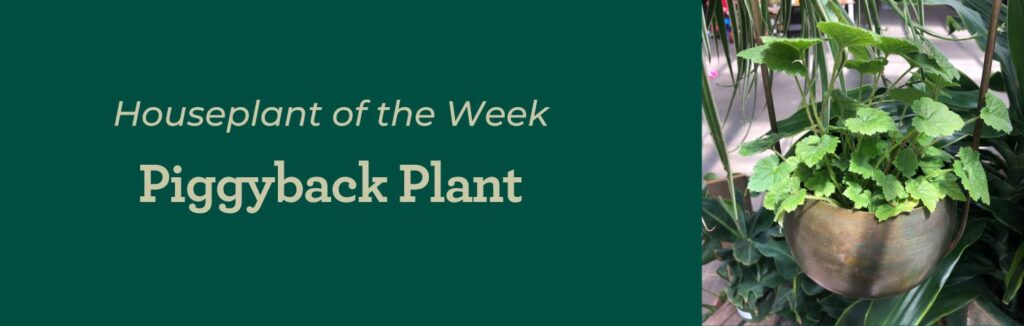
Houseplant of the Week: Piggyback Plant

Posted on by

Tolmiea menziesii is an unusual houseplant for a lot of reasons. First of all, unlike most houseplants, which tend to originate from tropical areas, this plant is a native of the Pacific Northwest. In its native environment, it’s a groundcover in forests along the coastline.

It also has an unusual way of growing leaves, with new leaves sprouting directly from the center of large, mature leaves at the point where the stem attaches to the leaf. That’s where the plant gets its more common nickname, the piggyback plant.

Caring for Your Piggyback Plant

  • Humidity & Temperature: This is a plant that likes conditions that mimic its Pacific Northwest roots. It thrives with high humidity, so a pebble tray should be used to make it happy. It also likes cooler temps, ranging from 50 to 75 degrees Fahrenheit.
  • Light: Piggybacks prefer indirect light.
  • Water: Keep your plant consistently moist all year long and mist if your home gets dry.
  • Fertilizer: Feed once a month during the plants growing season in the spring and summer.

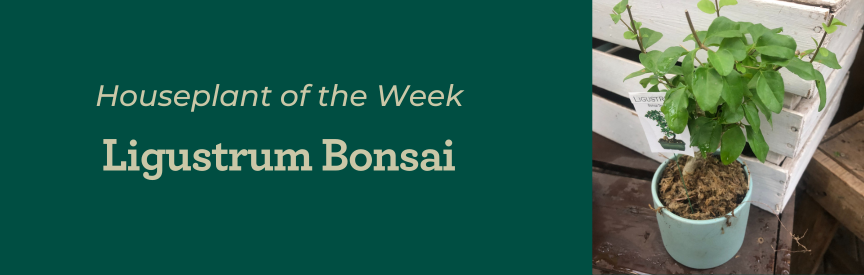
Houseplant of the Week: Ligustrum Bonsai

Posted on by

The Ligustrum genus is part of the olive family of plants and has more than 50 evergreen and deciduous subspecies and cultivars with a diversity of leaf colors and forms. It’s an excellent choice for gardeners who are new to cultivating bonsai plants.

Caring for Your Ligustrum Bonsai

  • Light: This is a plant that loves its sun, so make sure that you position your plant where it will receive full sun for at least part of the day.
  • Water: Getting the balance right for your bonsai involves making sure they get enough water without overwatering. Make sure they are in well-draining soil to avoid root rot. Saturate thoroughly and then allow the soil to dry out slightly between waterings.
  • Humidity: Bonsai like higher levels of humidity, so you can supplement your watering scheduled by misting the leaves every few days.
  • Temperature: This plant needs warmth as well as sunlight. Typically room temperature is ideal, but avoid placing your plant near a window or door when the temperatures drop.

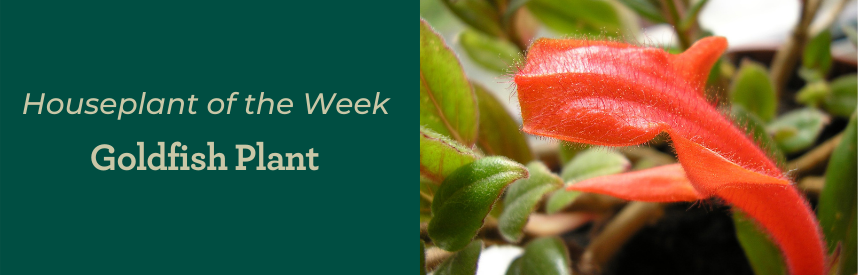
Houseplant of the Week: Goldfish Plant

Posted on by

It’s interesting how many plants have common names that remind you of creatures that live in the water. Heliconias are known as “lobster claws” because their flowers have that shape. Then there’s the String of Dolphins. Today’s fish-as-a-plant is the Goldfish Plant.

Columnea gloriosa features dark green leaves and flowers of red, orange and gold that do look a lot like goldfish.

They are an easy plant to grow and care for and are also great for propagating. Plus, they make quite a splash (sorry, we couldn’t help ourselves) with their colorful flowers.

Caring for Your Goldfish Plant

Goldfish plants want a lot of light, but direct sun will burn them so make sure it’s indirect. They also grow well under artificial light in the winter.

These plants love humidity, so make sure that their soil never fully dries out and if you have them in a hanger, mist them on a pretty regular basis. (And mist them with room temperature water, not cold, which can damage the leaves). If you want a really happy Goldfish plant, you might want to consider the bathroom, where they’ll thrive on the steam from the shower!

You’ll want to fertilize on a regular basis during the growing season (spring and summer). Controlled release pellets are a good choice.

Other tips

  • This is a long-living plant, and will thrive if you repot it every couple of years.
  • You can easily propagate this plant. Pick a stem a few inches long without a flower bud and they will take root very easily.
  • Also look out for aphids, spider mites, and mealybugs as these are common pests on this tropical plant.

Perfect Perennials

Posted on by

Perennials are the backbone of any garden.

They offer almost endless diversity in color and shape. You can plant them almost anywhere in your garden because there are perennials that love full sun and ones that are happier with shade. Perennials also range in when they bloom, so with some strategic planting, you can have color and beauty all season long. Their root systems are also smaller than roots and shrubs, so there’s less root mass to keep watered.

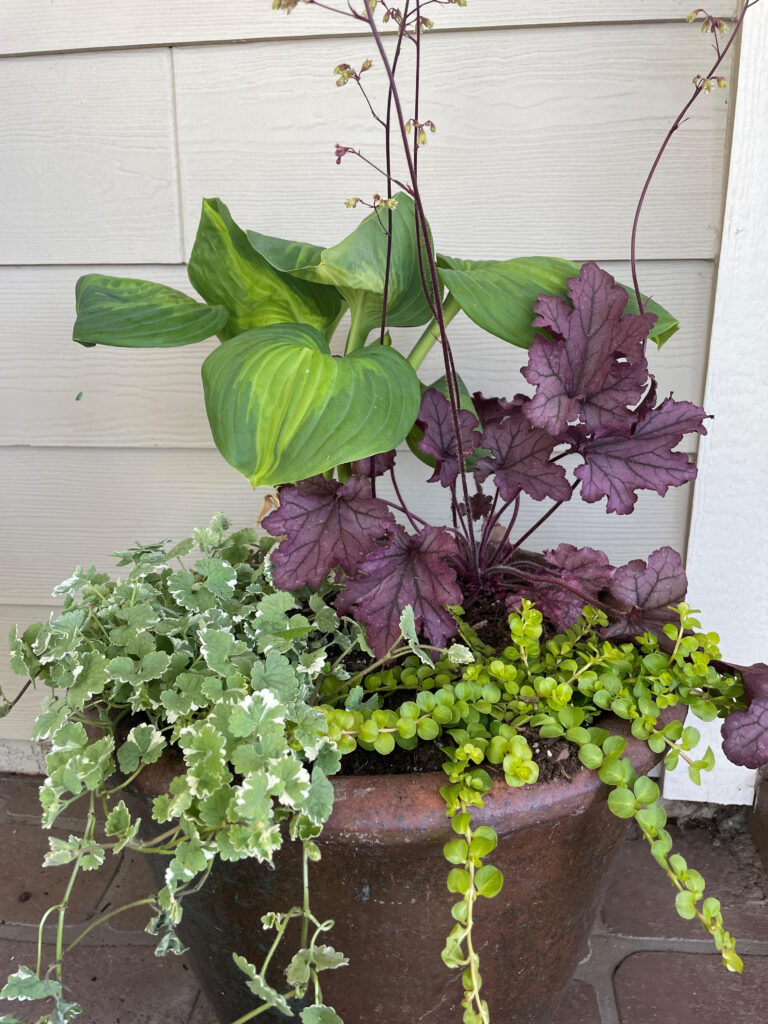
In addition, perennials are also quite versatile. They are equally suited to garden beds or containers. In fact, here’s a cute little planter I did, all with shade-loving perennials:

Here are some of the many perennials we have in stock right now at Warner’s Nursery:

In the sun-loving category, we have yarrow, hollyhock, dianthus, daylilly, guara, shasta daisy, rudbeckia, gaillardia, echinacea, catmint, anise hysop, penstemon, winecups, coreopsis, lupine, scabiosa, sedum, creeping thyme, veronica, gallium, delphinium.

For the shady parts of your garden, try hosta, heuchera, lamium, foxglove, columbine, vinca, campanula, myosotis, astilbe, dicentra (also known as fern-leaf bleeding heart) and brunnera.

The one thing all perennials share – in addition to coming back year after year – is that they need to be planted right to thrive. Here’s how: 

  • Dig a saucer-shaped hole that is twice the width of the root ball of your plant and equally as deep. (It is better to plant a little above ground level than too deep.)
  • Amend your soil by mixing parts of the soil from the hole and a good planting mix (we recommend our own Supreme Planting Mix) and place some of this in the bottom of the hole.
  • Water your plant thoroughly before gently removing it from its container. (Support the stem of the plant with one hand as you turn the pot upside down and tap the bottom of it, sliding the pot away from the plant. Don’t yank!)
  • Tease out the roots of the plant gently.
  • Place the plant into its hole and backfill with your pre-mixed soil.
  • Water thoroughly with some Fertilome Root Stimulator to prevent transplant shock and promote vigorous root growth.

Once your perennial is planted, watering is vital. During that first week, water twice a day, then for the next two weeks, water once a day. After the first month, you should be fine watering every other day until winter, when you can water every three or so weeks during dormancy. 

After the first year, your perennial will be fine with watering twice a week from spring through fall and once per month during winter.

If you have any questions about perennials – or just want to see our awesome collection of these amazing plants – please stop by the nursery. 

Happy Gardening!
Misti

Spring Prep After a Long Winter

Posted on by

When our record snowfall melted away recently, I was finally able to see the ground and plants in my yard and realized that after this really long winter, spring prep looks different this year.

For example, the amount of snow we saw in the past few months – and the sheer heaviness of it – have caused some issues that you’ll probably have to deal with before you can really get your garden ready for spring planting.

Trees and shrubs probably saw more damage than in past winters, which means that proper pruning is going to be essential this year. Here are a few reminders as you pull out your loppers and shears:

  • Early spring is the perfect time for pruning because most plants are breaking dormancy, meaning that wounds will heal faster. However, if you have a spring blooming tree or shrub, you should ideally prune them before they bud. Otherwise, wait until after blooming has finished.
  • Never prune more than one third of the plant. Prune more than that and you run the risk of damaging the plant or at least stunting its growth.
  • Remember that there’s no such thing as “recreational pruning” with conifers, because they don’t replace growth like other trees and shrubs. Evergreen pruning should always be done for a particular reason, such as removing dead or diseased branches or controlling the size of a tree threatening to grow into other plants, buildings, or utility wires.

Other things to look out for due to the excess snow are fungal issues such as “snow mold” on lawns and garden areas. The best way to deal with this is to rake up old matted down leaves and pine needles and treat for fungus if necessary.

And if you didn’t trim back your perennials last fall, you’ll definitely want to do it now. Shoulder surgery last year meant I couldn’t winterize my garden as much as I wanted to. Normally, if I don’t cut back my perennials, the dead foliage just breaks off. But with the extra moisture this year, much of it is still attached to the plants and is just limp and soggy. This foliage needs to be removed and it will expose new growth ready to emerge.

Once you clean up your yard, remove broken branches, trim your perennials, and bag up old leaves and pine needles, your garden will be ready for you to amend the soil with mulch and compost and then add new plants for the new season. 

If you have any questions about spring clean up – and particularly if you are unsure about the best way to prune a tree or shrub with broken branches – please stop by the nursery. Bring a picture if you can, and we’ll give you some expert advise and direction. 

Happy Gardening!
Misti

Houseplant of the Week: Ficus Trangularis

Posted on by

Probably the easiest of the ficus plant species to grow, ficus triangularis (or triangle fig) offers all the beauty of most ficus plants, but it’s the least fussy. This makes it a perfect plant for beginners.

The name comes from the plant’s triangle-shaped leaves that are typically variegated with dark, waxy green centers morphing into cream-colored soft edges. This striking combination makes this plant a highly decorative addition to your indoor decor.

The plant grows slowly, but can reach heights of four to eight feet, so the cute centerpiece on your table today could eventually grow into a nice floor plant with time.

Caring for Your Triangle Fig

Soil: Ficus triangularis requires a rich, well-draining potting mix.

Water: The triangle fig likes deep watering and then being able to dry out before being watered again. Wait until the top third of the plant’s soil is dry before watering. Do not allow your ficus to sit in standing water.

Light: Bright, indirect light year-round is perfect for this plant. If you find that your plant is dropping leaves or losing its variegation, it’s likely it’s not getting enough light.

Fertilizer: Feed once a month from spring through fall and refrain from feeding during the winter.

Houseplant of the Week: Geogenanthus ciliatrius

Posted on by

A relative newcomer to the houseplant scene, Geogenanthus ciliatrius (or “Geo” for short), is a stunner originally from the rainforests of Ecuador and Peru. Until recently, it was relatively hard to come by, but last year Geo became the “it” plant, getting a lot of press in articles with headlines like “The 12 Coolest New Houseplants of 2022.”

It’s easy to see what the buzz is about.

The plant has large, shiny oval-shaped leaves that are so dark they almost appear black (typically, they start out green with a purple stripe and as they age the purple takes over and grows deeper and deeper in color).

But they are a bit tricky to cultivate. They prefer low-light areas, so don’t stick them on a windowsill or in a bright room. As befits their rainforest beginnings, they like their soil moist and their air humid. Let the top inch of soil dry out and then completely drench the plant when you water. Geo will quickly decline if its soil gets too dry. Use an evaporation tray to provide the humid air it craves.

You can feed your plant during the spring and summer, but not when it isn’t actively growing. In fact, over-fertilizing can do more harm than good.

Finally, “listen” to your Geo, because it will let you know when it needs some tender care. Curling or limp leaves? Probably your plant’s soil is too dry. Brown leaf edges? Geo is telling you it needs more humidity. Brown spots are usually caused by your plant being hit with direct sunlight.

Lastly, those large lovely leaves can get dusty, and this not only diminishes the look of the plant, it can also interfere with its biological functions. Rinse the plant off or wipe the leaves with a clean cloth periodically to keep your Geo healthy and looking beautiful.

Houseplant of the Week: European Cypress

Posted on by

Although you typically see European Cypress outside, with their tall columns of dense blue green conifer leaves, it is possible to grow this plant as a houseplant.

Despite names that link it with the European continent (it’s also commonly known as an Italian or Mediterranean Cypress), the tree’s roots are firmly in Persia – modern day Iran. You can, however, find this cypress growing wild in places like Greece, Turkey and Israel.

The dwarf version of the European Cypress does very well as a container plant, but you’ll need to replicate some of the conditions it would get if it was planted outside in your garden.

That means a picking a sunny location in your home with at least six hours of brightness and good air circulation.

European Cypress will tolerate almost any type of soil, but your pot should have good drainage to prevent root rot. You want to keep the soil moist, but not heavily saturated. Don’t let the soil dry out completely.

Your plant would also appreciate a misting about once a month.

Keep your European Cypress happy and you can have the joy of bringing the beauty of the outdoors right into your home.

Houseplant of the Week: Aglaonema (Chinese Evergreen)

Posted on by

Not only are aglaonema plants beautiful, there are also very easy to grow, even if you are a novice gardener.

This tropical foliage plant, also known as the Chinese evergreen,  is one of the most durable houseplants you can have. As long as they are warm enough, they will tolerate poor light, dry air and drought.

That doesn’t mean you shouldn’t try to make your home hospitable to this lovely plant. If those leaves could talk, they’d tell you that they prefer bright, indirect light, some nice cozy temperatures and a bit of humidity (they are originally from the tropics of Asia, after all).

Caring for Your Aglaonema

  • Light: Your Chinese evergreen does well in anything from low to bright, indirect light. The pink-veined variety is one of the few pink plants that can tolerate low light.
  • Water: Let your plant dry out about 50% before watering again as too much liquid can lead to root rot. And keep this rule of thumb in mind: the less light your plant has, the less water it will need.
  • Temperature: They do not like the cold. Keep temperatures in the 70- to 85-degree level, and make sure wherever they are the temperatures don’t drop by more than 10 degrees at night.
  • Fertilizer: Feed older Chinese evergreens a couple of times a year with water-soluble houseplant fertilizer.
  • Pests: Chinese evergreens are susceptible to spider mites, scale, mealybugs and aphids. Check the leaves routinely for signs of pests.

Looking for a Happier, Healthier 2023? Try Houseplants.

Posted on by

It’s almost the end of 2022 and time to make those New Year’s resolutions, and if you are like me, making sure I’m healthier in the coming year is at the top of that annual list.

One way to accomplish that? More houseplants!

Plants in your home or office have lots of terrific benefits for your physical and emotional health. Because houseplants breathe in the carbon dioxide we give off, it’s pretty obvious that we need them around. But houseplants also work to remove many airborne toxins, and there are studies that indicate that they help reduce dust in the air of your indoor spaces.

(If you are wondering how plants can remove dust, here’s two simple scientific explanations. First, plants raise the humidity level in your home through a process called evapotranspiration. When you water your plant, the water goes from the soil up through the roots, and then into the stems and leaves, where it’s evaporated into the air through pores on the leaves. This humidity mixes with dust particles and the weight of it drags the dust from the air to the floor. Plus plants produce negative ions which attract dust particles, pulling them out of the air and onto their leaves.)

Then there are the psychological benefits of plant ownership. According to an article published in Psychology Today, studies show that having potted plants around – particularly green, leafy ones – have a calming effect that can boost our mood, our creativity and even how well we interact with others.

There are a few reasons for this. As anyone who has spent a day gardening knows, tending plants is a sure way to help ease signs of stress. That’s why doctors often suggest horticulture as a tool in coping with depression or anxiety. You can get that same good feeling tending plants indoors as well, enjoying the sense of purpose and the fun of “playing in the dirt.”

And don’t underestimate how working with soil can benefit you. A 2007 study found that Mycobacterium vaccae, a bacteria found in both indoor and outdoor soil, triggers the release of serotonin, which improves both emotional and mental health.

Finally, there’s just the beauty of plants, which can be displayed in so many different ways in your home. Besides the almost endless variety of traditional plant containers, there are terrariums, hanging kokedama (Japanese-style plants in circular moss balls), even glass beakers, like the one I have on my desk with succulents in it.

If you are new to houseplants, there are some that are pretty fool-proof like succulents, pothos, or spider plants. Spiders and golden pothos are also among the plants recommended for their air-cleaning benefits. Others are:

  • Philodendron (many varieties)
  • Dracaena (many varieties)
  • English Ivy
  • Mother in law’s tongue
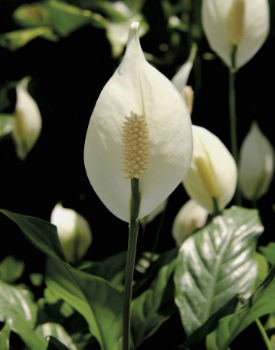
  • Peace Lily
  • Chinese Evergreen

To get the full benefits of houseplants you want to have enough around that you can see one or two from pretty much anywhere in your house, but not so many that it feels cramped.

If you’d like to learn more about houseplants and how they can make your 2023 healthier and happier, please give us a visit. We’ll be open until Christmas Eve and then taking a holiday break between Christmas and New Years. We’ll be back in the nursery bright and early on Monday, January 2.

Happy Holidays!
Misti