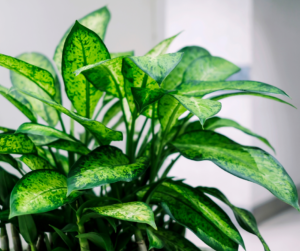
Houseplant of the Week: Dieffenbachia

Posted on by

Showy, beautiful and easy to care for, Dieffenbachia can make a super indoor plant.

Its tolerance for low light and numerous varieties make it a favorite houseplant for homes and offices. 

One word of caution, however. If you have small kids or pets, you’ll probably want to make sure you place this plant out of reach. Diffenbachia’s milky sap is a mild irritant and should be kept from bare skin. The sap can even result in temporary loss of speech if ingested by causing swelling of the tongue and throat! That’s how Dieffenbachia came by it’s other name, “dumb cane.”

Caring for Your Dieffenbachia

  • Light: It likes bright but filtered light, particularly in the spring, when it’s tender new leaves can get easily burned. Make sure to rotate your dieffenbachia so they don’t pull to one side of the planter.
  • Water: Keep your Dieffenbachia moist, but be careful not to overwater.
  • Fertilizer: Feed every couple of weeks with a nitrogen-rich fertilizer to encourage growth

5 Easy Peasy Houseplants

Posted on by

There are so many great reasons to add houseplants to your home, office, or dorm room. They add color and life to any space, help improve air quality, and reduce stress. Plants can even make you more productive!

The great news is that you don’t need to be a certified horticulturist in order to enjoy the benefits of having houseplants. There are several houseplants that don’t require a “green thumb” in order for them to flourish.

Here’s some of the easiest, most forgiving plants to cultivate:

Sansevieria

You might know this plant as the Snake Plant or Mother-in-Law’s Tongue. Some call it Viper’s Bowstring Hemp because the strong fibers were once used for bowstrings. The plant’s bold and slender upright leaves, typically edged in a green-gray color, make it quite a stunner. It’s also quite forgiving; the only thing you need to worry about is overwatering it. 

Among this plant’s variations is the “whale fin” sansevieria (Sansevieria Masoniana) which takes its name from its wide, paddle-like leaves. Typically dark green with lighter mottling, these leaves can grow to a whopping four feet long by 10 inches wide. Learn more about Sanseviera here

Peace Lily

Spathiphyllum, better known as the “Peace Lily,” is a great example of a spadix type of plant, where a spike of tiny little flowers is encased in a curved leaf-like structure known as a spathe. (Peace Lilies are sometimes called Spathe flowers.) Besides being beautiful, Peace Lilies are easy to take care of and can acclimate to lower levels of light. Peace Lilies symbolize purity and innocence. They are often given as a gift to those who have suffered a loss, as the white lily represents the rebirth of the soul. Find out how easy it is to cultivate this plant here.

Pothos

The easy-going nature of Potho makes them a very popular first plant for houseplant newbies. They have thick, waxy, heart-shaped leaves that are typically green with yellow or white sections (known as variegation). These versatile houseplants look great in a pot or hanging in a container, with their vine-like stems cascading down. They grow well in bright light or low light, meaning they will flourish anywhere in your home. Find out why this is one of the most popular species for first-time plant owners here and check out the “neon” version too.  

Succulents

Because they are able to store water in their leaves, stems, or roots, succulents have adapted to survive in dry conditions, such as deserts. The come in a wide variety of shapes and sizes, and there are many different species to choose from. Among the most popular are aloe vera, echeveria, kalanchoe and the jade plant. 

Philodendrons

In addition to being easy to care for, philodendrons are very diverse; there are more than 400 subspecies of this plant! This includes the ever-popular Monstera deliciosa, more commonly known as the split-leaf or swiss cheese philodendron for the holes that develop in its large heart-shaped leaves. Then there’s the Philodendron Birkin, a man-made plant created from two cultivars, which has pinstripe vegetation on lush dark green leaves. Rumor is that the name ‘Birkin’ came from the expensive Hermes handbag. One of the newest plants in this family is the Philodendron ‘Atom’ which is a dwarf cultivar. This compact plant will only grow about 12 inches high and has a very bushy appearance with deep-green leaves that are ruffled, which is why it’s also known as the “lacy” philodendron.

These are just a few of the plants that are relatively easy to care for and will bring beauty to your home without requiring you to be a plant expert. To learn about these and other houseplants, visit our houseplant experts at Warner’s Nursery.

A Perfect Plant Partnership

Posted on by

One of the great things about being in a gardening business in Northern Arizona is the talented horticulture experts you get to work with. We truly value our relationships with other gardening organizations, and one of our most special partnerships is with the Coconino Master Gardeners Association.

The association is part of the University of Arizona Cooperative Extension, a statewide network of knowledgeable faculty and staff that provides lifelong educational programs for all Arizonans.

The Master Gardener program’s volunteers provide free science-based horticulture information for our region, including data and guides on plant selection, insects, plant diseases, planting, pruning, irrigating, fertilizing, and more. They are probably best know for their program to train new Master Gardeners, a 15-week course, followed by 50 hours of volunteer gardening work to become certified.

But you don’t need to to become a Master Gardener yourself in order to benefit from the extension program’s expertise. Coconino Master Gardeners are our partners in Root Camp, Gardening 101 series, providing more than a dozen excellent one-hour seminars throughout the spring and summer for our customers.

Later this month, Coconino Master Gardeners will be hosting its annual Garden Tour, a chance to view and learn from the creators of seven beautiful vegetable, flower and native plant gardens around Flagstaff. The self-guided tour will be from 10 am to 4 pm on Saturday, August 12.

Tickets for the tour will be sold from 9 am to Noon at Warner’s Nursery the day of event. Tickets are $15 and all proceeds will benefit the Coconino Master Gardener Association community grants. (You can also buy tickets on EventBrite, but the ticket cost is $17.85 to cover processing fees).

We hope you will take advantage of this unique event, and avail yourself of the terrific programs that the Coconino Master Gardener Association provides, including their classes here at Warner’s Nursery.

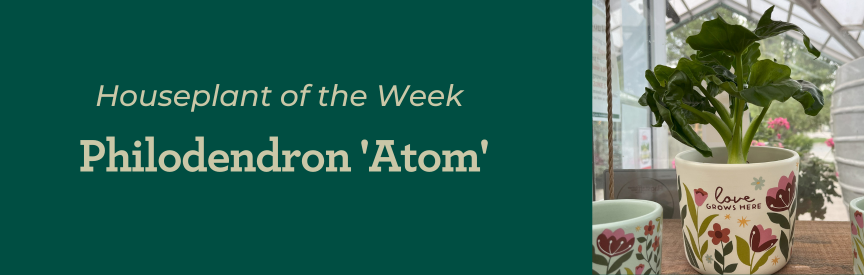
Houseplant of the Week: Philodendron ‘Atom’

Posted on by

It feels like every few months we get a new cultivar from the philodendron family that is more beautiful than the last. You can certainly say that of the newest arrival in our nursery, the ‘Atom.’

As a dwarf cultivar, it is compact and will only grow about 12 inches high. It also has a bushy appearance with gorgeous, deep-green leaves that are ruffled, which is why it’s also known as the “lacy” philodendron.

Here are some pointers for taking care of Philodendron Atom:

Light: This plant is native to the rainforests of Brazil and Paraguay, where it grew under tree canopies in relatively high humidity. You can replicate this by placing your plant in a warm, bright area away from direct sunlight, air conditioners, and heaters.

Water: Let the top inch of the soil dry off in between waterings. Your Atom would love frequent misting to remind it of its rainforest homeland. (In fact, it would be thrilled if you put it in a steamy bathroom!)

Fertilizing: Feed Atom with an all-purpose fertilizer about once a month during warmer months.

Soil: A good, fast-draining soil is best. You don’t want your plant sitting in water.

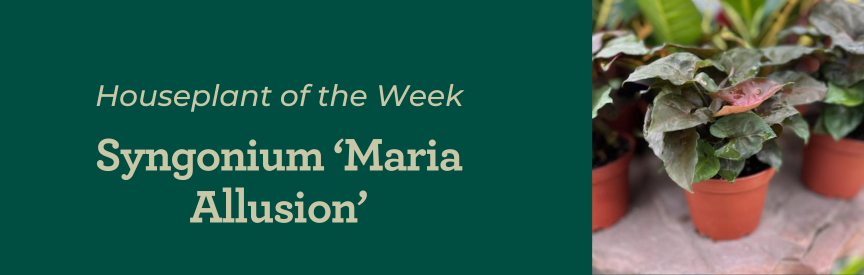
Houseplant of the Week: Syngonium ‘Maria Allusion’

Posted on by

Syngonium ‘Maria Allusion’ plant in a 4-inch pot in the nursery

The unique Syngonium ‘Maria Allusion’ is a beautiful and easy to care for houseplant native to Central and South America. What make’s this plant striking is it’s new leaves, which will come in pink and red before fading into green.

This plant tends to be compact with lovely arrowhead-shaped leaves.

Maria Allusion is tolerant of a wide range of conditions, making it perfect for new houseplant owners.

Caring for your Maria Allusion Syngonium:

Although relatively easy to grow – and resistant to most pests and diseases – it does have some specific requirements. It prefers bright, indirect light and should be watered when the top inch of soil is dry. Maria Allusion doesn’t require frequent feeding, but you should fertilize every 6-8 weeks.

Creating A Special Space in Your Garden

Posted on by

Part of the true joy of gardening is watching individual plants grow, flourish and provide beauty (and sometimes really great eats!)

But the other thing you cultivate when you create a garden is a special space – a green, leafy outdoor oasis. It makes your garden and yard another “room” where you can unwind and enjoy life with your family.

Here’s what that room looks like at my house.

My yard has a bit of everything, and we’ve set it up so there are little surprises tucked into every corner. There’s a greenhouse for me to putter in and an outdoor chess set to play with. We make sure there are different seating areas where you will have a different view of the pretty flowers, so anyone can find a spot to just hang out and enjoy.

Water features are a big part of our backyard. There’s a waterfall and stream for the kids and dogs to get in when it’s hot.  I like to have running water for the birds, so we made a boulder with a hole on top that bubbles water. They love it! They also play in the stream, bathing and drinking out of it.

Speaking of water, one big change we did make is trading our lawn for artificial turf in order to be more water wise.

There are endless choices for what you can include in your backyard oasis. It can be rustic or elegant, modern or traditional. Just make sure the elements make you and your family happy and make it easy for you to enjoy the outdoors.

Flagstaff is beautiful in the summer and it seems silly to travel somewhere else when you can, with just a little effort, create your own paradise to enjoy all summer long, literally in your backyard.

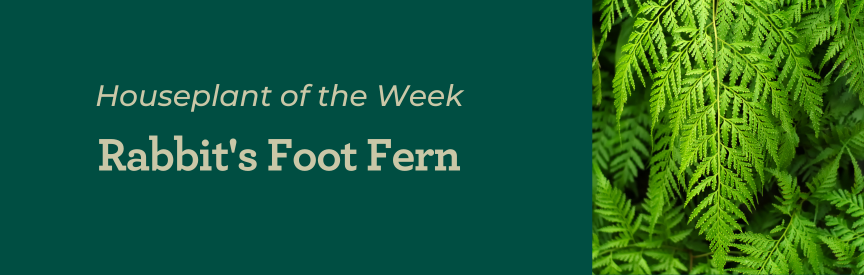
Houseplant of the Week: Rabbit’s Foot Fern

Posted on by

Fronds of rabbit's foot fern plant

The rabbit’s foot fern (Davallia fejeensis) is a beautiful and easy-to-grow tropical fern that was originally found in Fiji, but is cultivated all over the world. Like many ferns, it has lacy, graceful fronds, but what makes this fern unique is its rhizomes, which are covered with a fine, fur-like mat of hairs.

Rabbit’s foot ferns are epiphytic, which means they grow on other plants and absorb nutrients and moisture from the air in the wild. They are adaptable enough, however, that they can be grown in containers or hanging baskets, and they make a great addition to any indoor plant collection.

Growing Rabbit’s Foot Ferns

Although rabbit’s foot ferns are relatively easy to grow, they do have some specific requirements.

Light: Your fern will need bright, indirect light.

Soil: Rabbit’s foot ferns like a loamy, rich soil with plenty of peat. Look for a peat-based potting mix, which will also have a slightly acidic pH that these plants like.

Watering: Rabbit’s foot ferns need to be watered regularly, but the soil should not be soggy.

Fertilize: Feed with liquid fertilizer every two to three weeks throughout the growing season (April through September). In the fall and winter, feeding can be reduced.

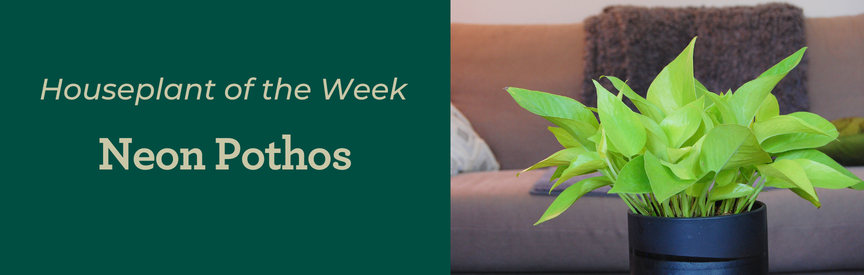
Neon Pothos

Posted on by

Pothos is that plant that you usually give to your friends when you aren’t sure if they have green thumbs or not. Almost anyone can cultivate this not-too-fussy plant.

While most pothos fall into the “golden pothos” family, there is one that’s particularly eye-catching because of its extremely bright, heart-shaped leaves: the appropriately named “neon” pothos.

Like the more common golden pothos, these plants look great in a pot or hanging in a container. We suggest that you give your plant bright indirect light, not only so it can thrive, but also so it can maintain that striking neon color. (Neon pothos in low-light conditions will survive, but their leaves will start to get darker).

One of the very few demands of all pothos is to not be overwatered, so keep the top few inches of soil dry and test the soil prior to watering. While pothos don’t necessarily require fertilization, particularly if they have good nutritious soil, you can feed them on a regular schedule from April or May through August. Just follow the instructions on the label of your favorite plant food.

Pothos love a good misting and it’s also important to dust them when needed so they photosynthesize efficiently. This also gives you a chance to inspect your plant for any pesky pests or bugs.

‘Bee’ Kind to Our Pollinators

Posted on by

Several years ago, I started blogging about our concerns for pollinators – the bird, bees, and butterflies – that are key to our gardens and essential to much of our food supply.

At that time, the headlines talked about things like bee colony collapse disorder, butterflies that were disappearing at an alarming rate, and how these declines could impact crops that depend on pollinators. Up to 75% of the food we eat relies in part on pollinators, from almonds to watermelons. 

The news is somewhat better today. Honey bees have made a remarkable comeback and while some species of butterflies (specifically the iconic monarchs that migrate between Mexico and Canada) were formally put on the endangered species list last year, other butterflies are stable and even thriving.

Yet, the danger isn’t over. One of the biggest concerns is climate change, which is impacting pollinators’ food sources. Flowering plants are blooming earlier or later than they used to, putting them out of sync with when pollinators are active. Extreme weather events like droughts, heat waves, and flooding are also endangering pollinators.

Together, we can help alleviate the challenges faced by pollinators, either by creating more gardens or making some changes in existing gardens so they are more friendly to birds, bees and butterflies.

You can expand pollinators’ garden habitats by planting at least three different pollinator-friendly plants that bloom in three different seasons (spring, summer and fall) to help ensure a consistent food supply. 

Towards the end of summer and beginning of fall, your best pollinator attractors include: Rudbeckia, Gaillardia, Catmint, Coreopsis, Agastache, Monarda, Lavender, Penstemon, Yarrow, Echinacea, Summer Phlox, Trumpet Vine, Russian Sage and, of course, Butterfly bushes.

Adopting some other strategic choices in your garden will help pollinators thrive as well. You can:

  • Create habitats for pollinators by supplying necessary water, food, shelter and places to raise their young. A great example is a “bee condo,” which you can make or purchase. 
  • Plant in clumps as clustering plants makes them easier to find and shortens the need for travel, reserving the energy of backyard pollinators.
  • Choose a variety of colors and shapes, as different pollinators are attracted to different types of flowers. (For example, flat petal flowers for butterflies, who “taste” with their feet; funnel-like flowers for hummingbirds; yellow and blue flowers for bees, who have difficulty seeing red.)
  • Use pollinator-safe pesticides and follow the directions for use carefully.

Warner’s locally grown native plant selection, as well as all the other quality plants from our nursery, provide multiple food sources for pollinators. Not only will they keep your local pollinators well fed, they’ll also keep your garden and yard looking lovely too.

Stop by and let us know if we can help.

Happy Gardening,
Misti

Houseplant of the Week: Kalanchoe

Posted on by

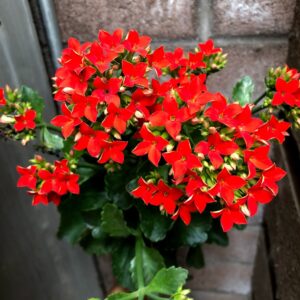
Kalanchoe, which also goes by the lively names “Flaming Katy” and “Madagascar Widow’s-thrill,” is a popular succulent that comes in a wide variety of vibrant colors, including yellow, pink, magenta, orange and red. These blooms are set off by gorgeous, large, deep-green leaves.
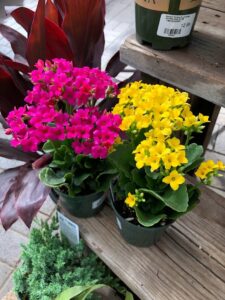
They like bright, natural light as long as they don’t get too much direct sun, which can cause burning. The more light they get, the better; the flowers often won’t bloom if the plant doesn’t get enough.

As succulents, Kalanchoe don’t want to be sopping wet. They need good drainage. Water well and then water again when dry (which could mean up to two weeks depending on your house temperature, lighting and the size of the pot).

When you repot, use a mix of regular potting soil and one designed for succulents. And while Kalanchoe aren’t particularly vulnerable to pests, keep an eye out for aphids and mealybugs.