Houseplant of the Week: Prayer Plant

Posted on by

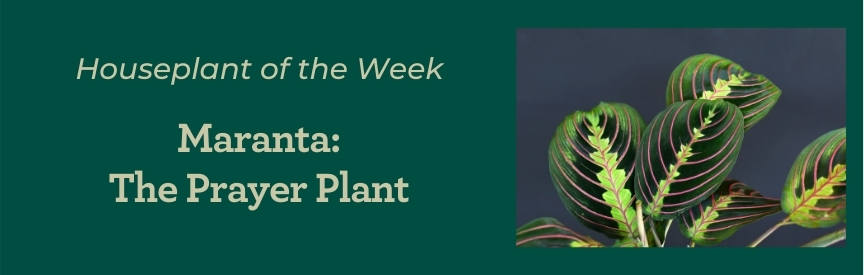
In the evening, if you look at the beautiful Prayer Plant, you’ll get a clue as to how this hardy native of Central and South America came by its name. Each night the plant’s leaves close together, resembling hands folded in prayer.

Prayer plants are relatively easy to grow, but have a few specific items you want to look out for – including susceptibility to some common houseplant pests.

Caring for Your Prayer Plant

  • Prayer Plants will tolerate low light conditions, but if you really want to see it thrive, give it bright, indirect light.
  • This is a plant of the Central and South American tropics, which means it likes its humidity. Keep its soil moist but not soggy and give it a spritz with a mister a couple of times a week.
  • It’s also a bit of a foodie, so satisfy its hunger with an all-purpose fertilizer every couple of weeks during its main growing time from spring through fall.
  • In winter, you can stop fertilizing and let the soil dry out a bit as it will be dormant, but it still needs some misting to keep it happy. In fact, you might want to do it every day given how dry our heated homes can get.
  • Prayer plants are easy to propagate through division or stem clippings during the spring. If part of your plant breaks off, dip it in some rooting hormone and place in distilled water. Change the water daily and when the roots are about an inch long, you can replant it.
  • Unfortunately, Prayer Plants are prone to things like spider mites, mealybugs and aphids, so it’s a good idea to check on your houseplant for pests during watering and feeding intervals.

Houseplant of the Week: ‘Whale Fin’ Sansevieria

Posted on by
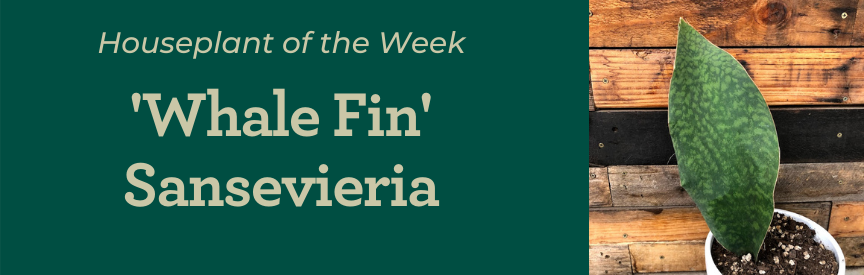
Whale Fin Sansevieria houseplant in pot against wood background

When we think of Sansevieria, we typically envision the plant popularly known as the “snake plant” with long slender leaves that are typically edged in green-gray or yellow.

But there is a rarer version of the species that is arguably even more striking. The “whale fin” or Sansevieria Masoniana takes its name from the wide, paddle-like leaves. Typically dark green with lighter mottling, these leaves can grow to a whopping four feet long by 10 inches wide. 

If grown in bright conditions, this plant will form a stalk of white flower clusters as well.

We say “if” because, like its snake plant cousin, the whale fin will tolerate a wide range of lighting conditions. Also like the snake plant, this is another easy to care for plant that is great for beginners.

CARING FOR YOUR SANSEVIERIA

  • Allow soil to dry between watering and be careful to not overwater. The foliage will “pucker” when the plant is thirsty.
  • Try to avoid getting leaves wet when you water.
  • While they prefer bright indirect light, these plants are tolerant of a variety of light conditions – including florescent-only lighting!

Rainwater Harvesting

Posted on by

After two years of minimal summer rain, the monsoon season has returned – with a vengeance, judging by the flooding some areas have experienced in the last 10 days.

We often talk in this space about being “water-wise” in our dry climate – things like using drip irrigation systems and selecting drought-resistant plants for your garden. Now, with the monsoons returning, we can take advantage of the weather by practicing rainwater harvesting.

There are lots of great reasons to harvest rainwater: lower water bills and general water conservation immediately spring to mind. But it’s also better for your plants since it’s not treated with any chemicals and it reduces soil erosion.

Rain barrels, which can be any container you use to catch water from a downspout, typically have a screen mesh to prevent debris from getting into the container and a spigot allowing you to attach your hose to the barrel and water your plants or grass.

You want to make sure your barrel is on a sturdy platform. Remember, unless you plan to install a pump, your rain barrel will be using gravity to move the water from the barrel through the hose and into your garden or yard, so the additional height will help increase the rate of flow.

Here are a few tips to make using a rain barrel safe and easy:

  • You can use emitters and timers with your rain barrel system for distribution, but make sure they are for low-pressure systems. If you get parts that require 10 or 15 pounds of pressure per square inch (PSI), they will not work with your rain barrel.
  • Make sure to keep your rain barrel clean; remove any debris that might block the screen mesh and clean the inside regularly to reduce algae growth.
  • Keep your rain container out of direct sunlight. That will slow down evaporation of the rainwater you collect and also discourage mosquito breeding.
  • Make sure no one drinks from this water. This water is great for your plants, but it’s not potable, so you might want to mark it so and take extra care that your kids and pets don’t try to drink from it.

Properly thought out and installed, rainwater harvesting can be great for you, your wallet and your garden.

Happy Gardening,
Misti Warner-Andersen

Houseplant of the Week: Xanadu Philodendron

Posted on by

We know what you are thinking – how could nature make a philodendron even better? It’s already an amazingly easy plant to grow, with lots of variations like split leaf, Swiss Cheese and Brasil.

But the Xanadu, also known as the “Winterbourn” philodendron might just exceed your expectations. It’s doesn’t require support as it isn’t a vining philodendron. It’s compact while visually striking. And, like most of us, it gets better as it gets older.

Originally, the leaves of a Xanadu start out like most philodendron (see picture above). As you plant gets older, however, these leaves start to create separate lobes, ultimately becoming more spikey and exotic in appearance, like this:

When mature, each shiny leaf will have about 15 or so lobes, and those leaves can grow to 16 inches long and 12 inches wide!

One note of caution, however: make sure these plants are someplace where your pets can get to them, as they can be toxic to dogs and cats.

Caring for your Xanadu Philodendron

Light: This plant prefers a little more light than most philodendrons in order to maintain its compact growth habit. Too little sun and the stems will elongate as it tries to reach more light. Too much direct sun will burn the leaves. Bright, indirect light is your best bet.

Water: Water thoroughly with good drainage and then allow about half of the soil to dry out before watering again. The leaves will yellow if it is too wet.

Humidity: A native of Brazil, this plant likes it’s humidity, but it’s tolerant of average indoor humidity.

Fertilizing: Use a well-balanced plant food (one that includes all the major macro- and micro-nutrients) monthly during the spring and fall and every other week in the summer. Do not feed in the winter.

Houseplant of the Week: Hoya

Posted on by
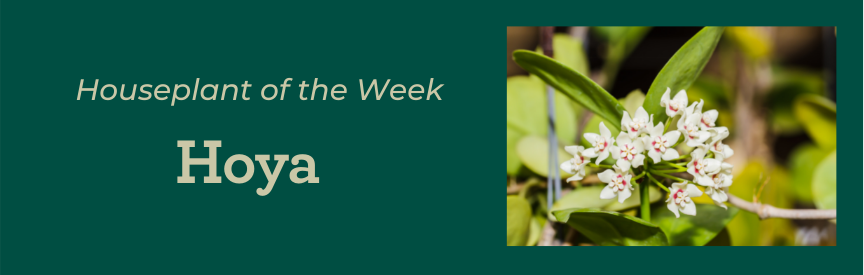
Banner with Hoya houseplant

Often called the “wax” plant because of its waxy leaves and star-shaped flowers, the Hoya is one of those plants that does better in bright, natural light. It will survive in medium and even low-light as well, but like most flowering houseplants, the more light it gets, the more blooms it will produce.

Caring for Your Hoya

This is a pretty easy going plant, but there are some basics.

  • Your hoya would prefer being too dry instead of too wet. Water it when the potting mix dries out and make sure not to overwater as that will cause root rot.
  • Although technically not a succulent, those thick leaves and stems do store water, so it will forgive you if you miss a watering.
  • The plant doesn’t require fertilizer, but you can use any general purpose houseplant fertilizer to get it to bloom better. (Warner’s has several good options.) Just follow the directions on the packaging. 

The Rewards of Growing Your Veggies

Posted on by

With the last of the late spring frost warnings behind us (finger’s crossed), now is a great time to talk about the rewards of growing your own tomatoes and veggies as a part of your garden.

The most obvious reason to grow your own food is taste. Yes, you can find lots of produce in your local grocery store, but nothing will thrill your taste buds quite like what you produce in your own garden. Remember, it takes a long time for tomatoes and veggies to be harvested, shipped and distributed – plus you don’t know how long they’ve been on the shelf by the time you buy them. The food you grow, however, has a very short journey to make from garden to kitchen and that freshness makes it more delicious and nutritious.

When you cultivate your own food, you also have more control of what goes in and on your food. Typically, you don’t know what commercial growers are using. You can go all-organic, but you’ll pay a premium for it. You, on the other hand, determine what goes into your garden soil to amend it and what types of treatments you use to deal with bugs or other plant issues.

You’ll also avoid other uncertainties about the food you eat. It’s not so long ago that we had romaine lettuce recalls because of e-coli outbreaks. That’s something you don’t have to worry about with your homegrown veggies.

Then there’s the benefits that extend to all sorts of gardening, whether it’s flowers or food. Time out in the sunshine gives you vitamin D. You increase your physical activity doing something you love. There’s also a lot of evidence that microorganisms in the soil (specifically Mycobacterium vaccae) triggers the release of serotonin in our brains, which is yet another reason why gardening can make you happy.

If you have small children, make sure they are a part of cultivating your tomato and veggie garden. First of all, it’s a great family activity, plus it will teach them loads about everything from biology to having a little patience. As a bonus, it’s more likely your kids will eat their vegetables if they help you grow them, according to a study by Ohio State and Cornell universities.

If you have any questions about growing tomatoes or vegetables (or anything else in your garden), please stop by the nursery and ask. We’d love to help you cultivate a terrific garden that’s full of good eats.

Happy gardening,
Misti

Warm Season Veggies

Posted on by

By definition, warm season vegetables are the ones that really can’t stand the cold – things like tomatoes and eggplants and melons. Because they are so susceptible to cool temperatures, they are typically planted outdoors only after the last frost of the spring.

Which is a problem here in northern Arizona. By the time we have the last frost of spring here, it’s practically summer. 

Don’t let the lovely temperatures of the last few days fool you. We can get a frosty night right up until June 15, and that’s way too late to get your plants in the ground and have them mature. We need to start them now!

Fortunately, there are ways to get your delicious warm season veggies planted and still protect them from late season frosts.

First off, let’s talk about where you are planting them. We like the idea of putting your veggie plants in raised garden beds or containers where you can ensure they are in nutrient-rich soil.

Once they are planted, it’s time to invest in some season extenders.

The most popular ones are tubes of water that go around the plant. They absorb heat during the day and keep you plant toasty at night. Additionally, they warm up the soil under your plant, which promotes good root growth and lessens the chance of shock, which will make your plant stronger.

You can also go the DIY route with PVC pipe and thick plastic. Just assemble the pipe into a frame that can cover your plants and attach the plastic to it. Pull it over your veggie beds at night and just make sure to take it off during the daytime.  

Growing warm weather vegetables in our region can be a bit of a challenge, but let’s face it – when you bite into that yummy pepper or cucumber or tomato, you’ll know that all your  hard work was worth it.

Happy Gardening!
Misti

Houseplant of the Week: The Black Raven ZZ Plant

Posted on by

We love the Zamioculcas zamiifolia (say that three times fast), better known as the ZZ, and right now we have one of the rarer versions of this plant – the Black Raven, with glossy black leaves.

Despite it’s exotic looks, the Raven is a relatively easy plant to take care of.

This is one of the most forgiving plants you’ll find in our nursery. Miss a watering (or three) and it still shows off it’s glossy, feathery wings as its rhizomes hold a lot of water. It’s not particular about soil; anything that drains well will do.

It’s not even fussy about light, which makes it very popular in places where there’s little natural light, like an office cubicle, or cities where most days are overcast. (Although truthfully it thrives best in bright indirect light.)

It also has no identified pest or disease problems.

No wonder this beauty is the star of so many Instagram posts!

Outdoor Décor Ideas

Posted on by


I was reading recently that the #1 hot trend in home improvement this year was “more outdoor living.”

Now some of this was about how to make the outdoors more of a feature even when we are inside – like adding a sunroom or bigger windows so you can see your outdoor space more.

But much of this movement is about looking outward and making our patios and back yards feel like another room in our homes.

Décor is a big part of this trend, and I wanted to spend a little time talking about how you can bring your unique style into your outdoor spaces.

Since Warner’s is a nursery, let’s start with some living things that will brighten up your outdoor space.

First off, plant containers. We have the best selection of outdoor pottery in the region and we are huge fans of container gardening. Whether it’s a hanging basket spilling over with flowers or gorgeously glazed pots on the ground, this is a portable garden that you can place almost anywhere. Plus it doesn’t require that you have a huge backyard – a tiny patio can be transformed into a lush, colorful oasis with a few potted plants.

But annual and perennial flowers aren’t your only source of living décor. Vines are also beautiful additions to your outdoor space. We particularly like having them woven through a pergola for additional shade outside on the patio. Warner’s will be getting in its stock of vines in late May.

Of course, one of the things about our homes is that they give us a little privacy and you don’t have to sacrifice that in your outdoor space. Hedges are great for creating that feeling of seclusion and peace. There’s a lot of great ones to choose from, including forsythia, privet, juniper, serviceberry and Sumac varieties.

Now to think about some non-living decorations for your outdoor space. You’ll need to think about your style here and what kind of look you are going for. Rustic or contemporary? Formal or casual? Bright colors or muted shades? 

Fortunately, you don’t need to buy a whole new patio set to update your look. It can be as simple as changing out the cushions on your lawnchairs or adding a little something that brightens your space up.

Here’s some ideas:

  • Birdbaths – there’s a huge variety available, from ornate to simple, and they are always an elegant addition to your yard. Plus, the birds will really appreciate it!
  • Fountains – Nothing like the sound of running water to make your space feel more peaceful and serene.
  • Windchimes – Another example of a piece of décor that can be a delight to both your eyes and your ears.
  • Decorative yard stakes. We have a great selection of these at Warner’s and they can be beautiful or surreal or funny – or all of the above.

Whatever your taste, we hope that you have fun decorating your outdoor space this season – and take time to enjoy it once you get it all decked out.

Happy Gardening!
Misti

Houseplant of the Week: Ric Rac Cactus

Posted on by
Ric Rac cactus

In the rainf‌orest, the Ric Rac Cactus lives on tree trunks as an epiphyte, its dramatic serrated leaves cascading down. But much like bromeliads, orchids and air plants that hail from the tropics, it’s possible to successfully cultivate a Ric Rac Cactus in your home.

The name comes from the zig zag decorative trim that you often see on curtains and clothing. In fact one of the other popular names for this plant is the “zig zag cactus” and also the “fishbone cactus.”

Because its distinctive leaves cascade beautifully, this plant looks fabulous in a hanging basket. 

Caring for your Ric Rac Cactus
Your Ric Rac needs porous soil. Warner’s has a mix designated for cacti that you can purchase, or make your own with a mix of three parts potting soil to one part pumice.

This cactus loves a warm spot, but protect it from direct sun rays which can burn the beautiful leaves. 

Because it is a tropical plant, the Ric Rac likes a little more humidity than your typical cactus. It should grow in average household conditions. It can tolerate drought, but to keep your Ric Rac in tip top shape, make sure it gets a drink when the top inch of soil dries out.

Give it some food once a week during the spring and summer growing months and then cut back during the winter. A liquid fertilizer similar to one for orchids works well. 

If the leaves get very long, you might want to give your Ric Rac a trim, but be careful! This is a cactus and it has some small (but sharp) thorns.