The Trees are coming (and they’re flying)!

Posted on by

Any regular reader of this column knows that I have love in my heart for family-run businesses. Warner’s itself is now on its fourth generation of family members working at the nursery with my three sons helping out when school’s not in session.

Today, I want to tell you about another family business out of Salem Oregon that we’ve been working with during the holidays for many years – it’s the Stone clan that grows and ships our Christmas trees to us each year.

Mike Stone was just 13 when he got started in the business. He purchased his first piece of property and paid for it by harvesting the trees on the land. When he got married, his bride joined the business and Mike ultimately passed the company down to his three sons. The company was renamed BTN of Oregon after the first names of those sons – Ben, Tyler and Nathan.

But there’s another reason I love the operations at BTN besides their being another awesome family business. It’s because their trees fly.

I’m not kidding.

BTN trees spend the first three years of their lives either in a seed bed or a greenhouse, after which they are transplanted and grow outside for several more years. They are sheared during that time to create the perfect taper shape and the lower 6 inches of tree limbs are removed by hand in order to create a “handle” on every tree, essentially the part you’ll put in a tree stand many years later.

It’s a nice quiet life right up until they are shipped. Then crews go into the fields to cut trees for upcoming orders and this happens:

Helicopter flying trees out of BTN fields

Yes, that’s a flying Christmas tree. It’s expensive, but the Stones say using helicopters is the cleanest, most efficient way to get the trees to the staging areas where they are baled and loaded onto trucks. About 1,500 trees an hour can be moved using the helicopters.

Despite the many forest fires that have devastated the west coast, the trees at BTN have not been affected and we’ll be getting our shipment of Douglas, Noble and Nordman firs next week.

Warner’s will be offering both cut and live, potted trees this year. We have pre-ordering, delivery, and disposal services available. We look forward to seeing you and helping you find that special tree. Happy holidays – from the Stone and Warner families to yours.

Happy Holidays,
Misti

Houseplant of the Week: Anthurium

Posted on by

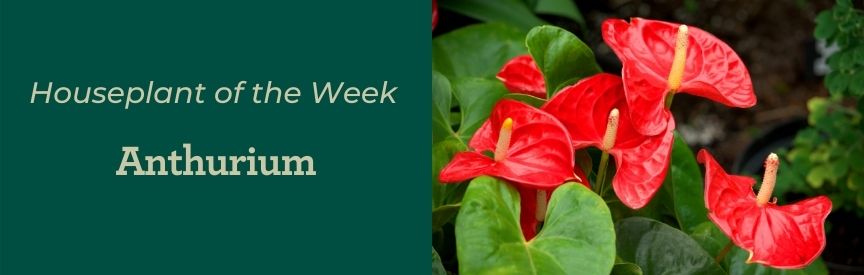
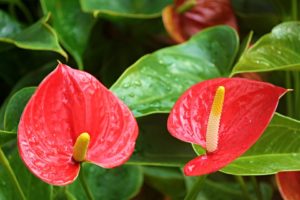
Picture of anthurium

Waxy and dramatic, the show-stopping heart-shaped flowers of anthurium (also known as laceleaf, flamingo flower or painter’s palette) are a wonderful addition to your home.

These plants are often used as centerpieces on tables or dining rooms. However, your anthurium might do really well in your kitchen or bathroom, as they love humidity.

Anthurium thrive in bright, indirect light. You can have them in low-lit areas and the foliage will do well, but they won’t flower. They are not particularly fussy about feeding (general fertilizer every few months is a good idea), and they like their soil moist but not wet. Only water when the top inch has dried out. Anthuriums also love having peat moss or coco-coir in their pots.
Like many of the plants featured in this column, anthurium is another great air purifier for your home.

Locals 4 Locals

Posted on by


As a local family business with more than five decades in northern Arizona, we have a special love for our community and the many companies that make our mountain town a wonderful place to live and work.

During this pandemic, we’ve been lucky – our industry and situation as a mostly outdoor nursery meant we were able to remain open. Other businesses have not been so fortunate.

That’s why we are so excited to be participating in Locals 4 Locals this coming week. It’s a Facebook-based event where local businesses buy gift cards from fellow businesses and give them away on Facebook.

On Wednesday, November 11, we’ll be inviting you to comment online about what you love about these businesses and choosing winners to receive the gift cards.

Participating is easy – just get onto your Facebook account, visit our page and look for our Local 4 Local posts on Nov. 11. Comment on the giveaway posts created by us to be entered to win the gift cards. If you are selected, we will private message you and ask you to pick up your gift card.

Here’s the businesses and organizations we have purchased gift cards from that will be up for grabs this Wednesday:

  • Aspen Sports
  • Bright Side Bookshop
  • Café Daily Fare
  • Dara Thai
  • Karma Sushi Bar & Grill
  • MartAnne’s Burrito Palace
  • Mountain Sports
  • Orpheum Theater
  • Paragon Athletics
  • Peace Surplus
  • Salsa Brava

Many thanks to Mountain Mojo Group and Deep Roots Landscaping for hosting this digital event. We love our fellow Flagstaff businesses and are excited for this chance to support them. #FlagstaffStrong 

Happy Gardening (and Happy Shopping),
Misti

Making Time for Indoor Plants

Posted on by


It’s autumn and that means the weather has gotten a little crisper and your flower beds and veggie plots are pretty much done for the year. But that doesn’t mean that your gardening has to stop. It just requires you to move your green thumb indoors.

Plants in your home or where you work have lots of terrific benefits for your physical and emotional health. Acting as the “lungs” of your indoor space, they breathe in the carbon dioxide we give off and provide us with oxygen. They also remove many airborne toxins from the air as well and studies show they have a calming effect that boost our mood and creativity.

Plus they are an attractive addition to your home decor, whether they are in a pot on your windowsill, in a terrarium or hanging from the ceiling.

Here’s a few of my favorites, all of which are easy to care for:

  • Zamioculcas, also known as the ZZ or eternity plant, tops my list. I love the clean look of the plant, with it’s strong stems and shiny leaves. Also, truthfully, I don’t spend much time indoors and ZZ doesn’t really mind being ignored. It only needs water every once in a while, never gets bugs and basically cares for itself.
  • My second favorite is the Snake plant! This is a tidy little plant that doesn’t drop its leaves all over the place. They come in many different varieties and I really like the newer variegated versions. This is another low maintenance plant that never has pest or disease issues.
  • And I always have room for some succulents. This is another type of plant that seems to have endless varieties. In fact, one of my favorite things is to do a mixed planter of small succulents and then change them out seasonally.

If you are new to houseplants, there are some ones that are pretty fool-proof, like pothos and spider plants, which also are among the ones recommended for their air-cleaning benefits. If you want to go for more sophisticated or unusual plants, there are bromeliads and orchids.

I’m often asked how many houseplants should you have in your home. I like the idea of having enough so that you can see one or two from pretty much anywhere in your house. On the other hand you don’t want it to feel cramped. 

I hope you are enjoying your fall and that we’ll see you soon to show you our wide range of beautiful houseplants.

Happy (Indoor) Gardening,
Misti

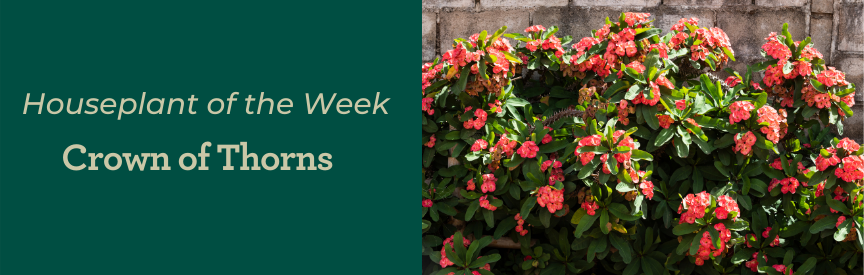
Houseplant of the Week: Crown of Thorns

Posted on by

What makes Euphorbia milii, the Crown of Thorns, such an easy indoor plant to cultivate? It thrives in the conditions you find in most homes, adapting well to normal room temperatures (although it can withstand temperatures as low as 50 degrees). It doesn’t mind dry indoor conditions and will even forgive you if you miss a watering or two.

The one thing it does insist on is a little sunbathing. Your plant will be super happy in a sunny window where it gets about four hours of bright, indirect sunlight each day.

Caring for Your Crown of Thorns

  • Soil –Use a sandy, well-drained soil that is 2/3 cactus or succulent potting soil and 1/3 perlite or coarse sand. The soil should drain quickly to prevent root-rot.
  • Water – From late spring to early fall, water your plant well and then allow the top half of the soil to dry out before watering again. Reduce the amount of water when the plant is not producing new leaves and flowers, but never allow the soil to totally dry out. 
  • Fertilizer –Feed monthly when it is actively growing with a water-soluble fertilizer diluted to half the recommended strength.
  • Pests & Diseases – While the plant is pest-resistant, too much moisture can cause mildew or fungus on the plant.
  • Repotting – A Crown of Thorns plant needs to be repotted every two to three years.
 

Houseplant of the Week: Dracaena

Posted on by

We’d understand if you think the Dracaena is an intimidating plant.

It’s name comes from the Greek and roughly translates to “Female Dragon,” because of the red gummy resin that can be produced by the stems of the plant resembling, it’s said, dragon’s blood.

Fortunately, the Dracaena doesn’t breathe fire. It’s even pretty easy to maintain.

Dracaena houseplant being heldDracaenas like filtered light or semi-shady spots. Never place a Dracaena in direct sunlight. It’s ironic, but the dragon plant actually has leaves that will burn in direct light.

Dracaenas also require less water than most indoor plants. Mist their leaves, keep the soil slightly moist but also make sure it has good drainage (Dracaenas hate soggy soil as it can create root rot). A good rule of thumb? Let the top couple of inches of soil dry out before watering.

Dracaenas are sensitive to temperature, preferring it to be about 65-78 degrees during the day and no colder than 55 degrees at night.

Trees & Bulb & Mums, Oh My!

Posted on by


This week, we said goodbye to summer, but not to gardening. With the temperatures still reaching the 70s and sometimes 80s in our neck of the forest, it seems silly to pack up our gardening gear and call it a season.

In fact, Fall means a lot to do for gardeners. 

First of all, take a moment to look around. Your garden is in its last full flower and now’s the time to take stock of what worked, what didn’t work and what you’d want to change next year. If you wait until winter or next spring, you might have a harder time remembering or visualizing the things you want to do.

Also, you might not get a chance to do it next month. October is the transition between summer fun to holiday crunch, particularly as we try to figure out how (and if) we can do our traditional get-togethers in the time of COVID.

Meanwhile, let’s talk about how to extend the season so you can enjoy your garden for as long as possible. Pretty soon the threat of a freeze will loom, so I’ll be honest with you – you’ll likely lose your “non-hardy” annuals. But you can replace them with some fall favorites, like mums, asters, flowering cabbage and kale, all of which will keep your garden looking beautiful for several more weeks. Meanwhile, spring blooms like pansies and violas have made a reappearance and aren’t threatened by a little cold weather – or even snow!

If you haven’t yet, make sure you get those spring-blooming bulbs into the ground before the freeze. Plus there’s still time to plant some cold-season veggies.

Fall is also a great time to get trees and perennials planted. I know the temptation might be to wait until next year, but there are a lot of advantages to getting them into the ground now. You’ll get more growth out of the plant next year if they are planted in the fall. Also, there’s less up-front care that is required when you plant this time of year as trees will soon go into dormancy.

The bottom line is that any excuse to be outside gardening during this beautiful season is a good thing!

Hope you are enjoying your Fall and we hope to see you soon at Warner’s Nursery.

Happy Gardening,
Misti

Warner’s Kids’ Club is Back!

Posted on by

One of the things we’ve really missed this year because of COVID-19 is being able to have our club for kids. Usually, the “Mud Club” would meet every couple of weeks with fun, hands-on lessons about how plants work.

It was good for us (there’s nothing like the unabashed enthusiasm of kids playing in the dirt). It was also good for our young participants. Horticulture is a really effective way of teaching things like patience and responsibility. 

But in 2020, our get-togethers needed to be curtailed because of safety concerns.

Which is why I’m so very excited to announce that this Saturday, September 12, we’ll be launching our online version of the Warner’s Kids’ Club.

Our New Video Series Debuts

It will be a video series uploaded on Facebook every other weekend to explore plants, science and the environment. Each class will include a fun project you can do at home and we’ll have “kits” set up for purchase here at the nursery.

This Saturday we’ll be talking about the water cycle – how water on the ground heats up, turns into vapor, rises into the sky where it cools, becomes heavier and returns to Earth in the form of rain.

What’s even cooler is that we’ll show kids how to recreate this phenomena with a self-watering seedling. All it takes is a couple of cups, some seeds and seedling plant mix and, of course, water.

As I mentioned, we’ll have a kit for purchase specifically for this kid club. And the beauty of this video series is that you can access it at any time, giving your child one more fun activity to do at home. 

We hope that you – and your child – enjoy this new video series. 

Happy Gardening,
Misti

Houseplant of the Week: Philodendron

Posted on by

This week’s houseplant, Philodendron, comes in many varieties, including Splitleaf, Brasil and Hope Selloum, but one of our favorites here at the nursery is the “Swiss Cheese” philodendron.

The name comes from the holes that form on its heart-shaped leaves as it gets older.

In addition to being beautiful, they are relatively easy to care for.

  • All philodendrons like bright, but indirect, light.
  • These are tropical plants, so they like their humidity. A swiss cheese philodendron in your bathroom or kitchen will likely be a happy plant.
  • It’s a good idea to let the top inch of soil dry out between waterings.
  • If you give them some support, they will climb like a vine.

Finally, if your leaves are pale, it’s likely that your Philodendron isn’t getting enough calcium and magnesium. A good fertilizer will help you correct any nutritional deficiencies for your plant – just ask one of our experts at Warner’s about which fertilizer would be right for your philodendron.

Houseplant of the Week: Ferns!

Posted on by

Ferns are typically underrated, and we think we know who’s to blame: yuppies.

A long time ago, in an attempt to cater to the wave of young urban professionals, lots of bars decided to go upscale. They installed better lighting, started offering fancier expensive drinks and added a lot of plants, mostly ferns, to their decor. The term “fern bar” was coined – and for many who missed the shot-and-a-beer vibe of their local watering hole, it wasn’t meant as a compliment.

But the haters don’t appreciate how versatile, easy to maintain and just plain luscious ferns are. And they seem to come in endless varieties. There’s the Western Sword with its layers of fronds coming up to a point like a sword; the Asparagus Fern, with its airy, delicate appearance and the Crocodile Fern with its scaly textured leaves. Not to mention the Birds Nest Fern, the Lady Fern, the Eagle Fern, and the Ostrich Fern (there’s a lot of ferns named after animals, aren’t there?) 

Caring for Your Fern 

  • Light: Ferns grow in the wild on forest floors where there’s a lot of shade, but this doesn’t mean that your houseplant has to be in a dark corner. So give your fern some morning or late afternoon sun, similar to the dappled light it would experience in the wild. No direct sunlight, however; that will make them lose their leaves or turn the fronds yellow.
  • Water: Ferns like moisture, so stand their pots on trays of damp pebbles and mist them regularly unless you are using a humidifier in the room, in which case that should be enough humidity for them.
  • Fertilizer: During the summer, feed your ferns every two to four weeks (dilute the strength because ferns have delicate root systems, and full strength will scorch them). Stop feeding in winter, while the plant is “resting.”