Take Time to Reconnect with Nature

Posted on by

I know many of you might be kind of bored right now.

Unless you are one of the essential employees protecting our life and health or providing us with food and other necessities, the world has gotten a lot smaller lately. Your commute to work might have shrunk to the distance between your bed and wherever your laptop is. Or maybe you aren’t working and dealing with all the uncertainty that brings. You also could be busier than ever, homeschooling your kids and keeping your household running, but feel trapped within your four walls. 

Might I suggest nature as an anecdote to whatever might be ailing you.

Because for all the things coronavirus has taken away from us these last few weeks, being able to enjoy nature isn’t one of them. You can easily practice social distancing while soaking up the sun in your own backyard, hiking the trails (which for the most part are still open in northern Arizona) and appreciating all the wonder that plants and animals have to offer.

Here’s just a small list of what getting outside can give you during these difficult times:

  • An escape. Don’t get me wrong; I’m grateful for all the technology that allows us to stay informed and connected. But every once and a while, I need to get away from it. 
  • Vitamin D. You can never underestimate the power of the sun to recharge your immune system. And just 10 to 15 minutes a day is all you need. 
  • Fresh air. Nothing like it to clear the head and calm the nerves.
  • Exercise. I think we’ve all heard the jokes about the “Freshman 15” and the “Covid 19.” Or how it’s hard to maintain six feet of social distancing between yourself and your fridge. Cooking is one of our big hobbies now and exercise is the natural counterbalance to all that extra eating.
  • Hope. Enjoying the beauty of plants and trees, listening to songbirds, inhaling the amazing smell of fresh-cut lawns and playing in the dirt always makes me hopeful. It puts things into perspective; the world is bigger than this crisis and it’s here for us to enjoy.

Obviously, being a gardening enthusiast, much of my outdoor time is getting my flowerbeds planted and putting in my veggies. Growing your vegetable garden and your fruit trees are another tangible – and really tasty – benefit of nature right now. 

But for those of you who can’t get out of the house or apartment, nature can come to your home in the form of houseplants. They offer many of the same benefits – cleaning your air and giving you something to grow. (If you are new to houseplants, I’m going to recommend a pothos. They are among the simplest to care for and are easy to propagate.)

So as you soldier on through these days, looking forward to a time when we can gather together again and emerge from our various lockdowns, I hope that you take the time to reconnect with nature. It has a lot to offer you, not the least of which is a promise of a brighter future to come.

Happy Gardening!
Misti

A Bright Spot this Spring

Posted on by

During this time of anxiety and uncertainty, the thing that gives me hope and a sense of peace is right outside my door where…

My baby daffodils are blooming.

I know that might not seem like much. It’s spring, bulbs bloom, that’s their job. But honestly, I’m taking my victories where I can find them nowadays.

Seeing my perennials come back, marveling at the hardiness of pansies and violas, catching the awesome pale green of new leaves on the trees – those are the highlights of my days.

Spring is in the air folks – and now more than ever, we need to enjoy it.

The health benefits of gardening have been noted even when there isn’t an emergency going on. Being out in the fresh air, the satisfaction of growing something and the sheer beauty of flowers and tastiness of veggies and herbs that you cultivate are all wonderful for your mental wellbeing.

Even the soil wants to make you happy, apparently. Microbes that are essential for the life cycle of plants also stimulate serotonic production in humans. One study showed that bacteria in the soil works on neurons in a fashion similar to Prozac. No wonder we love to play in the dirt.

But now, in this time with lots of folks working from home or practicing self-isolation, horticulture is becoming even more important. Gardening reminds you to get outside (or bring a little of the outdoors in with houseplants). It gives you the opportunity to walk away from the tv news or the social media feeds and get a needed break. It alleviates boredom. And it give you something awesome to do with your kids, who might be having some boredom issues of their own.

So I hope that during this time you don’t give up on gardening. It has the potential to nourish you body and soul and give you a reprieve from all the bad news out there.

Because every time I look at my baby daffodils, I know that Mother Nature is giving us hope for the season to come.

Happy Gardening!
Misti

Houseplant of the Week: Frizzle Sizzle

Posted on by

Looking to put some pizzazz in your houseplant collection? Well, Warner’s is happy to announce we have some rare Frizzle Sizzle in stock. This native of South Africa is a bulb plant that features fabulously corkscrew leaves.

When in flower, the Frizzle Sizzle (more formally known as the Albuca spiralis) has fragrant, yellow blooms with a sweet smell similar to vanilla.

Caring for Your Frizzle Sizzle

  • Keep them warm. This plant thrives best at temps over 60 degrees. 
  • It likes sunlight, but not direct sunlight, which can burn its leaves.
  • On the other hand, not enough sunlight will take the sizzle out of the frizzle and your leaves won’t curl as much.
  • Let your plant dry out between waterings. 
  • Frizzle sizzles tend to go dormant in the summer after flowering. At that point, stop watering and fertilizing until you see new foliage in the fall/winter.
  • The Frizzle Sizzle seems to be blessedly free of pests and disease, making it an easy plant to maintain.
  • Final note: When your Frizzle Sizzle sends up its flower stalks in the spring, the tips of the leaves might brown. This is a natural occurrence and not a sign that your plant is ill. 

Stop Treating Your Soil Like Dirt

Posted on by

Here’s a startling thought: Our soils are endangered.

I know, I know. There’s a lot of uncertainty in the world at the moment and now I’m telling you that you have to worry about the earth under our feet too. But I wouldn’t be mentioning it if there wasn’t a solution. So let’s talk about how we got here – and how we can make it better.

First off, what happened that caused us to treat our soil like dirt?

Prior to the 20th century, soil was healthy and organically dense. It was the source of good, nutritious botanical delights, and with proper crop rotation, it naturally replenished itself. 

But erosion and deforestation have washed away a third of the world’s topsoil, taking much of its benefits away in the process. And crops today are developed for increased yield, not nutritional value, a classic case of quantity over quality. 

If current trends continue, soil as we know it will be gone by 2050, according to the United Nations Food & Agricultural Association.

But there are things we can do to help regenerate our soils. Here’s the Top 5 soil friendly habits you can practice at home:

  1. Whether it’s broccoli or begonias, it’s important to plant your garden organically.

  2. Reduce waste by composting and create a probiotic for your soil. Added benefit: it will reduce your household trash significantly.

  3. Test your soil and replenish it with organic fertilizers.

  4. Till with worms and organic composts.

  5. Grow green manures, cover and pulse crops such as buckwheat, beans, lentils and clover. They do double duty- enriching garden nutrients while controlling weeds.

These steps will give you healthy, happy and organically rich soil for your garden.

I hope you are managing to enjoy Spring, even as concerns about coronavirus abound. Speaking of which, please check out our homepage for information on what we are doing in response to COVID-19 to keep you (and us!) safe and some new options for shopping with us.  

Happy Gardening!
Misti

Houseplant of the Week: Arrowhead Plant

Posted on by

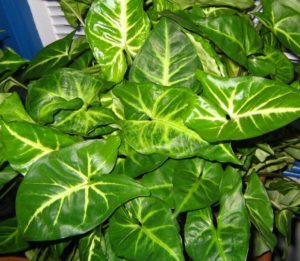
Arrowhead Plant closeup

Arrowhead plant by User:Omegatron / CC 3.0

Take one look at the lovely Arrowhead Plant and you’ll see where it gets its name. The distinctively shaped leaves are contrasted by their lighter colored veins, giving it a bold and striking look.

This plant is great both as a table topper (if you trim the runners) or as a hanging plant.

Caring for Your Arrowhead Plant

Water: Water well and then allow the top half of the soil to dry out before watering again. Arrowheads droop when they are thirsty but are known to rebound quickly once they get a drink. As with most plants, avoid over-watering, which can lead to root rot.

Food: During the spring and summer (its peak growing time), these plants like fertilizer every couple of weeks. Drop down to once a month in the fall and winter.

Light: The darker green variations of this plant will do okay in low to medium light, but if it’s a lighter green or burgundy/pink variety, they need more light.

Temperature: Anywhere from 60 to 75 degrees works for the arrowhead. They love humidity, but can survive in the normal household humidity. However, keep them away from things that could sap the moisture from them, like air vents or fireplaces.

Houseplant of the Week: String of Dolphins

Posted on by

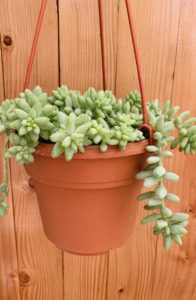
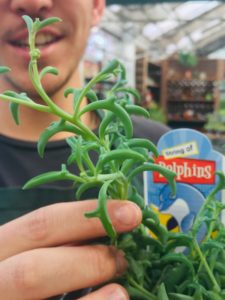
Rare and super unique, String of Dolphins is a fun succulent whose leaves literally look like tiny dolphins jumping out of the water.

These plants look fabulous in a mixed container or in a hanging basket on its own with the distinctive leaves hanging down.

Like most succulents, String of Dolphins are relatively low maintenance and have few growing issues. They need well-draining soil, however, to thrive.

They prefer bright, indirect light or filtered light from a window. They also tend to thrive in slightly crowded conditions, so think about mixing them with other smaller succulents and decorating with a sea theme of seashells or sand dollars.

Frosty Times

Posted on by

Frosty times have arrived in Flagstaff. The forecast says that most evenings will dip to or just below freezing, so it’s time to talk about what to do in your garden (and how to save those last veggies and tomatoes in your fall harvest).

First off – the frosts of fall are not as threatening to your garden as those unexpected freezes we get in the spring. Your perennials and shrubs won’t be devastated – this is part of the natural ebb and flow of the seasons for perennials, so most likely the frosts will just put them “to sleep” for the winter a little sooner.

You do want to ensure that your plants are well watered prior to a frost to protect them.

As far as veggie gardens go, you can protect plants with frost cloth when the temps get down to the 30s, but if you are trying to harvest, now’s the time to get those last tomatoes and green peppers indoors and let them ripen in the cozy warmth of your home.

A few tips on ripening veggies inside.

  • Pick any full-size peppers or tomatoes that are green
  • Pick an area of your home that’s a bit dark (a laundry room, an insulated garage or even your kitchen as long as you remember to keep your veggies covered).
  • Make sure your veggies are a couple of inches apart. Why? Because if any of them ripens too quickly and begins to rot, it’ll spread to the other veggies.
  • Cover with newspaper.
  • Check on them frequently as they will ripen quickly.
  • Enjoy when fully ripened!

Other miscellaneous things to do as the weather gets colder: Deadhead your spent perennials and collect the seeds. Apply mulch, which will help insulate plants in the colder weather. And get into the habit of unhooking your hoses from spigots at night so your pipes don’t freeze. You may need to drain your hoses after use as well.

Hope you are enjoying this beautiful fall and the cooler temps!

Happy gardening,
Misti

Fall Gardening: So Much to Do!

Posted on by


This week it officially became Fall – and that means lots to do for gardeners.

I know some of you are ready to pack up your trowels and call it a season, but this is the perfect time to extend the season and enjoy some more quality time outside.

But what exactly does fall gardening look like?

The threat of a freeze is always looming, so I’ll be honest with you – you’ll likely lose your “non-hardy” annuals. In fact, if you’d like to save any of them, I’d suggest cleaning them up and moving them inside.

But you can replace them with some fall favorites like mums, asters, flowering cabbage and kale, all of which will keep your garden looking beautiful for several more weeks. Meanwhile, spring blooms like pansies and violas have made a reappearance and aren’t threatened by a little cold weather – or even snow!

If you haven’t yet, make sure you get those spring-blooming bulbs into the ground before the freeze. Plus there’s still time to plant some cold-season veggies.

Fall is also a great time to get trees and perennials planted. I know the temptation might be to wait until next year, but there are a lot of advantages to getting them into the ground now. You’ll get more growth out of the plant next year if they are planted in the fall. Also, there’s less up-front care that is required when you plant this time of year.

The bottom line is any excuse to be outside gardening during this beautiful season is a good thing!

Hope you are enjoying your Fall and we hope to see you soon at Warner’s Nursery.

Happy Gardening,
Misti

Houseplant of the Week: Pilea Depressa (Baby’s tears)

Posted on by

Don’t let the name fool you – Pilea Depressa might be called the “Baby tears” plant, but you will have nothing to cry about with this beauty.

Alex, our houseplant guru here at Warner’s, is a big fan. She says, “This plant will spice up your room with its bright green color.”

Pilea Depressa has small thick leaves. It’s a nice and easy-to-keep plant that looks very pretty in a hanging pot, because the stalks with leaves will hang down. But it also does well in a terrarium, where it can be a decorative climbing plant.

Pilea Depressa likes medium to high light, but no direct light, which will burn the leaves and turn your bright green plant brown.

Allow your plant to dry out between waterings, and don’t let water stand in the saucer underneath the plant.

Houseplant of the Week: The Parlour Palm

Posted on by

The Neanthe Belle or Parlor Palm is one of the most popular houseplant palms in the world – and its easy to see why. With its elegant lush leaves, this palm is a lovely addition to any home.

The plant can reach three to four feet in height, but it will take several years to get there. This plant thrives in a variety of indoor lighting conditions, but a room with medium to bright light and a north or west facing window is best. Do not keep your plant in direct sunlight.

Keep your plant evenly moist, meaning the soil should never be completely dry or overly wet. Do not keep the plant in standing water for more than 15 minutes as this can lead to root rot and pests.

The Parlor Palm needs more fertilizer than most indoor palms. Feed monthly in spring and summer with a slow-release fertilizer. If the leaf tips are brown, you could be over fertilizing.