Container Shrubs

Posted on by

If I say shrub to you, what do you think of? A row of hedges planted along your property line to give you privacy? Or maybe some dwarf evergreen shrubs in a xeriscape garden to soften the hard edges? Perhaps fast-growing plants like honeysuckle or forsythia that are great for quickly filling in a bare landscape?

Whatever example popped in your head probably involved a shrub that was firmly planted in the ground. But what if you are renting a property or live in an apartment or are looking for some patio décor – do you have to go without shrubs?

Happily, there are many shrubs that do well in containers. They will give you all the benefits of these beautiful plants, plus the flexibility to reposition them around as needed – or if you move!

Here are some examples of shrubs that do very well in containers:

  • Dwarf Alberta Spruce (and all dwarf conifers) – this small evergreen conifer has the classic Christmas tree shape.
  • Japanese Maple – with their fiery leaves, these shrubs make a big statement in a small space.
  • Dwarf Peach Trees – rarely getting taller than 8 to 10 feet, these trees will give you spring blossoms, summer green foliage and full-size fruit.
  • Serviceberry – this is an all-year shrub that gives you different looks throughout the year – flowers in spring, fruits in summer, colorful foliage in fall, and stark bark in winter.
  • Dwarf Crabapple “Lollipop” Shrubs – It really does look like a lollipop with its ball of fragrant white flowers on a sturdy trunk. Thanks to its dwarf genetics, this shrub always looks neat and needs minimal pruning.
  • Dwarf varieties of butterfly bushes – you’ll still attract the pollinators with these shrubs but without them taking up too much space in your garden.
  • Hydrangea – about a third of the size of a full hydrangea bush, dwarf hydrangea are another shrub that gives you beautiful blooms while requiring minimal pruning.
  • Barberry – the small round leaf clusters of the barberry look gorgeous in containers and can add color (and privacy) to a deck, patio or balcony.
  • Dwarf Ninebark – a shrub where the flowers are almost secondary to the bark, the name comes from the way the bark peels back, exposing a beautiful red underneath.
  • Low Scape Mound Aronia – this dwarf chokeberry has fast developing leaves and is great for attracting birds.
  • Boxwood – the classic border shrub that often give in-ground gardens their shape is also terrific in containers, and their evergreen foliage provides year-round color.

There are some things you need to consider when planting shrubs in pots. First, your container needs to be thick; plastic containers need not apply for the job of housing a dwarf shrub. Size matters too; your pot should be twice the size of the root ball of the plant to ensure the roots don’t freeze and thaw throughout the winter.

All this means you might have a heavy plant to cart around, so you might want to invest in a tray with wheels to make it easier to move and winterize. Speaking of winter, your container shrub will need water at least once a month during the winter, so make sure it’s accessible.

If you have any questions about selecting shrubs for container planting, please give us a call or visit the nursery. We have both the plants and the appropriate pots for them and can help with whatever advice you need.

Happy Gardening!
Misti

Tomato Troubles

Posted on by

In the late spring, when we get our tomato plants, we have such hopes. We water them diligently, we wrap them in season extenders or cover them with frost cloth if it gets cold, and set up our cages carefully to support them as they grow.

They flower and we can’t wait for the delicious results.

And then, well, things go south. There are a bunch of common afflictions that strike tomato plants and today I want to tell you about them and what you can do about them.

Blossom Drop – When flowers appear on your tomato plants, but fall off without tomatoes developing, it’s likely you have blossom drop. Temperature fluctuations can cause it, but insect damage, lack of water, too much or too little nitrogen, and lack of pollination can also be the culprit.

What to do about it: While you can’t change the weather, you can make sure the rest of the plant is strong by using organic fertilizer for tomatoes, drawing pollinators by planting milkweed and cosmos, and using neem oil insecticides.

Fruit Cracks – Cracks appear on ripe tomatoes, usually in concentric circles, are fruit cracks. Besides being unsightly, sometimes insects use the cracks as an opportunity to eat the fruit. Hot, rainy weather can cause it. After a long dry spell, tomatoes are thirsty. Plants may take up water rapidly after the first heavy rainfall. This swells the fruit and causes it to crack.

What to do about them: Although you can’t control the rain, you can water tomatoes evenly during the growing season. This prevents them from being so thirsty that they take up too much rainwater during a heavy downpour.

Leaf Roll – This is when mature tomato plants suddenly curl their leaves, with them rolling up from the outside towards the center. As much as 75% of the plant can be affected. High temperatures, wet soil and too much pruning are often the cause.

What to do about it: Although it looks ugly, leaf roll won’t affect tomato development, so you will still get edible tomatoes from your plants. Avoid over-pruning and make sure the soil drains excess water away.

Tomato Spotted Wilt Virus (TSWV) – TSWV is spread by one of the arch-enemies of any garden, thrips. I absolutely hate thrips. They acquire the virus by feeding on an infected weed, then they spread it to developing tomato plants. Several weeks after transplanting the tomato plants into the garden, random plants may appear stunted, and younger leaves may be marked with bronze or dark spots, or have prominent purple veins. Often the upper foliage will become twisted and cupped as the bronze areas expand. Fruits may have yellow spots. Younger plants may wilt and die, but older plants may survive and bear discolored fruit that may not fully ripen.

What to do about it: Eliminating weeds in the garden is the first step in reducing the chance of acquiring TSWV. Keeping the grass and weeds mowed in areas surrounding the garden may reduce the spread of thrips onto susceptible garden plants. 

There are several other possible tomato problems. If you are worried about how your plants are doing, please take a picture and bring it in to Warner’s Nursery. We can help you identify what’s going on and how to prevent it in the future.

Happy Gardening,
Misti

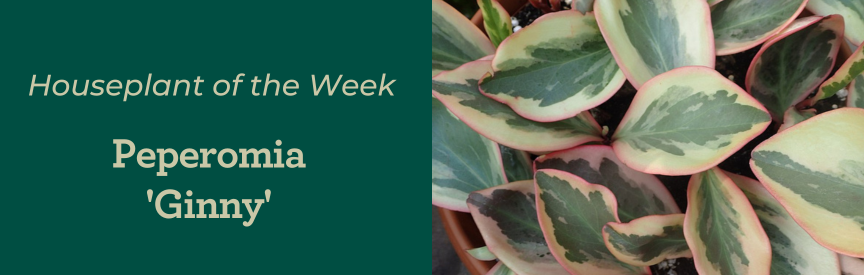
Houseplant of the Week: Peperomia ‘Ginny’

Posted on by

Peperomias are tropical plants from the pepper family that are popular as indoor plants because they are easy to take care of and come in an almost endless array of colors and varieties.

One of the newest versions is Peperomia clusiifolia known as Peperomia Ginny or sometimes a Tricolor Peperomia because of its varigated, colorful leaves.

Like other Peperomia, this plant thrives in medium to bright, indirect light, but it can also tolerate low light relatively well.

You’ll want to water your plant every one to two weeks, allowing the potting mix or soil to dry out between waterings. If you see your leaves turning yellow and dropping off, it can be a sign that you are overwatering.

Because of a tendency towards root rot, you’ll want to plant your Peperomia in a pot with good drainage and use a light, well-draining soil for your plant. 

Tomatopalooza!

Posted on by

There’s nothing that quite captures the joy of growing your own food as that moment when you pick those first fresh tomatoes from your garden. They work on almost all the senses – the beautiful transformation from green plant to yellow flower to deep red fruit; the earthy smell of it; the satiny smooth skin against your fingers when you pick it off the plant…

Then there’s that taste. Ever eaten a tomato fresh off the vine that is still slightly sun-warmed? Absolutely amazing. No wonder gardeners are in love with tomatoes!

Every Memorial Day weekend, we break out the party hats to celebrate Tomatopalooza with specials on on our tomato plants and plenty of advice for home gardeners. Here are some practical tips on getting a beautiful harvest this year:

  • Please get them planted soon! We’ve got a limited window to grow these gems and the sooner yours are in the ground, the sooner you can reap (eat) the benefits.
  • You might want to invest in a season extender – even if you aren’t technically extending the season. The nice thing about these tubes of water is that in addition to keeping the plant warm (remember, we still could get frost into June), they protect your plants from transplant shock.
  • Yes, you need cages or stakes. Tomato plants are like children – they need structure and support. New fruit will benefit from improved air circulation and it keeps the plants away from ground pests.
  • Food and Water. A slow release fertilizer is perfect for your young plants. Water thoroughly but not too often and try to water early in the day so that plants will dry off before evening. As always, we recommend drip irrigation systems because they are more efficient and get the water down to the roots and you don’t lose water to evaporation or runoff. If nothing else, don’t water from the top down – this does nothing except get the leaves and tomatoes wet and make them more prone to get diseases or rot.

We hope you have a safe Memorial Day weekend – and that you get some gardening in during the holiday.

Happy Tomatopalooza!
Misti

Houseplant of the Week: Club Moss

Posted on by

Club Moss Houseplant

Although they have no flowers, the club moss or Selaginella, is a charming, easy-to-care-for houseplant whose beauty comes from its foliage. 

Colors can range from green to gold and some species feature new growth that is white, which makes them look like they are frosted.

They also can be placed in a variety of containers, working well in pots and terrariums.

Caring for Your Club Moss

  • Soil – If planting in a pot, start with good commercial potting soil, which is lighter than top soil and often contains a mild “starter” fertilizer.
  • Water – Club Moss likes moist but well-drained soil. Check the soil moisture with your fingertips. If the top two inches are dry, or the plant is wilted, you need to water it.
  • Fertilizer – Apply a balanced liquid fertilizer monthly.
  • Temperature – The Club Moss is a native of sub-Saharan Africa and loves humidity. If you want to make this plant happy, place it in the kitchen or bathroom. Avoid placing in drafty, hot, or high sun locations.

Houseplant of the Week: Sunny Star Croton

Posted on by

Long, strong leaves with lines of bold neon yellow are typical of this cultivar of the Codiaeum variegatum or the Croton plant. Native to the Pacific Islands, crotons are often grown outdoors, but they are also popular as lovely houseplants.

Here’s the first thing you need to know about croton plants in general: they are a bit stuck in their ways. Crotons are notorious for not liking change and can be sensitive to disturbances whether it’s repotting or changing lighting conditions or humidity.

So if you take home your plant and find that it loses a bunch of its leaves within a few days, don’t panic. It’s not that it’s a bad plant or you somehow “failed” it. Basically, it’s gone into shock. It will recover pretty quickly with some regular plant care – the right amount of light, proper watering and good soil.

Caring for your Croton

Let’s talk about lighting first. In general, Crotons like a sunny location; lack of sufficient light can even cause new leaves to be less colorful! Crotons also like their humidity; they are, after all, a tropical plant. A pebble tray or regular misting will keep your plant looking good.

Crotons like consistent mild moisture, but don’t want to be waterlogged, so a soil with good drainage is a must.

The plant should also be kept away from drafts and cold, as it cannot tolerate temperatures below 60 degrees.

Crotons can reach heights of about 3 feet, so you might want to make this a floor plant in your home.

Celebrating Mother’s Day

Posted on by

Did you know that if you were to assign a monetary value to all the tasks a mom typically does for her family, her annual salary in 2024 would amount to $140,315?

That’s what Insure.com’s Mother’s Day Index suggests. Each year, they tally up the various roles moms fulfill, cross-referencing them with the average hourly wages from the Bureau of Labor Statistics to arrive at this figure.

I personally love the jobs that make the index each year. There’s cook and chauffeur (naturally), and maid and meeting planner (that makes sense too). But there’s also teacher, interior designer, grounds maintenance worker, judge, and my favorite, private investigator.

It’s a fun little article, but I think it also points out the difference between the worth of the work that a Mom – or any other primary caregiver – does, which can be measured and calculated, and the value of being someone’s Mom, which is pretty much priceless.

How do you measure the value of comforting a child, tending to their scraped knees, guiding them with boundaries, and being their biggest cheerleader at every milestone? How do you assign a price tag to the daily doses of encouragement that shape them into the remarkable individuals they become?

It’s interesting how many highly accomplished people – from Abraham Lincoln to Pablo Picasso – credit Mom for what they achieved. The anthropologist Jane Goodall said that her Mom told her she could achieve anything she wanted to if she put her mind to it. “I am always grateful for that,” she added.

I hope you have a wonderful Mother’s Day this weekend. If Mom is no longer around, spend some time cherishing her memory. If she lives far away, give her a call. And if you are lucky enough to have her nearby, spend some time with her. Do lunch, take in a movie, or maybe plant a garden. There is no one in the world quite like her and, despite the best efforts of Insure.com, no way you can truly pay her what she’s worth.

Happy Mother’s Day,
Misti

Houseplant of the Week: Algerian Ivy

Posted on by

Algerian Ivy

The image that probably pops into most people’s heads when you mention Ivy is the vine you often see clinging to the sides of houses. In fact, as a vine, it’s often considered invasive because of its aggressive growth.

But as a houseplant, ivy is a favorite of indoor gardening enthusiasts. Algerian Ivy (Hedera canariensis), with its cascading foliage and elegant demeanor, is a versatile houseplant with lovely dark green leaves often edged in creamy white.

This plant has larger leaves than its cousin, English Ivy, and is slightly more drought tolerant.  

Caring for Your Algerian Ivy Plant

The most important thing your ivy plant needs is the right amount of light. Ivy plants that are mostly green like bright indirect light, but variegated versions with white on the leaves prefer medium light.

While Ivy plants like regularly watering, they don’t want to be waterlogged as this can make the roots rot.

Remember to feed your plant, too. Fertilize your ivy with a water soluble, nitrogen-rich fertilizer about once a month except in winter, when the plant is dormant.

Houseplant of the Week: Calathea concinna ‘Freddie’

Posted on by

The beautiful ‘Freddie’ with its dramatically patterned leaves is another member of the ‘prayer plant’ family. Plants in the family are known for their leaves moving from flat during the daytime to erect at night, as if they were hands in prayer.

Like most tropical plants, Freddie loves heat and humidity. It prefers medium to bright indirect light, but will tolerate lower light.

When watering, you are trying to walk the line between keeping the soil damp most of the time without allowing the plant to sit in water or overly wet soil, which can cause root rot.

While sitting in water is not good, surrounding it with humidity is a positive. Try a humidifier or sitting the plant on pebbles to increase humidity. If you really want to give Freddie a treat, try misting.

For a planting medium, you can use a potting mix that is well draining, with elements like perlite or coco coir.

Finally, remember that this plant likes it nice and hot, and while it will tolerate cooler temperatures in the home, make sure it’s not near any A/C vents and avoid drafts.

Believe It or Not, It’s Spring

Posted on by

It’s April 26th, and the Weather Channel has informed me that there’s a 70% chance of snow this evening. Not much, just an inch, but we’ll be hitting a low of 32 degrees. Meanwhile, by the end of the weekend, we’ll be back in the upper 60s.

Welcome to spring in northern Arizona: warm, flower-friendly weather for a few days and then – whoosh – a rush of wind, cold temps and the occasional snow flurry.

But when I see the new buds and leaves on my garden plants this time of the year, it fills me with a sense of hope for the season.

First of all, it’s great knowing my perennials survived another year. Then there’s the excitement of different annuals coming in as the season progresses and we move from pansies and petunias to coneflowers and dahlias.

Right now it’s a great time to plant trees, flowering shrubs, and lots of perennials. It’s even possible to start some warm season veggies, but you have to be strategic about it.

By definition, warm season vegetables are the ones that really can’t stand the cold – things like tomatoes and eggplants and melons. Because they are so susceptible to cool temperatures, they are typically planted outdoors only after the last frost of the spring. Which is a big problem here in northern Arizona because by the time we have that last frost, it’s practically summer.

Fortunately, you can always begin your warm-season veggies inside and then transplant them when the weather is a little more friendly. I have a whole separate blog about that, which you can read here.

I know spring in Flagstaff is maddeningly hard to predict and that makes gardening challenging here. But I was always taught that you don’t get what you wish for; you get what you work for, and the things that you work for the hardest give you the biggest reward.

That’s how I think of gardening in Flagstaff.  Difficult but worth it, and when spring finally decides to stick around, it’s like Mother Nature is giving us hope for the season to come.

Happy Gardening!
Misti