Unique Houseplant Workshops!

Posted on by


If you have pothos, philodendron, or spiders in every corner, you might be on the lookout for more daring or unique plants to grace your home. 

That’s where our Houseplant Club can help.

Our upcoming sessions on August 21 and August 28 will explore some of the more exotic houseplants that we carry. Often these plants require a little more care than beginner plants, but their beauty and ability to make a statement makes them so worth it!

We’ll also have a couple of workshops where you can create your own plant masterpiece by putting together a kokedama, terrarium, or bonsai garden.

Kokedama

This form of Japanese gardening involves taking the root ball of a plant and suspending it in a mud ball, which is then coated with soft green moss (kokedama literally translates to “moss ball”). It means that you have not only a plant but a living planter which can then be displayed in a container or hung on a string. If you hang several of these plants up, it’s often referred to as a “string garden.”

The most challenging part of creating a kokedama is getting the soil right, because it needs enough clay to allow the ball to keep its structure. You also need to select an appropriate featured plant. Ferns and ivy do well, but avoid succulents and cacti, as the soil ball at the heart of your kokedama will typically be too moist for them.

Learn more about kokedamas and bring home your very own at our workshop at 2 pm on Saturday, August 24.

Terrariums

Also known as “gardens under glass,” these displays of plants are housed in partially or even fully sealed containers, which allow heat and light to enter the container but confine moisture. This results in a little eco-system that is pretty much self-sustaining. Come to one of our workshops (either 2 pm on Saturday, August 21 or 2 pm on Saturday, September 7) to find out the best plants to feature that will like the natural humid environment of a terrarium.

Bonsai

A bonsai garden is a meticulously curated space dedicated to cultivating miniature trees, each grown to embody the beauty and elegance of full-sized trees on a much smaller scale. Originating from ancient Japan, bonsai gardening involves carefully pruning, wiring, and nurturing the trees to maintain their small size while enhancing their natural aesthetic. Working on these gardens is contemplative, artistic, and very rewarding.

Create your own bonsai garden at our workshop at 4 pm on Wednesday, September 18.

Our workshops all have fees to cover the cost of materials. To learn more or sign up, please call us at (928) 774-1983.

Happy Gardening,
Misti

Houseplant of the Week: Baby Rubber Plant

Posted on by

Peperomias are tropical plants from the pepper family that are popular as indoor plants because they are easy to take care of and come in an almost endless array of varieties. There are more than 1,000 sub-species of this plant!

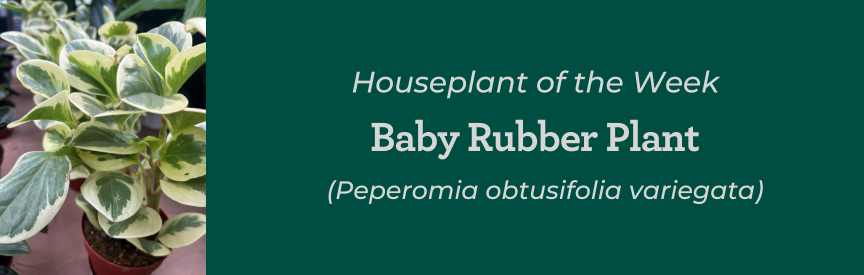
Today we are taking a look at Peperomia obtusifolia variegata, also known as the “baby rubber plant” which has large oval-shaped leaves with deep green centers and white or yellow markings that give it a marbled appearance.

Peperomia generally prefer medium to bright, indirect light, but they can tolerate low light relatively well. They can even flourish under florescent lights, which makes them popular office plants. Keep in mind, however, that if you have your Peperomia in a low-light situation, it will grow more slowly and will require less water. Low light can also mute the color contrast of the leaves.

You’ll want to let your Peperomia dry out between waterings, and you’ll want to err on the side of underwatering your plant. It’s a succulent and those beautiful leaves retain water, so it will survive a missed watering or two. But Peperomias are quite susceptible to root rot, so overwatering can be a problem.

Because of this tendency towards root rot, you’ll want to plant your Peperomia in a pot with good drainage and use a light, well-draining soil for your plant. 

Houseplant of the Week: Heart Fern

Posted on by

Picture of a heart leaf fern in a planter at Warner's Nursery

It’s easy to see where the heart leaf fern or heart fern (Hemionitis arifolia) gets its name. This charming plant’s most distinctive feature is its glossy, dark green, heart-shaped leaves, which can add a touch of elegance to any indoor garden.

Interestingly, many heart ferns feature two shapes of leaves. They are dimorphic, meaning some of the leaves are sterile and some are fertile. Sterile fronds tend to be heart shaped, while fertile fronds look more like an arrowhead and are on a thicker stalk.

Because of its compact size (it typically only grows between 6 and 8 inches tall), this plant packs a lot of style and in small space. As a plant native to Southeast Asia, the Heart Leaf Fern likes high humidity and warmth and recreating those conditions will keep your plant happy.

Growing Heart Leaf Ferns

Light: Heart ferns prefer bright, indirect light. Direct sunlight can scorch the delicate leaves, so it’s best to place the fern in a spot where it will receive filtered light. North or east-facing windows are ideal.

Temperature: Heart ferns like it warmish (75 degrees is ideal). It’s important to keep the temperature consistent, as this plant is sensitive to sudden changes. Avoid placing it near drafts, air conditioning vents, or heaters.

Humidity: High humidity is needed for this plant’s health, either through misting or setting the pot on a pebble tray with water.

Soil: A mix of peat moss and potting soil is excellent for this plant.

Watering: Regular watering is recommended, but the soil should not be soggy.

Houseplant of the Week: Alocasia African Mask

Posted on by

Alocasias are considered some of the most striking houseplants available because of their eye-catching foliage. Native to the subtropics, they have close to 80 varieties with a wide range of looks. 

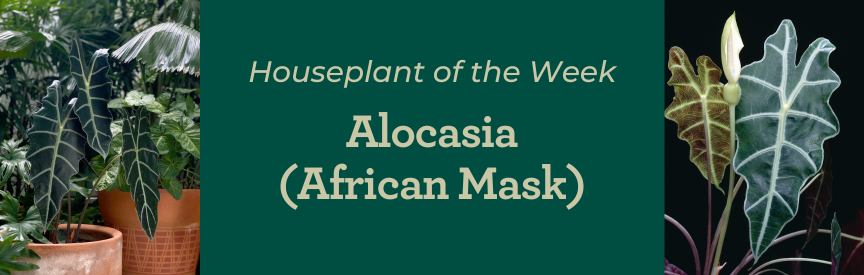
This week we are focusing on Alocasia Polly, which is also known as Alocasia Kris or the African Mask plant, because of the leaves resemblance to traditional ceremonial masks. The leaves of this plant are such a dark green as to almost look black and are contrasted dramatically with highly visible white striping along the veins and edges.

Alocasias can be a little tricky with their light, humidity and temperature needs.

They require bright, but diffuse lighting. In nature, these plants thrive beneath tree canopies and direct sun will lead to the leaves getting burned. They are also used to high humidity, so don’t place them in a place where they will dry out easily, such as an air conditioner vent or a heater. Employ a pebble tray to keep the air around them humid or mist them with distilled water.

The preferred temperature range for this plant is 70 to 80 degrees, year round. With enough water they can survive extra heat, but your plant might get damaged if the thermostat goes below 60 degrees in your home. 

Allow the top 2 to 3 inches of the plant to dry between watering to ensure that the plant isn’t sitting in soil that is too wet. Make sure your soil has good drainage!

Dracaena ‘Lemon Lime’

Posted on by


One of the most popular houseplants are cultivars of the Dracaena plant. Dracaenas are not only gorgeous, they also tend to be easy to maintain.

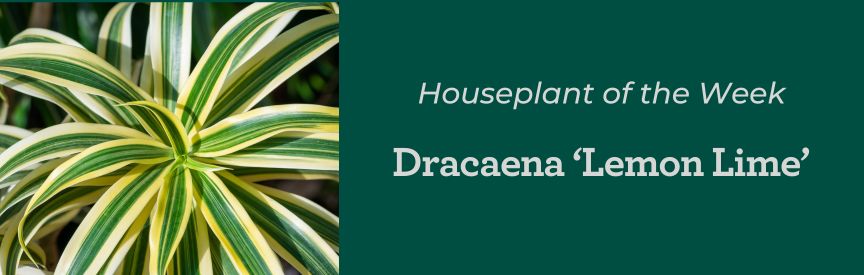
The “Lemon Lime” version of this plant has dramatic sword-shaped leaves that feature edges of neon yellow contrasting with bright green centers.

These plants like bright, indirectly light. While it will tolerate lower light, the plant might become leggy and the colors will not be as vibrant. Never place a Dracaena in direct sunlight. It’s ironic since the plant’s name is derived from the Greek for “female dragon,” but this plant’s leaves will actually burn in direct sunlight.

Dracaenas also require less water than most indoor plants. Mist their leaves, keep the soil slightly moist but also make sure it has good drainage (Dracaenas hate soggy soil as it can create root rot). A good rule of thumb? Let the top couple of inches of soil dry out before watering.

Dracaenas are sensitive to temperature, preferring it to be about 65-78 degrees during the day and no colder than 55 degrees at night.

Monsoon Season Garden Care

Posted on by

Monsoon season is officially here, and that added moisture – and coolness – is both a blessing and a challenge for gardeners.  

The question we most commonly get at Warner’s Nursery during monsoon season is how often to water your plants. It can be tricky to judge this because monsoon seasons can be erratic, with lots of rain one week followed by very little the next.

One rule of thumb is that it needs to rain at least an inch a week to provide enough water for your garden. 

If the ground is saturated from recent rains, be judicious about watering, particularly with your annuals. Overwatering can lead to root disease. However, new perennial and tree plantings still need to be watered regularly to ensure they establish roots properly.

This is also a great time to consider adding a rain barrel to your garden if you don’t already have one. Rainwater harvesting has multiple benefits for your garden and your wallet:

  • Using captured rainwater means you don’t have to use tap water, lowering your monthly water bill.
  • It’s the best water for your gardens because it is not treated with any chemicals.
  • It helps reduce soil erosion.
  • It increases general water conservation and helps prevent local flooding.
  • It can make your plants more drought resistant because it forces damaging salts down and away from your plants’ roots. This allows for greater root growth and water uptake, increasing drought tolerance.

Mulching also plays a role in protecting your plants during monsoon season. Typically we talk about adding wood chips, straw, or other materials as a way of retaining moisture for your plants during drier seasons. But mulch also helps reduce erosion from rainstorms and acts as a barrier during heavy rains. 

Finally, there are a couple of additions you’ll find to your garden during monsoon season – mushrooms and mildew. One is relatively benign (at least as far as your garden is concerned), and the other one you need to address as soon as possible. 

For the most part, mushrooms are a sign of healthy soil and don’t pose a threat to your plants. However, you might want to remove them for aesthetic reasons or if you’re worried about young children or pets eating them. The best ways to get rid of mushrooms are by raking them up or using an organic fungicide.

Powdery mildew is a fungal disease that can spread quickly in the damp conditions of the monsoon season. Organic fungicides, particularly those containing sulfur or neem oil, are effective in treating powdery mildew. A product like Fertilome Triple Action Spray can be very useful. It’s crucial to remove and destroy any part of your plant that has mildew. Make sure not to put the infected parts into your compost, as this can spread the disease.

By following these tips, you can navigate the challenges of the monsoon season and keep your garden healthy and thriving. If you have any questions about managing your garden during monsoon season or throughout the year, please visit us at Warner’s Nursery – we’d love to help!

Happy Gardening,
Misti

Rattlesnake Plant

Posted on by


It’s like having a little bit of the Brazilian rainforest in your home.

The striking Rattlesnake Plant features elongated leaves with wavy edges that can grow up to 30 inches long. The underside of the foliage is a deep purple, but it’s the upper surface of the leaves that inspires its name – light green with a dark green pattern that resembles the skin of a rattlesnake.

Cultivating this plant takes a little careful planning, but can be accomplished if you mimic its tropical habitat.

CARING FOR YOUR RATTLESNAKE

Light: Rattlesnake Plants thrive in bright, indirect light. Direct sunlight can scorch their delicate leaves, while too little light can cause the vibrant colors to fade.

Watering: These plants prefer consistently moist soil but should not be waterlogged, which can lead to root rot. Add water when the top inch of soil feels dry. Brown curling leaves indicate too little water, while yellowed leaves means your plant has too much H20.

Humidity: As tropical plants, the Rattlesnake loves high humidity, which is why they do well in kitchens and bathrooms or in rooms with a humidifier. Pebble trays and misting the leaves regularly can also help maintain the required humidity levels.

Soil: A well-draining potting mix is crucial. A mix designed for African violets or a combination of potting soil, peat, and perlite works well.

With proper care, the Rattlesnake Plant will add a visually stunning touch of the tropics to any indoor space.

Houseplant of the Week: The Moth Orchid

Posted on by
Detail of the flower of a white moth orchid at Warner's Nursery.

Often new plant enthusiasts shy away from orchids, thinking that the plant’s exotic looks mean they are “fussy” and require more gardening expertise than a newbie might have. It’s not true. Here’s what you need to remember about growing orchids: they’re not difficult, just different.

It’s estimated there’s more than 30,000 species of orchids and probably more than 200,000 hybrids. And, yes, some are challenging, even for professional gardeners.

But ones like Phalaenopsis, also known as the moth orchid and available at Warner’s Nursery, really aren’t that hard to cultivate. You just have to be aware of what they need: specialized potting media, careful watering, a way to make sure the roots get air, and bright – but not direct – sunlight.

An air plant in a pot

Most orchids are native to the tropics, where they are essentially air plants, attaching themselves to the bark of trees. Their thick, white roots are able to absorb moisture and nutrients, and because they grow high in the trees, they are used to good air circulation and plenty of light.

Your job is to re-create these conditions in your home and make it possible for this air plant to thrive in a pot. Fortunately it is relatively easy to do that.

Caring for your moth orchid

  • Planting Material: As an epiphyte (fancy word for air plant), moth orchids can’t be grown in soil; their roots would suffocate. Instead pot them with material that’s similar to or comes from a tree, such as bark chips. Having perlite, moss, or coconut husk chips mixed in helps with water retention. You can also buy potting mix that is made special for orchids.
  • Light: Orchids like light, but keep them out of direct sunlight as their leaves will scorch. East- and west-facing windows are good places for them.
  • Watering: There are some orchids that store water, but the moth orchid isn’t one of them, meaning they tend to have a low tolerance for drought. You’ll want to water them about every 7 to 10 days. If the planting material is almost dry and the pot feels light, you should water. Make sure that water doesn’t rest around the stem as that will cause new leaves to rot.
  • Fertilizer: Orchids do love to be fed regularly, but like “light meals.” So take your typical houseplant fertilizer, weaken it by diluting it to about 1/4 strength and feed that to your plant every 7 days. Among orchid growers, this is called the “water weakly, weekly” method.

Philodendron ‘Ring of Fire’

Posted on by

Philodendron ‘Ring of Fire’ is another bright and beautiful hybrid from the philodendron family. As the plant matures, its lobed variegated leaves turn different colors that can run from different shades of green to yellow, orange, and even a deep red.

It’s given to vining or climbing, meaning you have lots of different ways you can display this plant.

Here are some guidelines when cultivating your plant:

Light: Like most philodendron, Ring of Fire likes bright indirect light to maintain its variegation. Too much direct sunlight and you might scorch the leaves, while too little light might reduce the vibrancy of its colors.

Water: A tropical plant, philodendrons enjoy water in moderation. In the spring and summer, keep the top inch of soil moist to the touch, but starting in September, cut back and allow the soil to dry out a bit between waterings.

Soil: A good, fast-draining soil is best. You don’t want your plant sitting in water. A mix of perlite, peat moss, and orchid bark is a good way to maintain the balance between retaining moisture and providing good drainage.

Temperature/Humidity: Ring of Fire likes warmth and humidity. A humidifier, pebble tray or daily misting can make your plant happier. Protect it from cold drafts by keeping it away from vents or air conditioners.

Dracaena Sanderiana Gold

Posted on by

Dracaena sanderiana ‘Gold’ is commonly known as Gold Ribbon Dracaena for its striking lance-like leaves that have deep green stripes with prominent gold edges.

This plant prefers bright, indirect light but can tolerate low light conditions. Direct sunlight should be avoided as it can scorch the leaves. When placed in low light, the plant may grow more slowly and the variegation on the leaves may become less pronounced.

This plant is relatively drought-tolerant and prefers to dry out slightly between waterings. Overwatering can lead to root rot, so it’s crucial to ensure the soil is well-draining. It prefers moderate humidity levels but can tolerate lower humidity. During winter, avoid placing the plant near cold drafts or heating vents.

Feed Dracaena sanderiana ‘Gold’ with a balanced, water-soluble fertilizer every month during the growing season (spring and summer). Reduce feeding frequency in the fall and winter when the plant’s growth slows down.