Planting from Seeds

Posted on by

Speaking scientifically, seeds are the reproductive system of a flowering plant; each one contains an embryonic version of its parent plant.

What they really are is little superheroes, tiny packets of potential that can totally transform bare dirt into beautiful garden beds or containers of flowers, veggies and herbs.

Of course, they need a little help from us to get there. But with some care and commitment, seeds can bring the garden of your dreams into reality.

Here’s my tips for you on how to successfully plant from seeds.

Getting Started

  • Gather the right supplies. In addition to the seeds, you’ll need containers, soil and, eventually, fertilizer. Seed trays are probably the easiest and most convenient way to begin your project.
  • Speaking of Soil… Resist the temptation to repurpose houseplant soil or just get dirt from your garden. Look for a “seedling mix” that is specifically formulated to help grow seeds and is typically a lighter soil, which makes it easier for seedlings to break through the soil once they germinate.
  • Get planting! Moisten your soil and pack it in your container or tray firmly to eliminate gaps. Check your packaging to determine if you should sprinkle your seeds on top of the soil or bury them. Give the planted seeds a little more water with a mister or small watering can. You might want to cover the seeds with plastic wrap or a plastic dome to keep that moisture in before they germinate, removing the cover when you see the seedlings start to grow. 

How to Raise Your Seedlings

Once they poke out of the soil, your seedlings need food and light.

When you see a little green growth, add some fertilizer to provide nutrients and make sure your seedlings are getting the sunshine (or light from an indoor lighting system) they need to grow. A south facing window is best for natural light. If you do use a lighting system instead, remember not to have the lights on all the time. Your seedlings need darkness so they can rest.

Finally, when your seedlings are ready for the great outdoors – and it’s warm enough outside – it’s time to transplant. But I’d suggest exposing your seedlings to the elements gradually before moving them to their final container or garden bed. One way is to leave the seedlings out during the day and bring them back in at night so they can adjust and “harden” to the elements.

Happy Gardening!
Misti

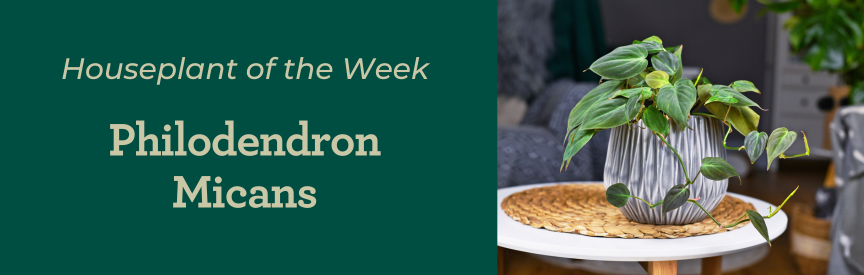
Houseplant of the Week: Philodendron Micans

Posted on by

The Philodendron Micans, also known as the Velvet Leaf Philodendron or Sweetheart Philodendron, is a popular houseplant prized for its lush, velvety-textured leaves and easygoing care requirements.

The defining characteristic of the Philodendron Micans is its stunning foliage. It emerges as a beautiful coppery-pink shade before the leaves turn a dark green color with a shimmering, velvety texture.

This plant can be trained to climb or trail gracefully from hanging baskets.

Caring for Your Philodendron Micans

  • Light: The philodendron micans enjoys bright indirect light. Avoid direct sunlight as it can burn the delicate leaves, causing discoloration and crispy edges.
  • Water: Allow the top two or three inches of soil to dry out before watering. If your plant’s leaves start to droop or curl inward, it’s another sign that your plant needs water.
  • Humidity: Like most philodendrons, this plant prefers warm and humid conditions. Normal household levels of heat and humidity will do fine, however, as long as you keep your philodendron away from drafty areas or vents.
  • Soil: Use a well-draining potting mix. A mixture of equal parts potting soil, perlite, and peat moss is ideal.

Hanging with Houseplants

Posted on by

Everything old is new again, and that’s true in the world of houseplants, where one trend that first appeared half a century ago is making a strong comeback.

Hanging plants first became popular in the 1970s, in part because macrame was a common hobby during that time; many homes featured macrame plant hangers, typically with easy-to-grow spider plants inside.

This trend has made a resurgence, but now the reason has more to do with limited space, as more people congregate in urban areas with smaller homes and apartments. 

Hanging plants offer a clever solution to shrinking living quarters. Using vertical space, they maximize your leafy green decor without sacrificing floor area. Strategically placed, they can even create a visual separation between living areas. 

And you are no longer limited to just spider plants! There are many choices readily available at local garden centers like Warner’s Nursery. 

Cascading pothos and philodendrons, trailing air plants, and vibrant string of pearls will create visual interest in any room. Succulents like echeveria, jade, and donkey’s tail offer unique shapes and textures. Indoor ivy and Chinese money plants can be trained to climb up or cascade down, depending on your preference.

Your hanging plant is part of your room design. A cluster of greenery – mixing hanging, windowsill, and floor plants – can give you a mini jungle retreat indoors. Hanging plants can also soften corners, frame windows, and create a privacy “screen” within your home.

Caring for your hanging houseplant will depend on the species you use, as each has its own particular needs, so make sure to check the care label on any plant you purchase. 

But there are some general tips that apply to most hanging houseplants: 

  • Always use a quality potting soil mix that is suitable for your plant.
  • If you are mixing plants in the same hanging basket, try to group plants with similar care needs together.
  • Keep in mind that air in your home tends to get warmer and drier as it rises towards the ceiling, so your hanging plants might dry out a little faster than ones you have on counters, window sills, or on the floor.
  • If you are hanging from the ceiling, make sure to use a strong hook. 
  • Hang your plants in low-traffic areas. The last thing you want is for your plant tendrils to grab people as they walk by. 

If you are looking for a fresh take on houseplants for the new year, why not give hanging plants a try? They’re a budget-friendly way to add life and personality to your home, and their benefits extend far beyond their high-flying good looks. 

Happy gardening,
Misti

Bird’s Nest Fern

Posted on by
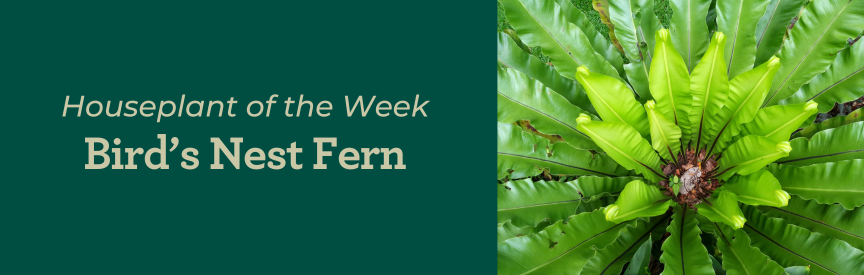
The versatile fern comes in many shapes and forms, but one of the most intriguing is the Bird’s Nest Fern. Unlike ferns that feature wispy leaflets that flutter delicately in the breeze, the bird’s nest grows study, bright green fronds that are typically wavy at the edges.

The fronds emerge from a central rosette, which looks very much like a nest, hence the name.

In their native tropical rainforests, these plants were epiphytic, clinging to the surface of other plants and soaking up the humidity around them. Given the right indoor environment, however, this wonderfully unique houseplant will thrive.

Bird’s nest growing tips:
  • Light: Medium to bright indirect light is ideal. It can survive in lower light situations, but you probably won’t get the groovy ripples in the leaves. As with many plants, you should avoid direct sunlight, which can scorch the fronds.
  • Humidity: Your plant will tolerate average indoor humidity, but it would love higher humidity, so think about misting it regularly or keeping it in a steamy bathroom!
  • Watering: Keep the soil moist, but not soggy. Allow the top inch to dry slightly between waterings. Avoid getting water directly on the fronds or the “nest.”
  • Do Not Touch: As new fronds emerge from the nest, take care not to touch them; they are very fragile.

Houseplant of the Week: Princess Philodendron

Posted on by

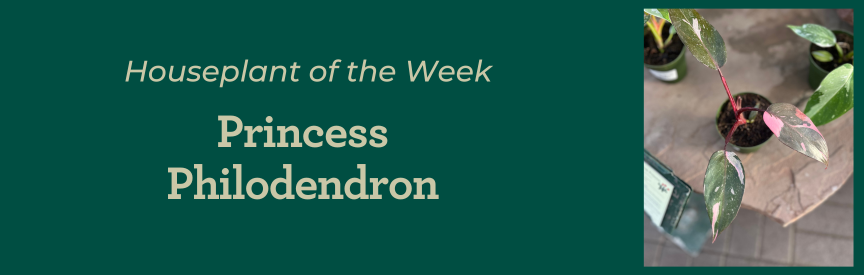
The Philodendron ‘Princess’ is a beautiful and popular houseplant known for its stunning variegated leaves which have splashes of pink, white, and green.

This plant is relatively easy to care for, but it does have a few specific needs.

Caring for Your Princess

  • Light: The ‘Pink Princess’ needs bright, indirect light. Light plays a large role in the amount of variegation you’ll see in the leaves, but placing it in in direct sunlight risks scorching the leaves.
  • Water: You can allow the top half of your plants soil to dry out between waterings and then you should water well. This typically translates into watering once a week in the spring and summer and every two weeks in the fall and winter.
  • Humidity: The Philodendron Princess prefers warm (65 to 79 degrees) and humid conditions. If the air in your home is dry, you can place the pot on a pebble tray filled with water. Avoid placing this plant in drafty areas or near vents.
  • Soil: Use a well-draining potting mix. A mixture of equal parts potting soil, perlite, and peat moss is ideal.

Holiday Gift Tips from Warner’s Nursery

Posted on by

One of the great blessings of this time of year is that it gives us a chance to celebrate and focus on others, and the perfect opportunity to thank them for the impact they have in our lives all year long.

You have those nearest and dearest to you, of course, but there’s also a whole group of people who you might not see every day but still play a significant role in your life.

Often these are the folks who get some generic cookies or candy or maybe some cut flowers. But if you want to give a holiday gift that’s unique (and has 0 calories) to your hairstylist, dog walker, yoga instructor or babysitter, please consider a trip to “Dot’s Back Porch.”

Our gift shop located inside of Warner’s Nursery is a continuation of our grandmother’s legacy. She started creating and selling fabulous gardening-themed gifts back when Warner’s was still in Page, Arizona. We carry on her vision and style with each new product line we select, and every display we build.

You’ll find a delightful selection of home accents, gifts, decorative pottery, and personal beauty items available year round, but as winter approaches, Dot’s Back Porch is transformed into a holiday wonderland, including ornaments for the tree, holiday-themed decorations, personal accessories such as jewelry and scarves, and gift ideas for everyone on your list.

If you are going to holiday parties this year, you can find lovely hostess gifts in the shop – or you could also bring a Christmas cactus, poinsettia, or other potted plant to the party. In either case, our Warner’s staff would love to help you pick out something that will stand out and show how much you care.

We hope you are looking forward to the holidays, get-togethers, and the joy that marks the upcoming season.

Happy Holidays,
Misti

Guest Blog: Gardening for Mental Health at Killip Elementary

Posted on by

During the height of the pandemic, when most of us were working from home, I was sent a link to a recorded Zoom video about horticultural therapy. I had never heard of horticultural therapy, but during the presentation, I learned that it is a professional practice that is used to improve lives by connecting people with plants. Being a plant lover, a professional horticulturalist, and an instructor for Arizona Cooperative Extension’s Master Gardener Program, I was immediately hooked. I enrolled in a certificate program and began the process to become a registered horticultural therapist.

Things began to return to normal in the summer of 2021. Our County Extension office reopened to the public and students were back in the classroom at Killip Elementary School, a stone’s throw from our office in Sunnyside. But in August 2021, a devastating flood ripped through the neighborhood.

As many of you may remember, a few years ago, the Museum Fire burned the mountain above our town. A major rain event occurred on the burn scar to produce this flood, one of the largest flooding events in Flagstaff’s history. We were trapped in our county building when the floodwaters hit. Waters rushed down our street, creating whitewater rapids between our office and nearby Killip. Our building was spared but the elementary school was not so fortunate. Water and sludge coursed into the school and students and teachers were trapped inside. It was a traumatic event for all.

The stress the children had experienced from the pandemic was now exacerbated by this disaster. Just days into the new school year, students were, again, back at home in front of computer screens for their lessons. Students faced yet another ordeal; the school was so badly damaged by the flood that it was unusable.

But there was hope. Plans for a new school were in place prior to the flooding. And a community group of local partners, including Coconino Cooperative Extension, was awarded a national grant as one of 10 cities to make nature equitable and accessible for all students through the Green Schoolyards Initiative. Killip was selected as our pilot school, and I was asked to be a part of the Flagstaff team specifically because of my training in horticultural therapy. With both the pandemic and post-wildfire flooding, if ever there was a school that could benefit from wellness programming, Killip was it.

Thanks to the support of many community partners and Master Gardeners, several children from Killip have participated in a gardening wellness program that uses plants to improve mood, develop social skills, and instill appreciation for living things, including each other. If you’re a regular Warner’s customer and you’re reading this blog, you are most likely aware of the social, emotional, and other health benefits that are associated with gardening.

In the Grow with Us Gardening Club, students learn that plants have special adaptations that allow them to thrive in difficult situations. Plants are resillient and so are kids. Students learn that people and plants have a lot in common; we need nutrients, water, a place to live, and light to stay healthy. Students practice mindfulness techniques by taking in the sights, smells, and sounds found in the garden. They work together to grow plants from seed, care for them, and enjoy the sweet rewards of their labor. They also unite to tidy up the mess that typically results when kids, water, soil, and seeds come together!

One of the most positive observations I make during our time together is that the children seldom leave the garden feeling bad. No matter what happens during the day, it all gets left behind when they walk through the garden gate. They eagerly search the beds for veggies to pick, run through the tall sunflowers, socialize, and work together to care for the garden, a garden that was covered in flood debris and heavy equipment just a year ago.

And if there are fresh strawberries or cherry tomatoes to taste, things don’t get much better than that.

Gayle Gratop
Assistant Agent, Family Consumer and Health Sciences
The University of Arizona
Coconino County Cooperative Extension

Houseplant of the Week: Dracaena Kiwi

Posted on by


We’d understand if you think the Dracaena is an intimidating plant. 

It’s name comes from the Greek and roughly translates to “Female Dragon,” because of the red gummy resin that can be produced by the stems of the plant resembling, it’s said, dragon’s blood.

Fortunately, the Dracaena doesn’t breathe fire. It’s even pretty easy to maintain.

The ‘Kiwi’ Dracaena marginata species has a slightly thinner leaf than the classic dracaena, with banding of lemon cream in the center and darker green towards the margin. 

These plants like filtered light or semi-shady spots. Never place a Dracaena in direct sunlight. It’s ironic, but the dragon plant actually has leaves that will burn in direct light.

Dracaenas also require less water than most indoor plants. Mist their leaves, keep the soil slightly moist but also make sure it has good drainage (Dracaenas hate soggy soil as it can create root rot). A good rule of thumb? Let the top couple of inches of soil dry out before watering.

Dracaenas are sensitive to temperature, preferring it to be about 65-78 degrees during the day and no colder than 55 degrees at night.

Rainforest Yoga on Saturdays!

Posted on by

Keep your New Year’s resolution to improve your health, reduce stress, and facilitate happiness with yoga classes inside of the warm and sunny tropical greenhouse of Warner’s Nursery.

Erin Widman of Asana Adventures will be offering two classes every Saturday from Jan. 6 through Feb. 24. The first session at 9:30 am is a Level 2 class, while the 11:30 am session is open to all levels, and a perfect class for beginners.

Cost is $18.50 per session or $79 for 5 classes. Register for your spot here.


Houseplant of the Week: Schefflera

Posted on by

Better known as the umbrella or parasol plant, the Schefflera is yet another example of a houseplant that will lend beauty to your home while being relatively easy to grow. 

Available in both solid green and variegated varieties, the Schefflera likes “medium” light, which basically means good light without being in direct sunlight, which can scorch its leaves. It will tolerate a darker house, but you’ll want to rotate your plant, because it will lean towards the light source.

Schefflera likes nice moist soil, but it’s forgiving if you forget to water it for a week or two. On the other hand, you definitely don’t want to overwater as this will eventually kill it. A good rule of thumb is to water it when the first inch of soil dries out. Get rid of any excess water lying in the drip tray to avoid problems like root rot.

You also may need to prune your schefflera periodically, particularly when it is being grown in lower light situations, which can lead the plants growth to be “leggy” or floppy. Just cut away the overgrowth until the plant regains it shape.

Schefflera is occasionally susceptible to spider mites, mealy bugs and other scale insects. Insecticidal soap can usually take care of it, but if you have a persistent infestation of bugs, you might need to break out the neem oil or possibly use a systemic insecticide for houseplants.