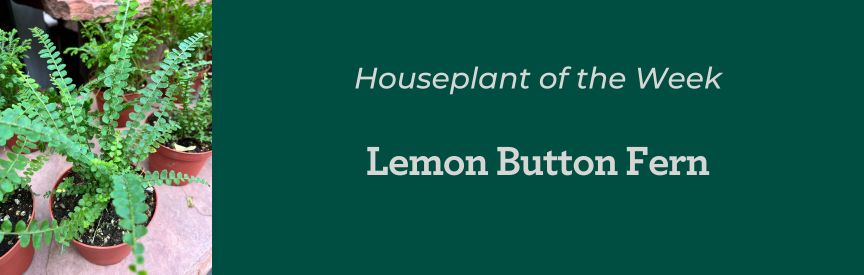
Houseplant of the Week: Lemon Button Fern

Posted on by

The Lemon Button Fern (Nephrolepis cordifolia ‘Duffii’) is a charming and compact variety of fern that has gained popularity among plant enthusiasts for its delicate appearance and easy care requirements. Its small, rounded fronds and fresh lemony scent (when brushed or crushed) make it a delightful addition to indoor gardens and terrariums. Here’s everything you need to know about this lush, vibrant plant:

Growing Your Lemon Button Fern!

Light – The Lemon Button Fern thrives in bright, indirect light. Direct sunlight can scorch its delicate fronds, while low light may slow its growth. A spot near an east- or north-facing window is ideal. If grown under artificial lighting, fluorescent or LED lights work well.

Watering – These ferns prefer consistently moist soil, but avoid waterlogging. Allow the top inch of soil to dry slightly between waterings. Overwatering can lead to root rot, while underwatering can cause fronds to turn brown and crispy.

Humidity – As a tropical plant, the Lemon Button Fern loves high humidity. If grown indoors, consider placing it in a bathroom, using a humidity tray, or misting it regularly. A humidity level of 50% or higher is ideal.

Temperature – The fern thrives in temperatures between 60-75°F (15-24°C). Avoid exposing it to drafts or extreme temperature changes.

Soil – Well-draining, rich soil is essential. A mix of potting soil with peat moss or coconut coir works well. Adding perlite or sand ensures proper drainage.

Fertilizer – Feed the fern with a diluted liquid fertilizer every 4-6 weeks during its growing season (spring and summer). Avoid fertilizing in the fall and winter when growth naturally slows.

Pruning and Maintenance – Remove yellowing or dead fronds to keep the plant healthy and encourage new growth. Its compact size requires little pruning overall.

Houseplant of the Week: Hen & Chicks

Posted on by

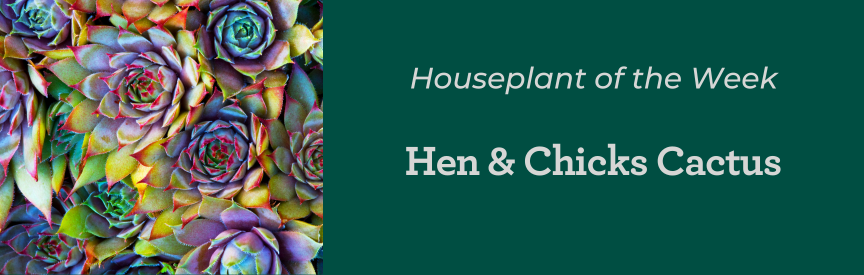
Sempervivum, commonly known as Hen and Chicks, gets its name from the way the plant reproduces. The “hen” is the main plant in the center, and the “chicks” are the smaller offshoots surrounding it. The Northern Lights variety is especially striking due to its vibrant color palette, which ranges from deep greens to hues of pink, red, and purple, depending on the amount of sunlight it receives.

This plant thrives in environments that mimic its native mountainous terrain. Its natural ability to survive in tough conditions makes it an excellent choice for those who may not have a green thumb but still want a showy and resilient plant.

One of the best features of the Northern Lights Hen and Chicks is how easy it is to propagate. When the “chicks” form around the main “hen,” you can gently remove them and replant them in new pots. These offshoots root quickly and can be shared with friends or used to expand your succulent collection.

Caring for Your Hen & Chicks

Light: These plants thrive in bright, indirect light. A sunny windowsill or well-lit spot in your home would be perfect.

Temperature: They are pretty tolerant of lower temps, but make sure to keep them in an area where the temperature doesn’t fluctuate drastically.

Watering: Unsurprising for a succulent, Hen & Chicks are drought-tolerant, and it’s best to let them dry out between waterings. Make sure your pot has good drainage as overwatering can lead to root rot.

Food: While these plants benefit from a balanced, water-soluble fertilizer about once a month during the spring and summer, they don’t require heavy feeding.

Houseplant of the Week: Rosemary Cone

Posted on by

A perfect hostess gift for the holiday parties on your calendar, the rosemary cone plant adds festive cheer (and an amazing fragrance) to any Christmas decor.

Rosemary is a perennial herb with fragrant needle-like leaves that’s easy to grow. But it’s also super useful as a herb with its flavorful silvery gray-green leaves.

You can arrange rosemary cone trees for table centerpieces or in your foyer. You can also have it in containers by the front door.

Caring for your Rosemary plant:

  • During the winter, place your rosemary in a sunny spot, like a bright window. Remember to turn the plant periodically so it gets sun on all sides.
  • Water your rosemary every other day – you want to make sure the soil never dries out.
  • The soil in the pot needs to be well draining, but you can have water remain in the saucer to provide humidity for the plant.

Houseplant of the Week: Lemon Cypress Cone

Posted on by

Lemon cypress

Each year around this time, we get to enjoy a miniature cultivar of the Monterey Cypress – the Lemon Cypress Cone. The plant’s conical shape makes it a perfect decorative choice, especially during the holiday season.

However, this highly versatile evergreen, with its unique yellow-green fronds and lemony scent, can be enjoyed long after it serves its role as a holiday centerpiece.

The Lemon Cypress Cone grows anywhere from 1 to 3 feet high. During the summer, it can even be enjoyed outdoors, provided it gets enough sun.

Care Tips for Lemon Cypress Cone
  • Light: When indoors, place in a location with bright, indirect light. If you bring it outside during the warmer weather, make sure it’s in a spot where it will get 6 hours of sunlight daily.
  • Watering: Allow the top couple of inches of soil to dry out between waterings. Avoid letting the roots sit in water and ensure proper drainage, as this plant is susceptible to root rot.
  • Temperature and Humidity: The Lemon Cypress thrives in temperatures between 50–70°F. Protect it from dry indoor air by using a humidity tray or misting occasionally.

Houseplant of the Week: Norfolk Pines

Posted on by

Houseplant of the Week Norfolk Pine

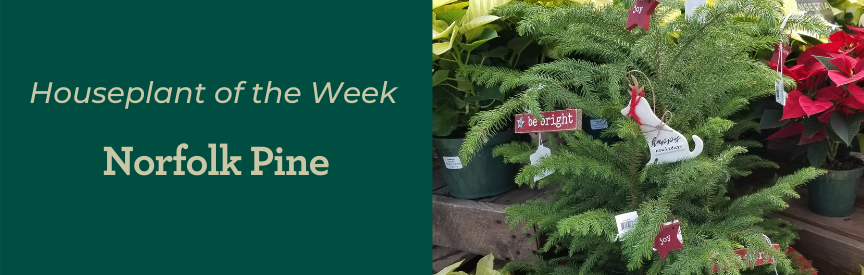
Enjoy the Christmas spirit all year round with our Houseplant of the Week, the Norfolk Pine.

But we’ll let you in on a little secret: While they are called “pines” and even look a little like an evergreen tree, they really aren’t pines at all. In fact, in terms of care, they are more like a gardenia or orchid plant than a pine tree.

What does this mean – well, first off, your Norfolk Pine isn’t happy with the cold. So don’t try to plant them outside after the holidays are over. It needs to be indoors, preferably in a south-facing window with a lot of direct sunlight. (It will tolerate bright indirect light too.)

Originally from Norfolk Island off of Australia, it is used to a mild subtropical climate with a lot of rain, so your plant wants its humidity. A pebble tray with water, a room humidifier or a weekly misting will make it a happy plant.

Water your Norfolk Pine when the top of the soil feels dry to the touch. You can fertilize it in the spring and summer with a water soluble fertilizer, but you do not need to feed it in the fall or winter.

Houseplant of the Week: Cyclamen

Posted on by

There’s something very romantic about cyclamen, one of our favorite houseplants.

Maybe it’s the petite blooms on long stems that stretch up above its green and silver foliage. Or the colors – cyclamen flowers come in shades of pink, violet, red and white and have a pleasing, sweet scent. Or those heart-shaped leaves.

We mention that they are our favorite winter houseplant, because unlike most indoor plants, their dormancy period is in the summer. Cyclamen are “tuberous perennials,” meaning they die down to their thick roots (tubers) in the heat of summer, then re-emerge and bloom again as the temperatures cool in fall.

Here are some tips for cyclamen care:

Light: Bright and indirect light in winter when the plant is actively growing. When dormant, keep your cyclamen in a cool, dark area with good ventilation.

Soil: These pretty plants like organically rich soil that drains well. Potting soil does well, but you might want to add some peat in to increase the acidity slightly.

Water: When leaves are present, the plant is actively growing and you should water when the first inch of soil below the surface feels dry. Do not overwater! It’s a common way to kill these plants. Don’t get the leaves or crown of the plant wet, which can lead to rot.

When the plant is dormant during the summer, reduce watering. All you are trying to do during this time is prevent the soil from entirely drying out.

Temperature and Humidity – Cyclamen plants don’t like extreme heat or dry air. Keep them away from drafts too. During the winter, when our air is so dry, cyclamen really want high humidity. Our suggestion would be keeping your cyclamen on a tray with pebbles and water. Just make sure that it isn’t sitting in the water, as that can cause root rot.

Feeding Time – Your cyclamen would appreciate some diluted liquid low-nitrogen fertilizer every couple of weeks while in full leaf. You don’t need to feed your cyclamen while it’s dormant.

Houseplant of the Week: Butterwort

Posted on by


Carnivore. Insectivore. Bug-killer.

And really kinda cute.

All of these descriptions are accurate for the Butterwort plant (Pinguicula vulgaris). It’s a highly attractive plant with a rosette of soft green leaves and, when flowering, delicate white and purple blooms that are reminiscent of orchids.

As pretty as they are, those leaves are fatal for the small insects that cross Butterwort’s path. They are coated in a sticky, glandular secretion that traps insects. Once captured, digestive enzymes in the plant’s leaf surface break down the prey, allowing the Butterwort to absorb essential nutrients.

Butterwort is relatively easy to care for as long as you give it plenty of light and the right kind of water.

Caring for Your Butterwort
  • This plant likes moderately bright light. A sunny windowsill with direct light in the morning or late afternoon is perfect, but direct midday sun might be too much for Butterwort.
  • In general, these plants like high humidity, but can survive in drier conditions as long as you don’t let their roots dry out.
  • When watering, don’t use tap water as the minerals can burn the roots. Distilled water works well. Also, don’t allow water to collect in the rosettes as this plant is prone to leaf and crown rot.
  • Butterwort will thrive in several different types of soil, but peat moss with perlite or an orchid potting mix work very well.
  • You don’t have to fertilize Butterwort as it is perfectly capable of catching its own meal. If you think your plant is hungry, give it cactus fertilizer, but don’t put it in the soil – it should be applied to the leaves where the plant digests nutrients.


Houseplant of the Week: Snow Bush Plant

Posted on by

The Snow Bush (Breynia disticha), also known as the Hawaiian Snow Bush or Snow-on-the-Mountain, is an eye-catching tropical shrub that can also be cultivated as an indoor plant, typically growing to a height of 3 to 5 feet.

It is celebrated for its unique variegated foliage, which is a green splashed with cream and white – as if it had been dusted with snow. Pink and red hues can also appear on the leaves.

Caring for Your Snow Bush
  • This plant thrives in bright, indirect light. Avoid direct sunlight, which would dry out and damage its leaves.
  • This is a plant that loves the tropics and will drop its leaves if your home doesn’t have enough humidity. Consider a nice humid room or a space with a humidifier. No drafty corners, please!
  • The Snow Bush wants nice moist soil as well, but should not be waterlogged.
  • This plant flourishes with feeding. During the spring and summer, use a half-strength, balanced liquid fertilizer each month, then every other month in the fall and winter.


Holiday Crafts & Storytime

Posted on by

Every Wednesday and Saturday from November 30th through December 21st, Warner’s Nursery has our always-popular Holiday Storytime for kids. We start off each event by reading a holiday story, followed by a craft that your child can take home!

This event is free and is held at 4 pm on Wednesdays and 2 pm on Saturdays.

Here’s these year’s classic stories and fun crafts:

Saturday, November 30th at 2 pm
Book: Green is for Christmas
Craft: Paper Plate Wreaths

Wednesday, Dec. 4 at 4 pm & Saturday, Dec. 7 at 2 pm
Book: Santa, Please Bring Me a Gnome
Craft: Gnome ornaments

Wednesday, Dec. 11 at 4 pm & Saturday, Dec. 14 at 2 pm
Book: How to Catch a Reindeer
Craft: Paper plate reindeers

Wednesday, Dec. 18 at 4 pm & Saturday, Dec. 21 at 2 pm
Book: The Gingerbread Man
Craft: Paper bag gingerbread men


Houseplant of the Week: Chinese Money Plant

Posted on by

You might be familiar with the “Money Tree,” pachira aquatica. That plant got its name from a popular story about a destitute man praying for money, who discovered the plant and became rich selling it. Another money-related tree is our featured plant this week. Meet the beautiful and unique-looking Chinese Money Plant (pilea peperomioides), which has a backstory rich not in folklore but the sweep of world history.

The plant’s most common nickname comes from its circular leaves that look like coins. Other nicknames include the pancake plant, UFO plant or just Pilea, a shortening of its scientific name. But for many people, this is the Missionary Plant.

Scottish botanist George Forrest was the first westerner to collect Pilea peperomioides in China’s Yunnan Province. Its worldwide propagation is credited to a Norwegian missionary. Agnar Espegren was fleeing the ravages of the Chinese Civil War in 1944 when he was delayed in Yunnan, waiting for a plane to take him and his family to the safety of India. While in Yunnan, he picked up either a full plant or cuttings, most likely at a local market.

The plant survived the trip to India and then another voyage to Norway as the family returned home. Espegren began giving cuttings away and the plant flourished throughout Scandinavia. A Norwegian au pair brought the plant to England as a gift to the British child she was taking care of, and the Chinese Money Plant began to take off in Western Europe. (As you can probably guess, this plant is very easy to propagate, leading to two of its other nicknames, the Sharing Plant and the Pass It On Plant).

Caring for Your Chinese Money Plant
  • This plant thrives in medium to bright indirect light. Avoid direct light, which would damage those lovely leaves. Meanwhile, low light will make the plant “leggy” with fewer offshoots. Rotate regularly to keep symmetrical.
  • Use a rich, well draining soil. Amend with perlite to increase drainage if necessary.
  • Allow the first two to three inches of this plant to dry out between waterings.
  • Average household temps and humidity should be fine for your plant, but keep it away from heating vents.
  • Feed your plant monthly during spring and summer.
  • If you’d like to share this “pass it on plant,” wait until the offshoots are at least a couple of inches tall before cutting. Use a clean knife or shears to cut the offshoot from the main root an inch or two below the soil. Immediately put the cutting in some moist soil in a separate container. Keep the soil moist (but not waterlogged) until the new plant has established a root system in the new pot.